Elevate your local knowledge
Sign up for the iNFOnews newsletter today!
Sign up for the iNFOnews newsletter today!
Selecting your primary region ensures you get the stories that matter to you first.
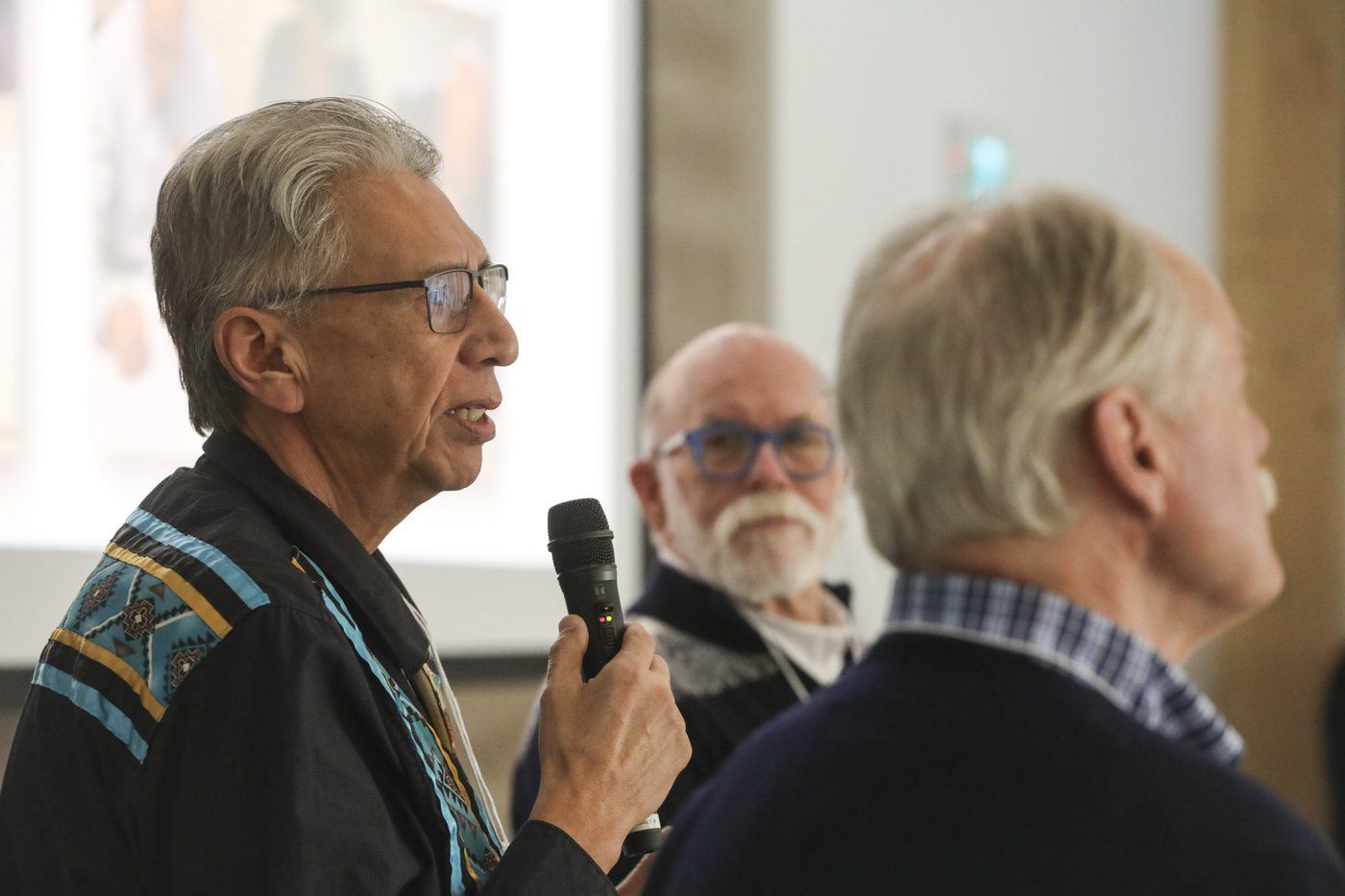
Fears of a wildfire devastating a drinking water source for up to 80,000 people in the North Okanagan are bringing local Indigenous and non-Indigenous governments together to protect their shared watershed.
Last month, leaders of Okanagan Indian Band (OKIB), the District of Lake Country and City of Vernon declared that protecting the crucial North Aberdeen Plateau watershed goes far beyond just preventing or mitigating wildfires.
“We can’t let it go back to what it was,” District of Lake Country Mayor Blair Ireland told fellow members of the Okanagan-Similkameen Collaborative Leadership Table at the Feb. 20 meeting.
“We have to make sure that this land gets stewarded properly, that it becomes a healthy ecosystem. That’s the goal.”
In November, a North Aberdeen Plateau Guidance Plan was signed by Mayor Ireland, OKIB Chief Dan Wilson, and Victor Cumming, the Mayor of Vernon.
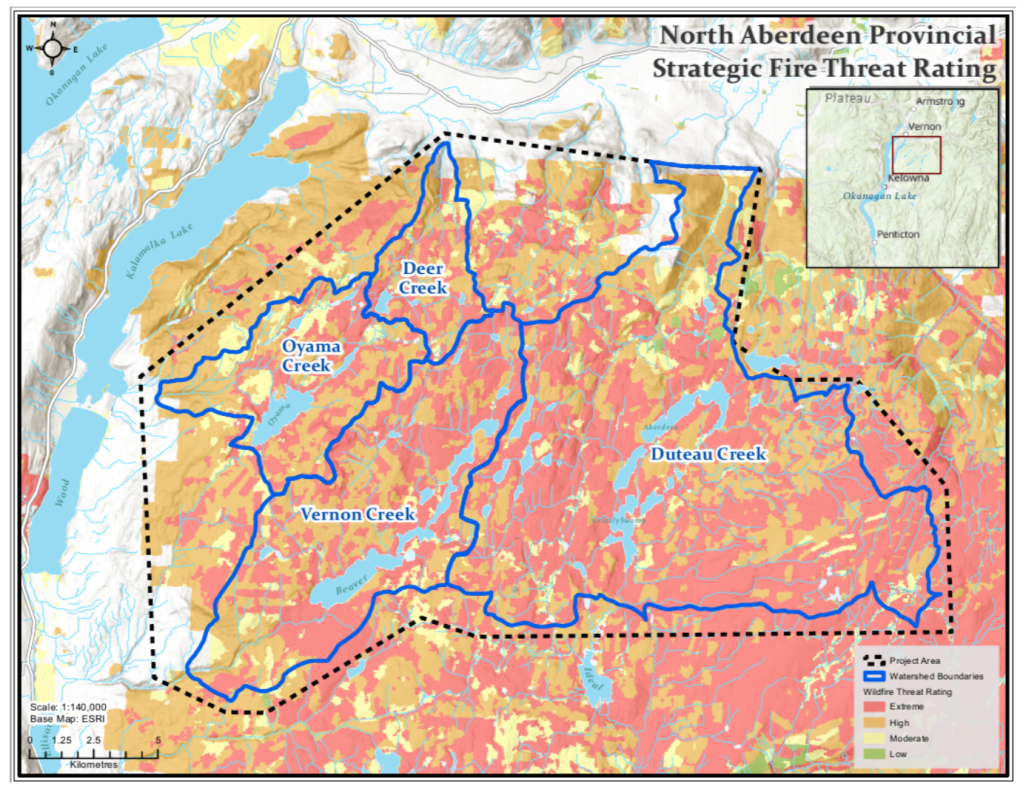
The plateau, near Kalamalka Lake in the North Okanagan, includes four smaller watersheds that provide water for homes and farms across Lake Country and the greater Vernon areas.
It also holds significant cultural importance for syilx people.
But today, its water sources and supply are threatened by resource extraction, land development and climate change — with a “catastrophic wildfire” being the most imminent threat, the guidance plan warns.
‘If we don’t change the pace, this is all burnt off’
The guidance plan for the watershed, signed on Nov. 10, arose from a partnership between the First Nation, Lake Country district, and the Regional District of North Okanagan, of which Cumming is a director.
The plan outlines a shared goal: preserving both water security and syilx cultural heritage.
But the three signatories each have distinct responsibilities; OKIB oversees stewardship of the lands, while Lake Country and the regional district ensure safe water provision.
“[The land] belongs to OKIB, and the two of us as the partners,” Ireland explained. “We help support.”
During a presentation at the Feb. 20 leadership table meeting, the three signatory leaders showed fellow table members a map of the plateau — revealing that much of the watershed is deemed to be under “extreme” threat of wildfire.
“If we don’t change the pace, this is all burnt off,” said Cumming, comparing the potential devastation to that of the 2021 White Rock Lake and 2023 McDougall Creek wildfires, which tore through the region — burning nearly 1,000 square kilometres combined.
“That is not what we want to see happening.”
Their presentation was one of several meant to guide and inform which of the region’s watersheds the table’s working groups should “champion and prioritize.”
That work is part of a process of creating a framework for a promised 250-year plan to protect water across the two regions.
‘Co-operation from municipalities … just wasn’t a thing before’
The partnership between governments is a significant historic milestone, the leaders agreed.
Staff across the three local governments have been trying to address the watershed’s issues since 2019, Cumming recalled.
But he noted that previously, local leaders hadn’t always “been together on the same page setting direction.”
Ireland noted that this new type of collaboration through the guidance plan “hasn’t really been done in our lifetimes.”
“The co-operation from municipalities, it just wasn’t a thing before,” he said.
In 2024, the province’s Ministry of Forests pledged $15 million to carry out multi-year fire mitigation work in the region.
That work would “protect water, water infrastructure and cultural heritage values in the North Aberdeen Plateau,” the province said at the time.
Cumming added “there are two very small but significant” fire mitigation efforts — in the form of prescribed burn work — that are planned for the watershed this year, potentially by the end of April.
But he suggested that the mitigation work hasn’t been moving at the pace that the local leaders would like to see, considering the risks.
“We’ve been at it for 20 months, trying to get the Ministry of Forests to actually cut a stick [off] of a tree,” he said.
Once complete, however, he believes the initiatives would “dramatically change” the wildfire threat level “from red to orange, to put a proper cultural underpinning to how we do it.”
Another goal in the guidance plan, he said, is for the three local governments to have greater authority in managing the area.
“We’ve been blunt to the premier that we’re looking for a change in management authority,” he said, “actual legal authority over the Northern Aberdeen watershed.”
‘Putting our heads together for the benefit of all of our generations’
Wilson, of OKIB, added that the key point is “that we’re working together.”
“We’re putting our heads together for the benefit of all of our generations,” he said. “We just need to get the province on board.”
Ireland praised the historic collaboration between governments, saying it “has been fantastic.”
“The key to all of this is the collaboration between all three groups: working together as one group with one goal in mind.”
But he noted there remains much more work ahead in getting better support from the province.
He stressed that — as the project moves ahead with more boots-on-the-ground efforts — leaders can’t allow the land use in the plateau “to go back to the way it was.”
“It has to go forward,” he said. “It has to be a healthy ecosystem, there has to be respect for the cultural values that this land brings, and the cultural sites that it has.
“It has to be managed better than we’ve done in the past.”
— This article was originally published by IndigiNews
News from © iNFOnews.ca, . All rights reserved.
This material may not be published, broadcast, rewritten or redistributed.

This site is protected by reCAPTCHA and the Google Privacy Policy and Terms of Service apply.
Want to share your thoughts, add context, or connect with others in your community?
You must be logged in to post a comment.