Elevate your local knowledge
Sign up for the iNFOnews newsletter today!
Sign up for the iNFOnews newsletter today!
Selecting your primary region ensures you get the stories that matter to you first.
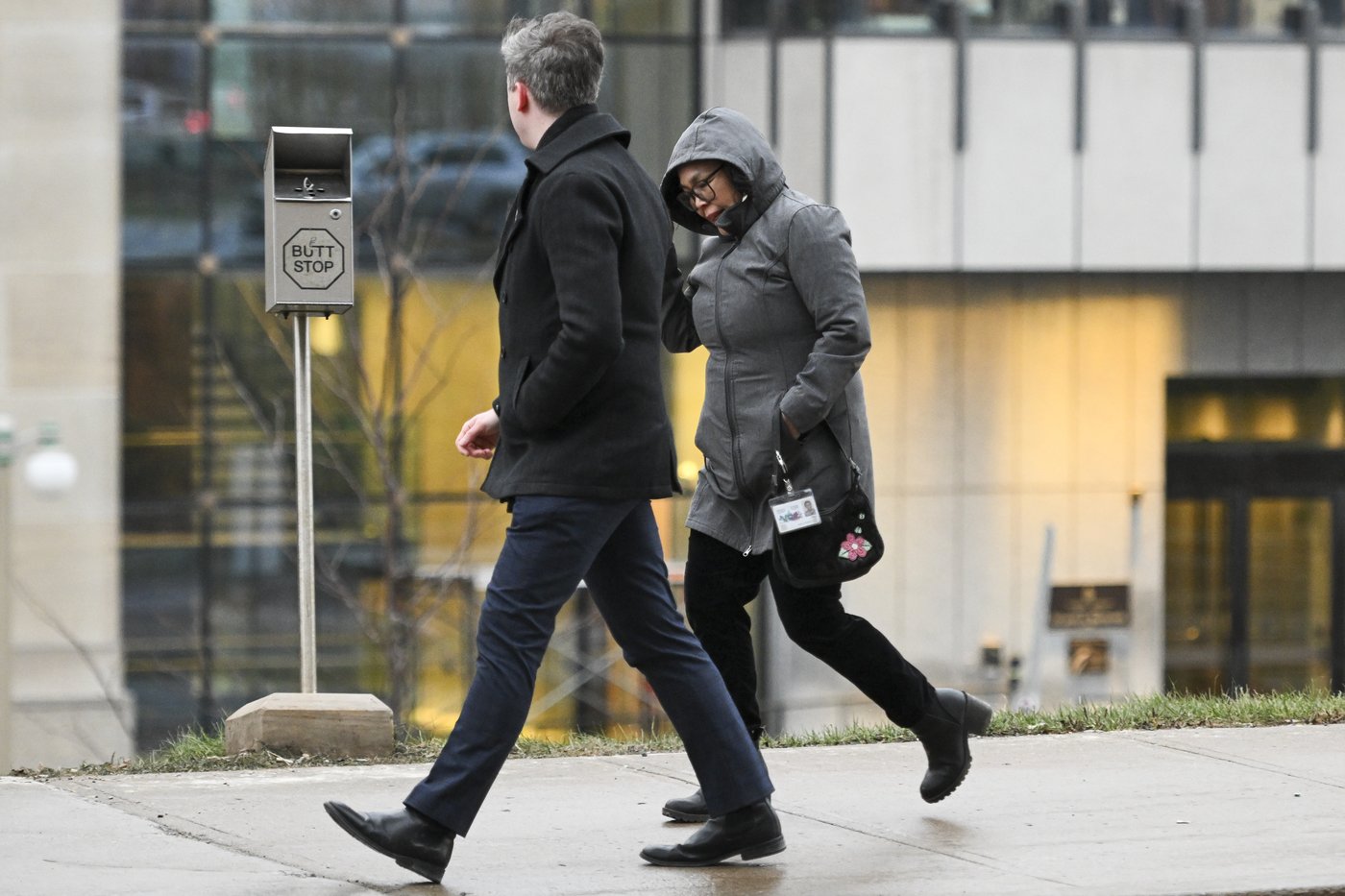
OTTAWA — Nunavut MP Lori Idlout’s decision to quit the NDP caucus to join the Liberals puts Prime Minister Mark Carney’s government just two seats short of a majority ahead of three crucial byelections set for April 13.
Sweeping all three byelections would give Carney a thin majority, bolstering his ability to push his political agenda forward and making it harder for the opposition to throw up roadblocks.
The Liberals sit at 170 seats, while the Conservatives have 141, the Bloc has 22, the NDP has six and the Greens have just one MP.
Two Toronto-area byelections were triggered by the resignations of former cabinet ministers Chrystia Freeland and Bill Blair. Both of those ridings are seen as safe seats for the Liberals.
A crucial third byelection has been ordered for the Montreal-area riding of Terrebonne after the Liberals’ one-vote win there was annulled by the Supreme Court last month.
Winning just two out three would give the Liberals a 172-seat majority, but the government still would likely rely on opposition support to pass legislation.
The three byelections will happen a day after the Liberal party convention in Montreal, which is close to the hotly contested Terrebonne riding.
“The government is pulling out all the stops for Terrebonne,” said Eric-Antoine Menard, a vice president at the consultancy NorthStar Public Affairs.
“The party’s machine is going to be in Montreal, ministers are going to be here, the prime minister’s going to be here. I wouldn’t be surprised if you saw the prime minister campaigning and door-knocking in Terrebonne that weekend.”
He said 172 is not a “magic number” for majority government. While that number would provide a razor-thin majority in the House of Commons, it would still leave the Liberals exposed in ways that could slow their agenda.
“It would be the weakest majority possible mathematically, but also procedurally,” he said.
He said the Liberals will want to alter House of Commons standing orders to change the makeup of committees — which are currently designed for a minority Parliament where the opposition controls the agenda.
Without that change, opposition MPs could still undermine government legislation at committee — even if Parliament is prorogued to reset the session.
To force a change to the committees’ makeup, the Liberals would need at least 173 Liberal MPs since the House Speaker — himself a Liberal MP — would not cast a vote in this instance and likely would not support time allocation to curtail debate.
Speaker Francis Scarpaleggia only votes in the event of a tie. The Speaker is expected to maintain the status quo and act as an impartial figure.
The Speaker traditionally does not vote to pass new legislation but sides with the government on confidence votes.
Political observers are also watching to see whether there will be more departures from the House that would prompt additional byelections.
Toronto Liberal MP Nate-Erskine Smith has declared his intention to win the provincial Liberal nomination for Scarborough Southwest, and Montreal NDP MP Alexandre Boulerice is considering leaving federal politics to run for Québec Solidaire.
There’s also the question of whether there are more floor-crossers waiting in the wings.
Idlout said she decided to cross the floor after receiving feedback from constituents and her family telling her that this is a “crucial moment” for both the territory and the country.
“With new threats against our sovereignty and pressures on the well-being of people throughout the North, we need a strong and ambitious government that makes decisions with Nunavut — not only about Nunavut,” she said in a written statement issued by the Liberal party.
Carney welcomed his newest Liberal MP Wednesday, calling her “one of Canada’s greatest constituency MPs” and pointing out that she represents an enormous riding.
“We’ve had conversations about what we can do both large and small in Nunavut, large projects, but also helping everyone get ahead,” Carney said standing next to Idlout outside the Liberal caucus room.
Interim NDP leader Don Davies beat the Liberals to the punch when he announced the news of Idlout’s defection on Tuesday night. He said the now six-member caucus is “very disappointed” by her decision.
Conservative Leader Pierre Poilievre said in a social media post Wednesday that Carney is “using back room deals to seize a costly majority that voters rejected.”
Several Conservative MPs on their way into a caucus meeting Wednesday simply shrugged when asked for their thoughts on the latest floor-crossing.
“Looks like that’s their game plan,” Saskatchewan MP Kevin Waugh said.
Liberal MP Karina Gould said on her way into Wednesday morning’s Liberal caucus meeting that it’s “extraordinary” to see so many floor-crossers during a session of Parliament.
She said it indicates the Liberals are a “big tent” party that draws support from both the left and right sides of the political spectrum.
Northern and Arctic Affairs Minister Rebecca Chartrand said Idlout has been contemplating this move for some time now.
“Our government is strong and that she sees that, and there’s huge opportunity in the North right now, particularly for Inuit Nunangat,” Chartrand said. “Lori really understands what her territory needs and that’s why she’s crossed over.”
Idlout is the fourth MP to cross the floor to the Liberals since last spring’s election, and the first to join from the NDP. Three other MPs — Chris D’Entremont, Michael Ma and Matt Jeneroux — left the Conservative caucus to join the Liberal bench.
D’Entremont — the first to cross from the Tories to join the Carney government in November — said he reached out to Idlout Tuesday night to offer his support on handling the “kickback” and the “uncomfortable conversations” that come with crossing the aisle.
D’Entremont said he’s sure it wasn’t an easy decision for Idlout to make, but it puts the federal government in a stronger position.
“That puts us in a place where we can govern Canada. We can actually do the things that we talked about without, I would say, the pushback that we continually get from one particular opposition party,” he said.
Gould said while voters technically cast their ballots for individuals, not parties, it’s incumbent on floor-crossers to explain their decision to constituents.
This report by The Canadian Press was first published March 11, 2026.
— Written by David Baxter, Kyle Duggan, Craig Lord, Sarah Ritchie and Alessia Passafiume
News from © The Canadian Press, . All rights reserved.
This material may not be published, broadcast, rewritten or redistributed.

This site is protected by reCAPTCHA and the Google Privacy Policy and Terms of Service apply.
Want to share your thoughts, add context, or connect with others in your community?
You must be logged in to post a comment.