Elevate your local knowledge
Sign up for the iNFOnews newsletter today!
Sign up for the iNFOnews newsletter today!
Selecting your primary region ensures you get the stories that matter to you first.
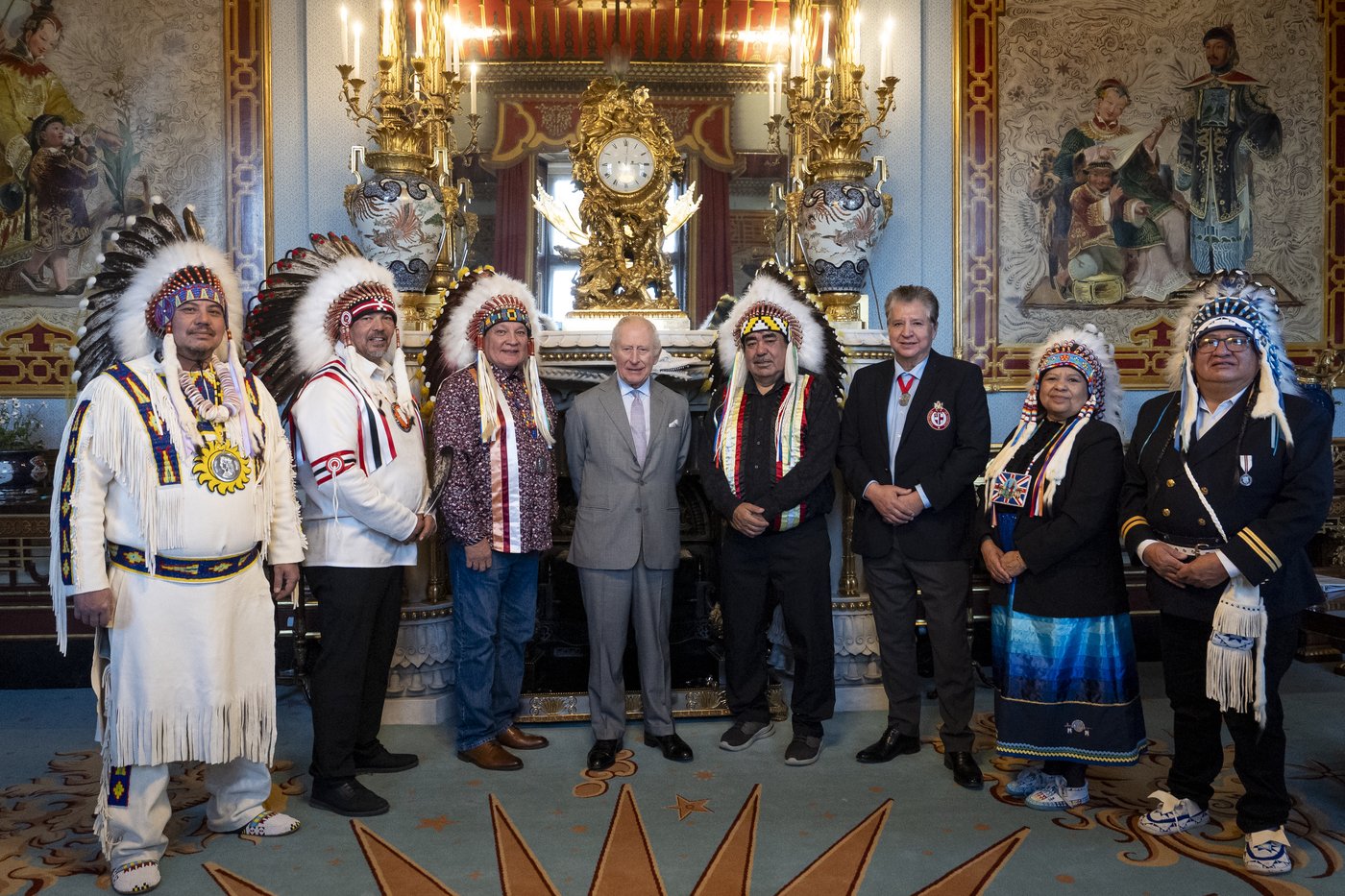
EDMONTON — The grand chief of the Confederacy of Treaty Six First Nations says King Charles “expressed his concern” after hearing about Alberta’s separatist push in a face-to-face meeting with Indigenous leaders on Wednesday.
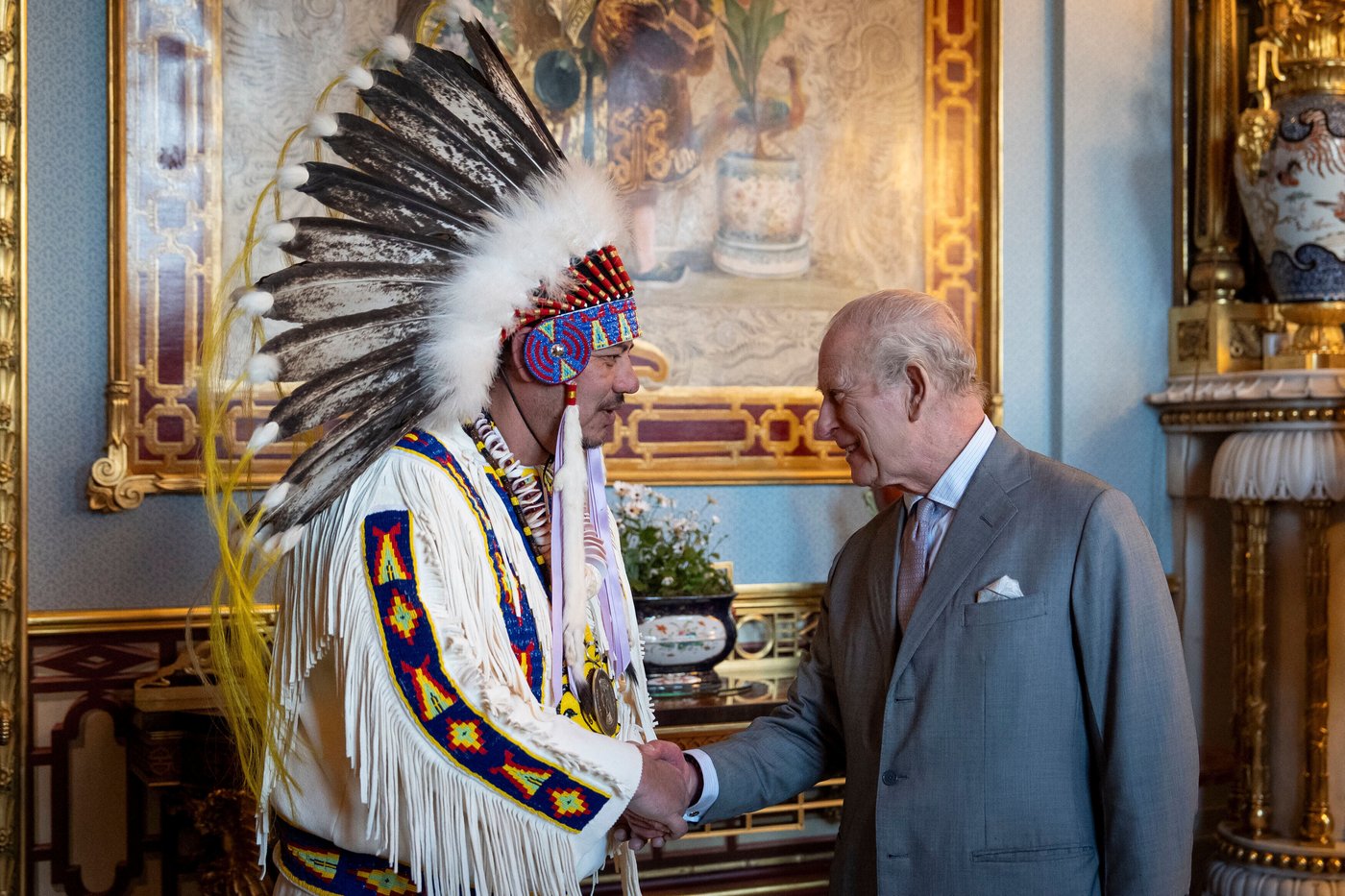
Grand Chief Joey Pete, who was part of a delegation of Treaty 6 chiefs who went to Buckingham Palace, said in a news release that the King was “very interested” in what the Indigenous leaders had to say.
“We made him aware of the separatism issue in Alberta and the threat to treaty it represents,” the chief said.
“He expressed his concern and committed to learning more.”
The meeting took place in response to invitations Indigenous leaders had sent to the King to attend an event this summer marking the 150th anniversary of Treaty 6 being signed.
Pete also said he asked the King to issue a royal proclamation to affirm the sacredness of the treaty and the rights it affords.
“It was a significant meeting, as treaty partners and equals.”
Pete is also chief of the Sunchild First Nation, southwest of Edmonton.
Louis Bull Tribe Chief Desmond Bull, who was also part of the delegation, said another topic of conversation was Canada’s “ongoing failure to meet treaty obligations.”
“He took it all very seriously,” Bull said.
Pete was not available for an interview, but earlier Wednesday he told CTV News that the King was “quite shocked” to hear of “direct violations to treaty and to the Crown as well” posed by Alberta’s separatism movement.
Pete also said the King is planning to meet with Prime Minister Mark Carney next week.
Alberta’s Indigenous relations minister, Rajan Sawhney, said Wednesday she was hoping to speak with Pete directly about the alleged treaty violations.
“I would like to know more about what he thinks those treaty violations are, and I think I’d have to speak to him, to hear from him directly, to understand his perspective,” Sawhney told reporters at the provincial legislature in Edmonton.
“At this point I don’t agree with those allegations.”
Sawhney said she thought it was a good opportunity for the Treaty 6 delegation to meet with the King, and for the King to meet with Carney.
“Dialogue is important at every level about a number of different issues. Everybody has their perspective. I’d be interested in learning more about what comes out of those meetings.”
Buckingham Palace did not immediately respond to a request for comment.
Indigenous leaders have been vocally opposed to the separatist movement in Alberta for months.
The royal face-to-face came two days after more than a dozen First Nations chiefs, and even more band councillors and elders, came to Alberta’s legislature to demand that Premier Danielle Smith’s government denounce separatism.
The chiefs had also been pushing for a non-confidence vote on Smith’s government, which the Opposition NDP tried to force on Monday only to be stymied by the premier’s majority United Conservatives.
Chiefs and supporters watching from the gallery heckled the government after the vote was blocked.
“Traitors!” shouted one.
Multiple First Nations are also challenging in court provincial legislation permitting citizen-led petitions that seek referendum votes, such as the ongoing campaign to put separation on a ballot.
That campaign, which officially got underway in January, has until May to collect nearly 178,000 signatures. Smith has said that should the petition be successful, the question of whether Alberta should separate from Canada will be put to voters in a referendum this fall.
Smith has previously said she won’t demonize those who are upset with Ottawa and that it’s her job to prove Alberta can have a productive relationship with the federal government.
The premier’s refusal to denounce separatism has lead to criticism from Opposition NDP Leader Naheed Nenshi, who has accused Smith of pandering to both sides of the debate and triggering economic uncertainty in the process.
Nenshi continued the criticism Wednesday, saying he thought the government was more concerned about its political fortunes than recognizing and acting on the concerns the separation movement has created.
“Minister Sawhney has a lot of explaining to do in terms of how she let this go this far,” he said. “We have a government that never thinks about the implications of what it’s doing.”
A leader of the petition campaign looking to force a vote on separation has claimed that members of Smith’s caucus have signed on, though the caucus and numerous ministers and UCP backbenchers have denied the allegation.
Forestry and Parks Minister Todd Loewen confirmed to reporters at an unrelated announcement Wednesday that he has not signed the separatist petition.
Loewen said he didn’t think they needed his help, noting that the group behind it seemed to be hard at work collecting signatures across the province.
“I think they’re doing a good job on their own as far as doing what they want to do. And that’s their right to do that,” he said.
Chelsae Petrovic, a UCP backbencher representing Livingstone-MacLeod, said Wednesday she also hadn’t signed.
“The mandate that I put onto myself is to not sign any petitions, knowing the weight of my signature,” she said.
That came a day after Scott Cyr, the UCP legislature member for Bonnyville-Cold Lake-St. Paul, told reporters he, too, had not signed any petition for a referendum on the issue, either for or against.
“I’ve been very clear for the last 10 months on my position: a sovereign Alberta within a united Canada,” he said.
This report by The Canadian Press was first published March 11, 2026.
News from © The Canadian Press, . All rights reserved.
This material may not be published, broadcast, rewritten or redistributed.

This site is protected by reCAPTCHA and the Google Privacy Policy and Terms of Service apply.
Want to share your thoughts, add context, or connect with others in your community?
You must be logged in to post a comment.