Elevate your local knowledge
Sign up for the iNFOnews newsletter today!
Sign up for the iNFOnews newsletter today!
Selecting your primary region ensures you get the stories that matter to you first.
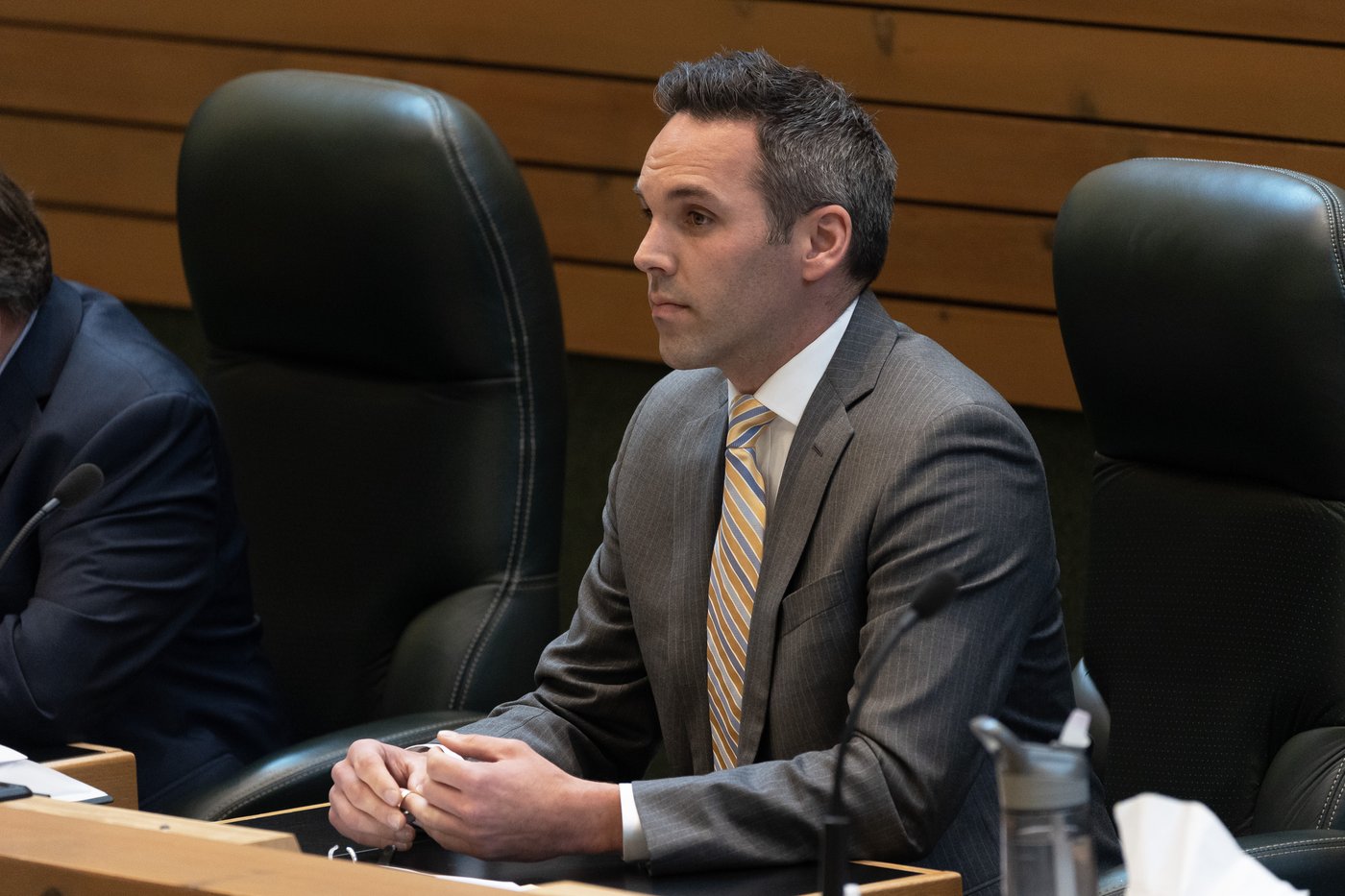
WHITEHORSE — Yukon Premier Currie Dixon hopes the budget he tabled Thursday is the worst the territory ever sees, as he warned of “tough decisions” needed to get its finances in order.
The budget for this year is Dixon’s first as premier and forecasts a record $81.8-million deficit — the largest recorded in the territory’s history — along with growing debt.
Dixon placed the fiscal situation squarely at the feet of the territory’s former Liberal government.
“This needs to be the worst budget the Yukon government ever tables,” Dixon, who also serves as finance minister, told the legislature.
“Today’s budget represents the low benchmark. It is the floor from which we must get up off of. It will shape the tough decisions needed to get us back on track.”
Interim Liberal leader Debra-Leigh Reti said in a statement Thursday that the record deficit was “a choice made by the new government.”
“There is no one to blame but themselves for that decision,” Reti said.
The Yukon Party was elected to a majority government in November, in a vote that saw the Liberals reduced to one seat.
Dixon said financial decisions, like those to pay for the confidence and supply agreement with the New Democrats to keep the minority Liberals in power, “were made at the expense of the next generation of Yukoners’ ability to fund essential infrastructure, such as health care or power generation.”
‘To put it bluntly, over the past few years, the Yukon has been spending far more than we can afford. This has put us in a dangerous financial position,” he said.
“This budget is a realistic and common-sense plan that will deliver actual results for Yukoners while getting us back on a reasonable fiscal track.”
The $2.46-billion budget includes net financial debt forecasted to increase to $804 million, and Dixon said he has asked the federal government to raise the territory’s $1.2-billion debt limit.
It’s up to Ottawa to decide when that could be approved, he said.
“That means we cannot take on any more debt to fund our spending. In other words, our credit card is maxed out and we aren’t bringing in enough revenue to spend more.”
In an interview following the budget being tabled, Dixon said the territory asked to be increased to a $3-billion debt cap, like what is available in the Northwest Territories.
Without that increase, he said they aren’t able to follow through on a promise to direct the territory’s energy corporation to cut a planned 34 per cent increase to Yukon power rates.
“What we promised in the election is that we would use the borrowing capacity of the Yukon government to take on some of what was going to be on the backs of ratepayers. The reality is we just aren’t in a position to do that, because our debt cap is maxed out,” he said.
Instead, the government is offering rebates to help with the costs, he said.
Government departments will be asked to find ways to reduce spending, he told the legislature.
He promised to strengthen the role of the private sector by reducing government activity “in areas that are more appropriately delivered by private enterprises.”
In the interview, Dixon said that doesn’t mean privatizing health services but could mean changes to how land development is managed.
“Right now the Yukon government is in charge of all land development in the Yukon. We think that there’s a role for the private sector. We think there’s a role for First Nations,” he said.
The budget forecasts a return to surplus in the 2028-29 fiscal year.
Opposition NDP Leader Kate White denied her caucus’s deal with the former government is responsible for the Yukon’s fiscal situation, pointing out that the budget continues to fund programs that were created as a result of the agreement.
“They’re saying that it’s a tough fiscal situation, and I don’t disagree. But the reality is, it was going to be like this no matter who stepped into this position,” she said in an interview.
White said the budget leaves questions about how the government plans to follow through.
“One thing for us that was really absent in that budget speech was people. How does this budget support people?” she said.
The budget includes more than $4 million for planning and design of an expansion of the Whitehorse General Hospital and money to plan for more long-term care beds in the territory.
More than $10 million is for more teachers and educational assistants, and $25.4 million is for building affordable housing in Whitehorse and Dawson City.
For the first time, the territory will have a $100-million contingency fund to address emergencies without needing special requests or supplementary budgets.
Dixon told the legislature that priorities for his government include improving timely access to health-care services, protecting the integrity of the electricity grid and ensuring reliable power.
“If we stay the course, make prudent choices and focus on priorities, we can emerge stronger and more prosperous than ever before.”
This report by The Canadian Press was first published March 19, 2026.
— By Ashley Joannou in Vancouver
News from © The Canadian Press, . All rights reserved.
This material may not be published, broadcast, rewritten or redistributed.

This site is protected by reCAPTCHA and the Google Privacy Policy and Terms of Service apply.
Want to share your thoughts, add context, or connect with others in your community?
You must be logged in to post a comment.