Elevate your local knowledge
Sign up for the iNFOnews newsletter today!
Sign up for the iNFOnews newsletter today!
Selecting your primary region ensures you get the stories that matter to you first.
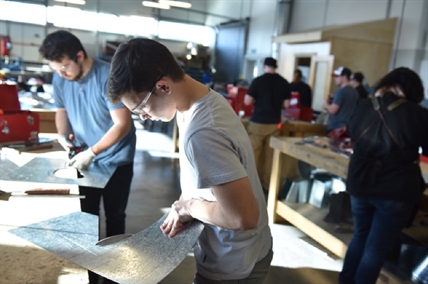
Cutting international student enrolment was meant to reduce strain on housing and health care, but it ended up doing more damage to post-secondary institutions than intended, including in the Okanagan and Kamloops.
UBC Okanagan, Thompson Rivers University and Okanagan College are managing a massive decline in international student enrolment after the federal government decreased the maximum number of international student permits by 35 per cent in 2024.
Tuition from international students is a significant portion of the university and college income. At TRU it’s 24 per cent, and at UBCO it went from 30 per cent in 2023/2024 to 27 per cent in 2025/2026.
Two years after the change, the full effect of the government’s move are showing up in post-secondary budgets. UBCO, TRU and Okanagan College are trying to find ways to deal with the revenue shortfall brought on by fewer international student dollars.
Okanagan College has cut the Modern Languages in Arts and Science in Nursing programs, laid off 12 employees, had 34 early retirements and implemented a hiring freeze, according to the British Columbia Federation of Students.
“Like other colleges and institutions across the country, Okanagan College continues to be impacted by declining international student enrolment. As a result, we have had to make difficult decisions and changes to adjust to having fewer international students at OC,” the college’s associate director Kevin Parnell said in an email.
Thompson Rivers University has cut 193 full-time equivalent jobs through early retirements and the elimination of vacant positions.
UBC, including UCBO, hasn’t seen any staffing impacts.
There have been 1,254 layoffs at colleges and universities across the province and 177 programs cut, suspended or paused.
“To date, the total number of international students attending the College has decreased by approximately 50 per cent compared to 2024, before federal policy changes came into effect. We anticipate the decline to continue into the Fall 2026 semester,” Okanagan College’s president Neil Fassina said in a press release issued earlier this month.
Okanagan College had 2,010 international students enrol in the fall of 2024, 1,100 in January, it’s expecting 850 this fall, and just 250 in the fall of 2027. The school’s deficit this budget year is $8.3 million.
Earlier this month, the college announced nine more staff would be given layoff notices.
“As a result, the college must continue reviewing course offerings and making adjustments, including reducing sections and, in some cases, narrowing the range of electives,” Fassina said. “These decisions are not taken lightly and are made with careful consideration of how to minimize impacts on both students and employees.”
The federal government’s plan to reduce international student enrolment in Canadian universities had a bigger impact than the intended 35 per cent total.
A new report from the federal auditor general, released on March 23, found that the reduction of international study permit approvals in B.C. was intended to be 18 per cent, but the province actually saw a decrease of 66 per cent in new study permit approvals.
“While the department’s implementation of these limits successfully reduced the number of new study permits issued, the combined effect of fewer applications and lower‑than‑projected approval rates led to a sharper decline than forecasted,” the auditor general office said in its report.
UBCO has managed to make up some of the lost revenue with government grants.
The University of British Columbia Okanagan went from 2,609 international students in 2021/2022 to 2,052 international students in 2025/2026, which cost the university around $10 million in tuition.
UBCO balanced its books with $11 million in government grants and contracts in 2024.
“Over the past several years, our campus has navigated sustained financial pressure, from rising operating costs to global policy shifts affecting international students, alongside challenges seen across the wider post-secondary sector. . . UBC Okanagan is on its way to stabilizing its financial position,” principal and deputy vice-chancellor Lesley Cormack said in a written statement.
Thompson Rivers University is anticipating a 36.7 per cent drop in international enrolment between 2024/2025 and 2029/20230.
For this budget year TRU is short $6,859,000, and by 2029 the deficit is expected to reach $43,741,000.
This year TRU balanced its budget with a vacancy discount, which means accounting for vacant positions, but it needs to find $43 million over the next four years.
With the federal policy in place, the universities and college will have to continue to find ways to make-up for the revenue they were accustomed to getting from international tuition.
“Our response to declining international enrolment and other pressures includes reviewing all areas of the college for opportunities to be able to continue supporting students in different ways,” Okanagan College’s Fassina said a media release.
UBCO declined an interview request. TRU and Okanagan College representatives weren’t immediately available.
News from © iNFOnews.ca, . All rights reserved.
This material may not be published, broadcast, rewritten or redistributed.

This site is protected by reCAPTCHA and the Google Privacy Policy and Terms of Service apply.
Want to share your thoughts, add context, or connect with others in your community?
You must be logged in to post a comment.













One response
Unfortunately this knee-jerk reaction is clearly not having a positive impact. Instead of working towards increasing housing and trying to attract more health care workers we are losing jobs and revenue in secondary education. We need to encourage foreign students as they are good for the economy. Especially if after getting their education they decide to stay.