Elevate your local knowledge
Sign up for the iNFOnews newsletter today!
Sign up for the iNFOnews newsletter today!
Selecting your primary region ensures you get the stories that matter to you first.
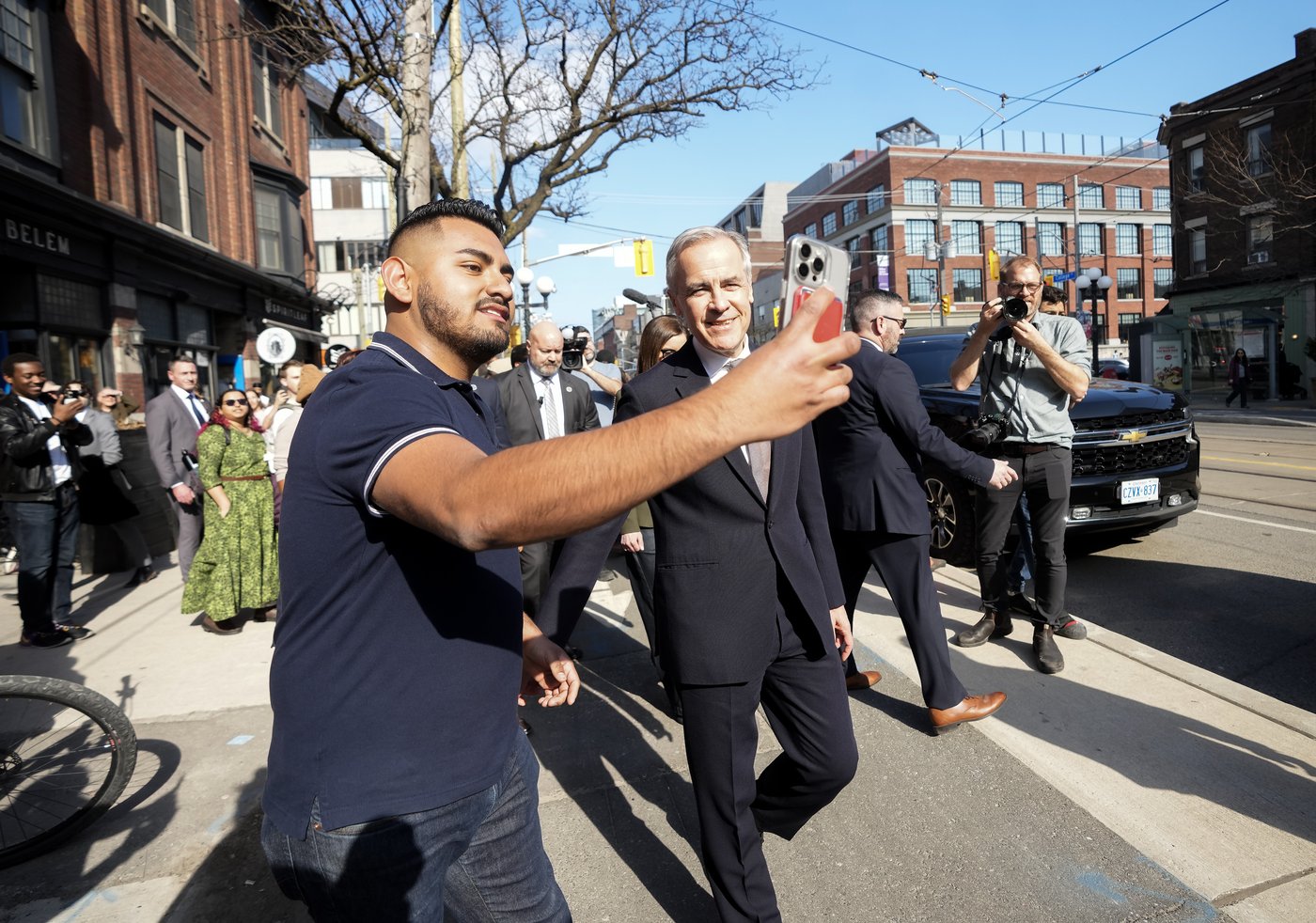
OTTAWA — Prime Minister Mark Carney insisted Tuesday he has “absolutely not” considered proroguing Parliament in the event he wins a majority in a series of upcoming byelections.
When reporters quizzed the prime minister at a news conference in Wakefield, Que., about whether he was considering proroguing to reset the parliamentary agenda, Carney said the idea had never entered his mind.
“It has never even entered my thinking, the possibility of that,” Carney replied. “I couldn’t have been more surprised to see the suggestion that was under consideration at all.”
The Globe and Mail newspaper, citing confidential Liberal sources, reported the Carney government is considering proroguing Parliament if the Liberals sweep a set of byelections in two weeks’ time.
Three byelections are set for April 13 and the outcome could give the Carney government a narrow majority government.
Philippe Bolduc of the consultancy Wellington Advocacy is a procedural expert who was once chief of staff to former Conservative house leader Gérard Deltell. He said he does not believe Carney has not considered proroguing.
“When you’re considering how to manage the House of Commons, all these options come up. So of course he’s thought about it,” Bolduc said.
He suggested Carney may be trying to distance himself from a term that became a dirty word in Canadian politics after a major parliamentary dispute in 2008, when the opposition attacked the Conservative government at the time for proroguing and avoiding a confidence vote.
Nelson Wiseman, professor emeritus of political science at University of Toronto, said proroguing now seems like a “stupid idea” that would allow Carney’s opponents to paint him as an opportunist making a power play. He said he’s “mystified” by the idea that any Liberal would float the idea.
“Prorogation got a lot of attention back in 2008 because of the constitutional crisis. Now, Canadians are quite familiar with the term. Before that, nobody really talked about it. It was never an issue of contention,” Wiseman said.
“Proroguing would be seen and painted as a political manoeuvre.”
Wiseman added that Carney can already govern effectively, almost as if he had a majority, since none of the other parties in the House want an election right now.
Bolduc said proroguing would not help the governing Liberals anyway because, while it would reset the legislative agenda, it would still leave committees dominated by opposition MPs.
To change the composition of committees, the Liberals would need to change the House of Commons standing orders through a majority vote in the House — and for that, they need to sweep all three byelections.
“If they don’t have that 173 seats, they would shoot themselves in the foot (by proroguing),” Bolduc said. “They would be starting back at zero on the progress they’ve made so far on some of the bills that are important to them.”
But if the Liberals hit a 173-seat majority in the House of Commons of 343 MPs, they likely would no longer need to prorogue, he added.
Two of the byelections are being held in Liberal strongholds in the Toronto area, while the third is in Terrebonne, a Quebec riding north of Montreal hotly contested by the Bloc Québécois.
If the Liberals only manage to hold the two Toronto seats, they’ll have 172 MPs. In that scenario, the House Speaker, Liberal MP Francis Scarpaleggia, could vote in a tie breaker to pass motions — but only under certain conditions.
That means the Liberals need to win the seat in Terrebonne to clinch the extra vote they would need to effectively govern with a majority.
“Despite what some people say, this has actually been a rather productive Parliament for a minority,” Bolduc added.
Carney said Tuesday his government is looking to work with the other parties in the House of Commons to advance its legislative agenda.
“We are absolutely focused on working with Parliament, getting legislation through Parliament, adjusting legislation where it needs to be, where it’s better informed by the discussions in Parliament, where we have to make compromise in order to do it,” the prime minister said.
“We’ve shown that consistently, and I think what we’ve seen, certainly in the last two months, is the real progress that we’re making across a range of bills, in crime, the budget implementation act, other aspects. So there’s no question of that.”
When asked about the possibility of prorogation, Conservative Leader Pierre Poilievre said it’s “time for the Carney Liberals to get to work” and start achieving the “results that he promised in people’s everyday lives.”
The byelections were called after former MP Bill Blair stepped down to become Canada’s high commissioner to the U.K., and after Chrystia Freeland left for roles outside of the country.
The Supreme Court of Canada also invalidated last year’s election result from Terrebonne — which was won by just one vote. The result was disputed because Elections Canada had put an incorrect return address on some mail-in ballots, which were never counted.
This report by The Canadian Press was first published March 31, 2026.
— With files from Sarah Ritchie
News from © The Canadian Press, . All rights reserved.
This material may not be published, broadcast, rewritten or redistributed.

This site is protected by reCAPTCHA and the Google Privacy Policy and Terms of Service apply.
Want to share your thoughts, add context, or connect with others in your community?
You must be logged in to post a comment.