
Former Vancouver mayor laments ‘normalcy’ of Downtown Eastside ‘despair’

VANCOUVER — Former senator and Vancouver mayor Larry Campbell says it was a “depressing and traumatic experience” when he began his work as a provincial adviser in the Downtown Eastside last year, but his initial despair then changed to hope.
He said he noticed the number of new buildings and housing going up in the neighbourhood and a “vibrancy,” but he was still shocked at the beleaguered state of people in the troubled Vancouver neighbourhood.
His appointment by the provincial government in September was for a six-month term, but Housing Minister Christine Boyle said Tuesday that his contract would be extended to allow him to continue working to “address systemic challenges” in the Downtown Eastside.
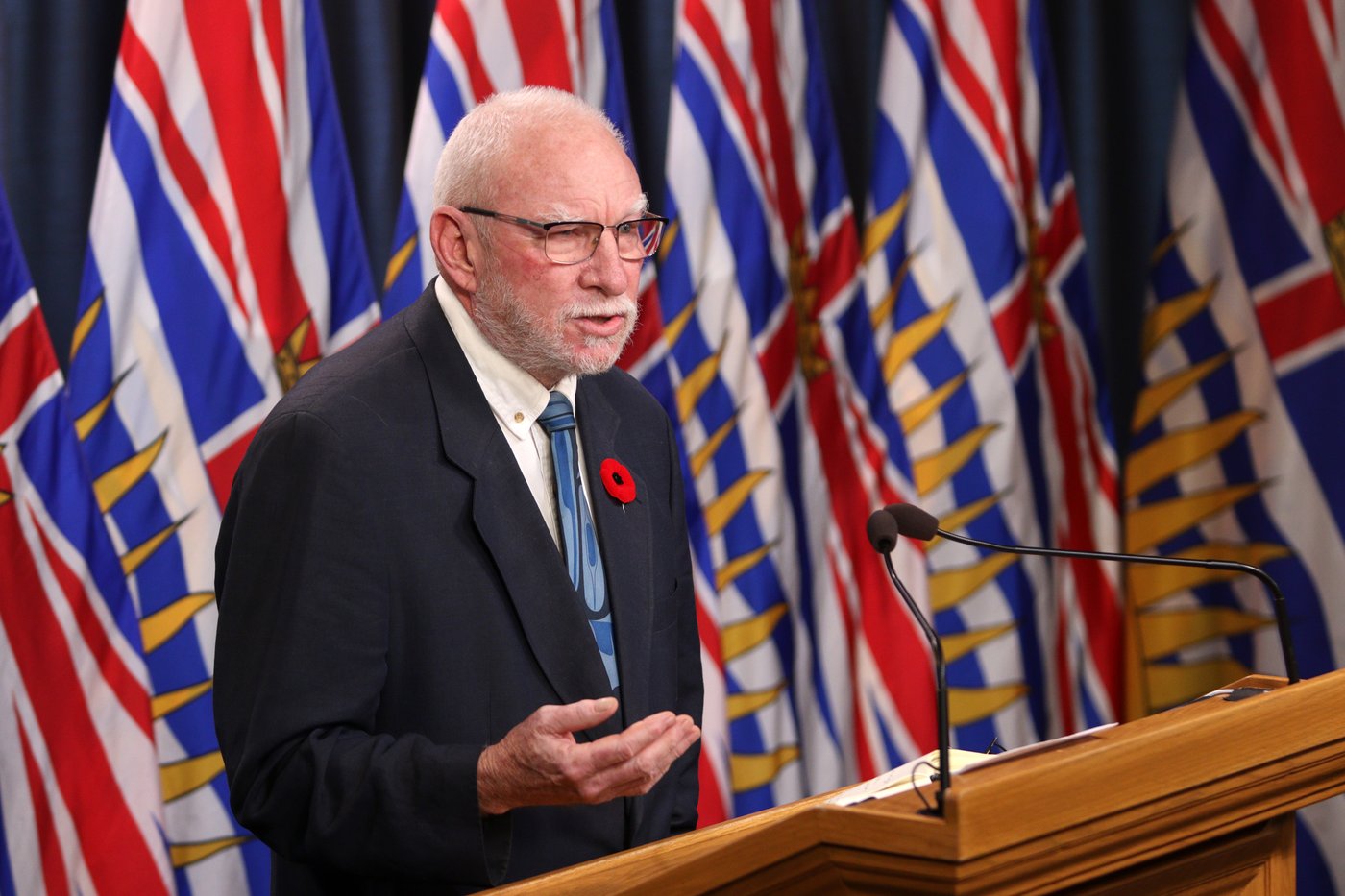
Campbell said at a news conference Tuesday that he was shocked at the “normalcy” of people stepping over others sprawled on the sidewalk in the city’s Downtown Eastside without anyone calling for help.
“I hadn’t experienced that before,” Campbell said. “In the past, if somebody was laying on a sidewalk, almost always a citizen or somebody would turn that person over, put them in a recovery position, and call for help.”
He said he needs another six months to complete his work as a provincial adviser on how to improve life for people in impoverished neighbourhood.
Campbell, who’s also the former chief coroner of B.C., said he thought he’d finish gathering information from people and organization in the first two months into the job.
“But it became rapidly clear that the numbers of organizations and groups and government organizations involved in the Downtown Eastside were way more than I had expected from my previous life,” he said.
The number of service groups in the Downtown Eastside has grown “exponentially,” but the problems of severe mental illness, addiction and inadequate housing are ever-present.
Campbell said the problem of brain damage suffered by addicts wasn’t something he had seen before fentanyl and other mixed chemical drugs were introduced into the illicit supply.
He said there’s a lot funding allocated to various support groups in the neighbourhood and he hopes that his report will spur “concrete” action on improving an area that has been rife with problems for decades.
“I’ve been looking at the organizations, both government and non-profits, and at the street level, there’s an amazing co-ordination that goes on,” he said. “But there’s a certain amount of fragmentation that goes on. There’s a lot of organizations and government that are overlapping.”
He said some single-room occupancy buildings are in such a poor state that they “should not be lived in,” and added that none of those residential buildings are safe for women, especially Indigenous women.
The neighbourhood has “changed dramatically” since he was mayor, Campbell said, but the problems around housing, addiction and mental illness are similar to what is happening in communities across the country.
“The Downtown Eastside is Canada. The Downtown Eastside is in everybody’s community,” he said. “What do we do? How do we help these people? How do we house them?”
Campbell said he hopes any report to the government coming out of his advisory work will spur “concrete action” rather than just be another report that’s “just going to sit on a shelf.”
“I certainly want to see some action on these things we’re talking about, both the accountability in the Downtown Eastside, the coming together of governments, and the coming (together) of ministries to work toward making things different,” he said.
This report by The Canadian Press was first published March 31, 2026
News from © The Canadian Press, . All rights reserved.
This material may not be published, broadcast, rewritten or redistributed.

Join the Conversation!
Want to share your thoughts, add context, or connect with others in your community?
You must be logged in to post a comment.