Elevate your local knowledge
Sign up for the iNFOnews newsletter today!
Sign up for the iNFOnews newsletter today!
Selecting your primary region ensures you get the stories that matter to you first.

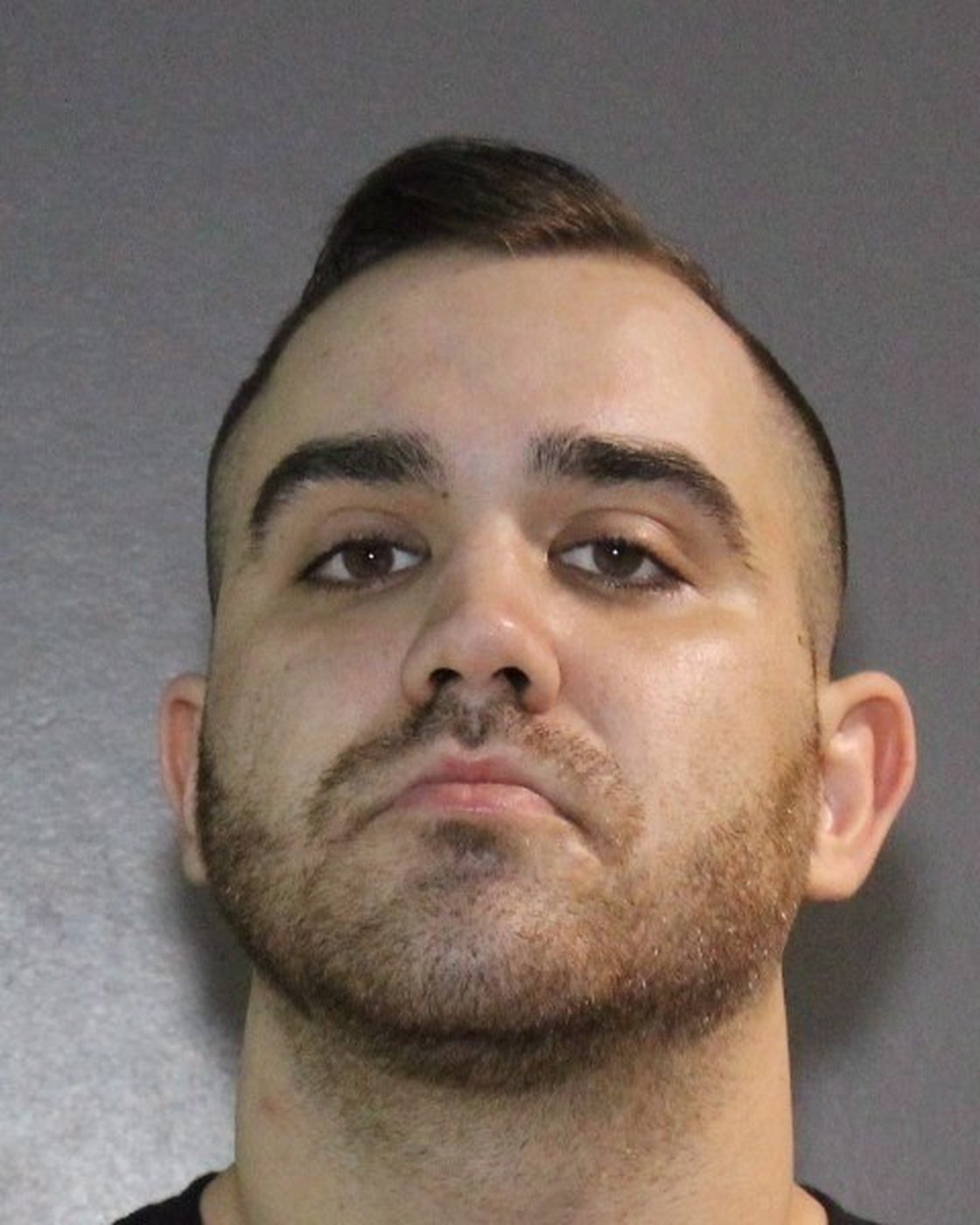
NEW WESTMINSTER — A convicted murderer has been sentenced to life in prison and a second 14-year-term in a case that a British Columbia Supreme Court judge says had all the “hallmarks of an organized killing.”
Brandon Teixeira was convicted of first-degree murder and attempted murder last year for what prosecutors described as an “execution-style” killing.
At his sentencing Wednesday in New Westminster, B.C., Justice Jennifer Duncan said the crimes are “a grim reflection on the ready access to and use of firearms in the Lower Mainland,”
“This case bore all the hallmarks of an organized killing – two guns, multiple attempts by cell phone to connect with a victim, and finally, a meeting on a dark residential street where the murder and attempted murder occurred,” she said.
“One man’s life was cut short, and one young woman’s life changed forever.”
Teixeira was convicted for the October 2017 shooting death of 28-year-old Nicholas Khabra and wounding a woman who drove the victim to meet Teixeira.
Duncan said she could not find that the attempted murder of the woman involved advanced planning and stopped short of imposing a second life sentence as the Crown had suggested.
Crown counsel Dianne Wiedemann said Teixeira was motivated by a $160,000 contract on Khabra’s life, which he planned to split with a second man, as well as vengeance against Khabra, who he believed was involved in planning a drive-by shooting targeting Teixeira days earlier.
A first-degree murder conviction comes with an automatic life sentence with parole eligibility after 25 years and Wiedemann argued the attempted murder was serious enough to also warrant a concurrent life sentence.
“Contract killings like this one strike at the heart of the sense of security that allows a community to function effectively,” Wiedemann told the court.
She said Khabra had four gunshot wounds and 31 stab wounds, “leaving a bloody and gruesome scene” when he died.
She told the court the woman who was shot twice in the leg was vulnerable, unarmed and unsuspecting, and her attempted murder “arose out of the commission of a planned and deliberate targeted contract killing.”
“This plan of meeting Mr. Khabra in the early morning hours, in a secluded area far from his home, by necessity, required the murder of a second person unrelated to the contract,” she said.
The woman, whose identify is protected under a publication ban, spoke in court about the impact the shooting has had on her life.
“Some days I feel strong and some days I feel completely broken,” she said, adding that Khabra “didn’t deserve what happened. None of us did.”
Teixeira’s lawyer, Reza Mansoori-Dara, said just because his client was convicted of first-degree murder doesn’t mean the jury necessarily believed it was a contract killing.
He also said that even if the contract killing had been proven, it was not relevant to the attempted-murder conviction.
Mansoori-Dara said his client does not have a long history of violence and that shooting the woman on her lower body suggested her vital organs were not the intended target.
Teixeira did not address the court during his sentencing hearing.
His lawyer argued the attempted murder conviction should result in a sentence of 12 to 15 years.
After the murder, Teixeira escaped to California, where he was living under an assumed name until his arrest in 2019.
He tried unsuccessfully to have the case thrown out on the basis that delays to his trial had infringed on his Charter rights.
This report by The Canadian Press was first published April 1, 2026.
News from © The Canadian Press, . All rights reserved.
This material may not be published, broadcast, rewritten or redistributed.

This site is protected by reCAPTCHA and the Google Privacy Policy and Terms of Service apply.
Want to share your thoughts, add context, or connect with others in your community?
You must be logged in to post a comment.















One response
The 14 year sentence will not affect his parole eligibility date. However the facts of the offense for which he was sentenced to 14 years will absolutely affect the consideration of parole when the 25 years have passed. The cold blooded nature of these offenses and using firearms as part of them makes parole a very unlikely chance. The while parole discussion even makes an assumption that he will survive that long. Guys in this lifestyle are also more likely to be murdered on the inside.
It’s just a guess…. but I am a very good guesses. I bet he did not collect even 10% of the $160,000 contract price.