Elevate your local knowledge
Sign up for the iNFOnews newsletter today!
Elevate your local knowledge
Sign up for the iNFOnews newsletter today!
Select Region
Selecting your primary region ensures you get the stories that matter to you first.
U.S. President Donald Trump appeared to cast doubt on the effectiveness of the two-week ceasefire over Iran’s continued chokehold on the Strait of Hormuz, while Kuwait accused Iran and its proxies of launching drone attacks despite the ceasefire.
Iran’s paramilitary Revolutionary Guard denied launching attacks Thursday night on Persian Gulf states.
Israeli Prime Minister Benjamin Netanyahu offered a potential boost to ceasefire efforts in the region when he said he had approved direct talks with Lebanon. The Lebanese government has not responded as of Friday morning.
The announcement came after Israel pounded Beirut Wednesday, killing more than 300 people. The negotiations are expected next week in Washington, according to a person familiar with the matter.
Questions remained over what will happen to Iran’s stockpile of enriched uranium at the heart of tensions, how and when normal traffic will resume through the Strait of Hormuz, and what happens to Iran’s ability to launch future missile attacks and support armed proxies in the region.
Talks between the United States and Iran on a resolution to the conflict are expected to start Saturday in Islamabad, with the White House saying Vice President JD Vance would lead the U.S. delegation.
Here is the latest:
Lebanon’s state-run news agency reports 8 State Security officers killed
The NNA news agency reported that Israeli warplanes on Friday struck near a State Security agency office in the southern town of Nabatieh, causing extensive damage at the government building. It said others were wounded in the strike and were being transferred to hospitals, without specifying how many.
There was no immediate comment from the Israeli military on the specific strike. Its Arabic-language spokesperson, Avichay Adraee, claimed that Israel had hit more than 120 Hezbollah militant sites in the past 24 hours.
Hezbollah has claimed a series of air and ground attacks against Israel in the last day after initially holding fire following news of the wider ceasefire deal in the Iran war.
Ceasefire deal brings relief to some in Iran, but Trump’s threat still echoes
Iranians have welcomed a fragile ceasefire deal after weeks of Israeli and American bombardment, but many fear the war is far from over. For some, there is also a sense of whiplash, after U.S. President Donald Trump threatened to wipe out their civilization hours before he reversed course and agreed to an uneasy truce.
The ceasefire that took effect Wednesday has brought relative quiet to the capital, Tehran, after more than a month of heavy strikes that targeted mainly government and security buildings but also destroyed many homes.
“Everyone I’ve spoken with, it’s given them a new life,” a university student told The Associated Press in an audio note via WhatsApp, speaking on condition of anonymity over fears for his safety.
AP spoke to half a dozen residents, despite an ongoing nationwide internet shutdown imposed during mass protests before the war.
Japan urges Israel and Hezbollah to reach a diplomatic settlement
Japan said it is deeply concerned about escalating Israeli attacks on Lebanon, urging all parties to immediately stop hostilities and comply with international law.
Foreign Minister Toshimitsu Motegi, in a statement Friday, expressed Japan’s “serious concern” over Israel’s ground operation against the Lebanese militant group Hezbollah, calling for respect for Lebanese sovereignty and territorial integrity.
Vance says he believes negotiations with Iran will be ‘positive’
Boarding Air Force Two on his way to Pakistan, the vice president said, “We’re looking forward to the negotiation. I think it’s gonna be positive. We’ll, of course, see.”
He cited Trump in saying, “If the Iranians are willing to negotiate in good faith, we’re certainly willing to extend the open hand.”
But Vance also added, “If they’re gonna try and play us, then they’re gonna find that the negotiating team is not that receptive.”
Vance also said that Trump “gave us some pretty clear guidelines” on how talks should go, but didn’t elaborate.
The vice president did not take questions from reporters traveling with him.
Some Israelis think Israel should ‘finish with’ Hezbollah before deal with Lebanon
In the streets of downtown Jerusalem, some Israelis said they believe peace with Lebanon is not possible before a decisive victory against the Iran-backed Hezbollah militant group.
“I think we should finish with them. After we finished with Hezbollah, we can try and make peace with Lebanon,” said Yaniv Matsree.
A little over a month of hiding in shelters has inconvenienced the lives of many Israelis, they said, but has done little to change their views of the war with Hezbollah that has killed more than 1,850 people in Lebanon, according to Lebanon’s health ministry.
For some Israelis, their country should press on to evade future threats from the militant group.
“The people of Israel want peace and seek peace, but those who want war will get war, and this war is very justified,” said Benhamo Momen, who fled from northern Israel, where the impact of the war is most severe. “Hezbollah will not disarm on their own.”
Gas price spike pushes up inflation by the most in 4 years in March
The largest monthly jump in gas prices in six decades caused a sharp spike in inflation in March, creating major challenges for the inflation-fighters at the Federal Reserve and heightening the political challenges of rising costs for the White House.
Consumer prices rose 3.3% in March from a year earlier, the Labor Department said Friday, up sharply from just 2.4% in February. On a monthly basis, prices rose 0.9% in March from February, the largest such increase in nearly four years.
Excluding the volatile food and energy categories, core prices rose 2.6% in March from a year earlier, up from 2.5% in February. But last month, core prices rose a modest 0.2%, suggesting the gas price shock hasn’t yet spread to many other categories.
The gas price shock stemming from the Iran war has shifted inflation’s trajectory from a slow, gradual decline to a sharp increase, further away from the Fed’s 2% target. As a result, the central bank will almost certainly postpone any cut in interest rates for months.
Gas prices are also a highly visible cost that has outsize impacts on consumer confidence and political sentiment.
Vance warns
Tehran not to ‘play’ the US as he departs for negotiations aimed at ending war with Iran
Vice President JD Vance is warning Tehran not to “play” the U.S. as he departs for Islamabad for negotiations aimed at ending the war with Iran.
President Donald Trump has tasked the member of his inner circle who has seemed to be the most reluctant defender of the conflict with Iran to now find a resolution to the war that began six weeks ago and stave off the U.S. president’s astonishing threat to wipe out its “whole civilization.”
Vance, who has long been skeptical of foreign military interventions and outspoken about the prospect of sending troops into open-ended conflicts, sets off Friday to lead mediated talks with Iran in the Pakistani capital of Islamabad.
It comes as a tenuous, temporary ceasefire appears to be on the precipice of collapsing. The chasm between Iran’s public demands and those from the U.S. and its partner Israel seems irreconcilable.
And in the U.S., where Vance might ask voters in two years to make him the next president, there is growing political and economic pressure to wrap it up.
Hezbollah leader urges Lebanese authorities not to give ‘free concessions’
In the first official statement from the militant group since Israel announced it would enter into direct negotiations with Lebanon, Hezbollah chief Naim Kassem said, “We call on (Lebanese) officials to stop offering free concessions,” but did not take a clear stance on the prospect of talks.
Kassem praised the performance of Hezbollah fighters battling Israeli forces in southern Lebanon and said Israel had been unable to make significant advances.
“We will not accept a return to the previous situation,” Kassem said, an apparent reference to the 15 months before the outbreak of the latest Israel-Hezbollah war, when a ceasefire was nominally in place but the Israeli military continued to carry out near-daily strikes in Lebanon that it said aimed to stop Hezbollah from regrouping.
Starmer says he’s ‘fed up’ in rare criticism of Trump
U.K. Prime Minister Keir Starmer told broadcaster ITV in an interview recorded Thursday that he’s “fed up with the fact that families across the country see their bills go up and down on energy, businesses’ bills go up and down on energy because of the actions of Putin or Trump across the world.”
Starmer’s point was that Britain needs energy independence. But mentioning the Russian and U.S. presidents in the same breath is a departure for the prime minister, who usually avoids direct criticism of U.S. President Donald Trump.
The Iran war has soured relations between the two leaders, with Trump lashing out over Starmer’s reluctance to join the conflict.
UK’s Starmer says ceasefire is fragile
British Prime Minister Keir Starmer says reopening the Strait of Hormuz is vital to strengthening a “fragile” ceasefire in the U.S.-Israeli war on Iran.
Speaking Friday as he left Qatar after a three-day visit to the Gulf, Starmer said leaders in the region were adamant that “there can’t be tolling or restrictions” on commercial shipping through the waterway, which has effectively been shut by Iran.
Starmer said he told U.S. President Donald Trump in a call on Thursday that ending the conflict “has to involve” Iran’s Gulf neighbors, who “have very strong views on the Strait of Hormuz.” Britain is involved with other countries in military planning to ensure security in the strait, if the ceasefire turns into a longer peace.
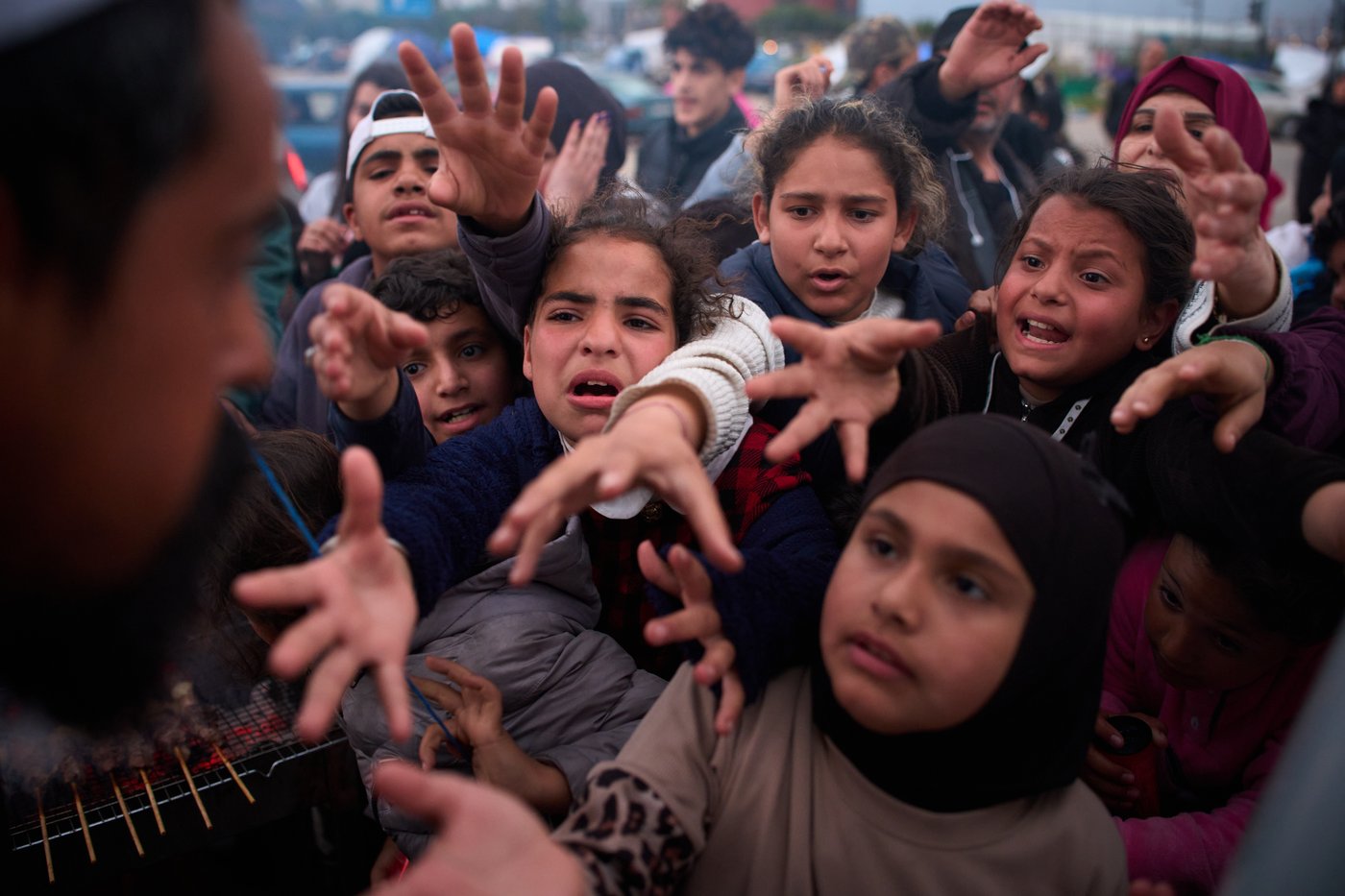
UN food agency steps up activities for nearly 1 million displaced in Lebanon
The World Food Program said that 874,000 people in Lebanon were already facing “acute food insecurity” before the latest escalation. Despite the risks, the WFP is continuing to send humanitarian convoys to southern Lebanon to villages on the border with Israel, which have been subject to heavy bombing, the agency said in a statement.
It says it has provided emergency food and assistance to over 440,000 people since March 2.
Lebanese are divided over negotiations with Israel
Some Beirut residents, desperate for any sign of the war ending, welcomed the prospect of talks between their government and Israel for the first time in decades.
“Negotiations are the only way to peace,” said Iyad al‑Kilani. “People are displaced, living on the streets. People aren’t living.”
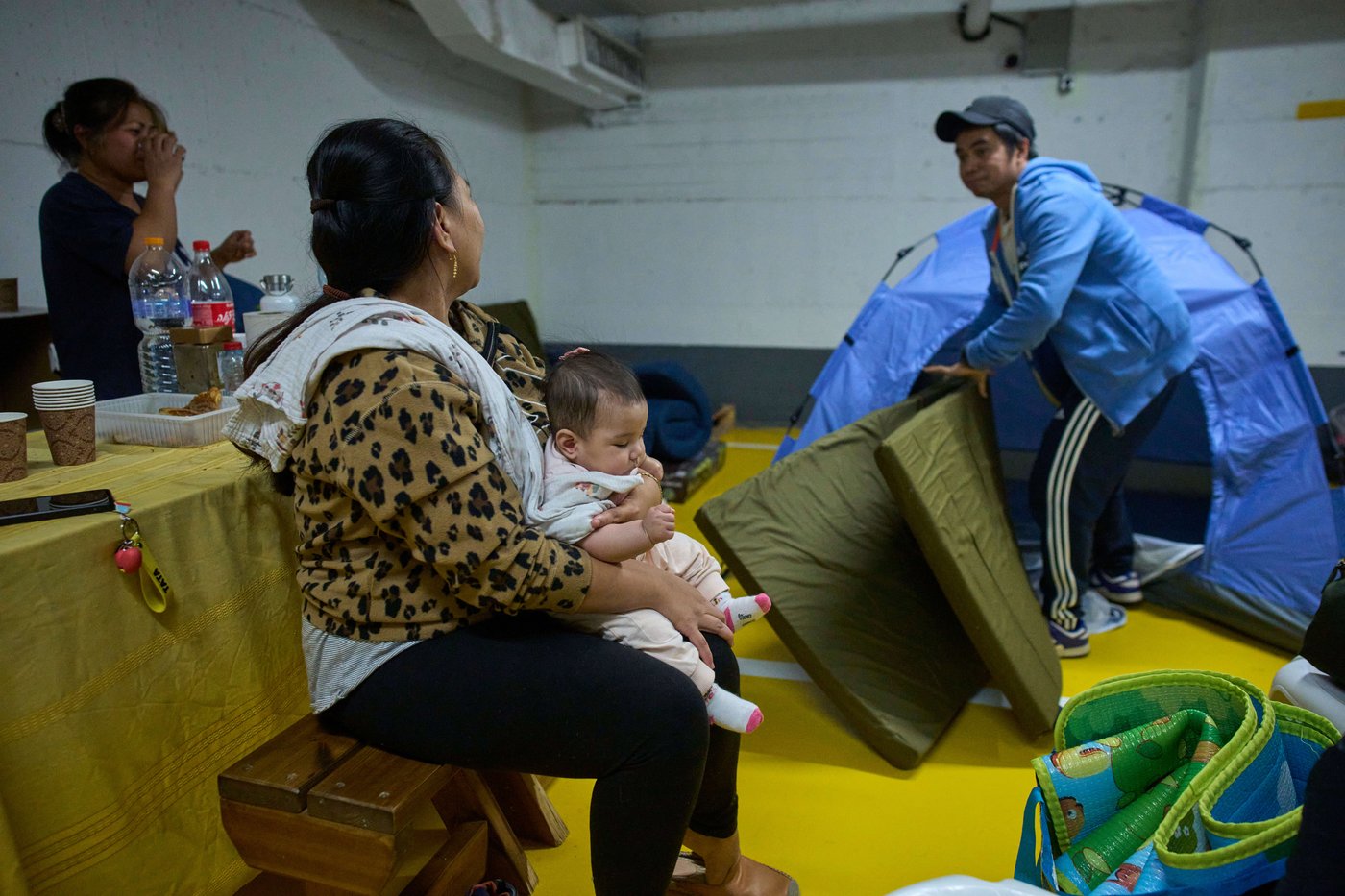
Other residents, sleeping in tents and cars after fleeing their homes in southern Lebanon, where Hezbollah is battling an Israeli ground invasion and heavy aerial bombardment, said they didn’t trust Israel’s intentions in the talks. “If we negotiate, we will be negotiating with someone who only understands force,” said Rabih Hammoud. “They (Israel) must stop the war and leave. Then we can talk.”
Israeli Prime Minister Benjamin Netanyahu says the Israeli military will continue strikes on the Iran-backed group while the talks in Washington focus on disarming Hezbollah. In just one of many obstacles, the Lebanese government has no direct control over Hezbollah. It also insists on a ceasefire before wider discussions about the future of Hezbollah can take place.
Beirut residents sift through the wreckage of their homes
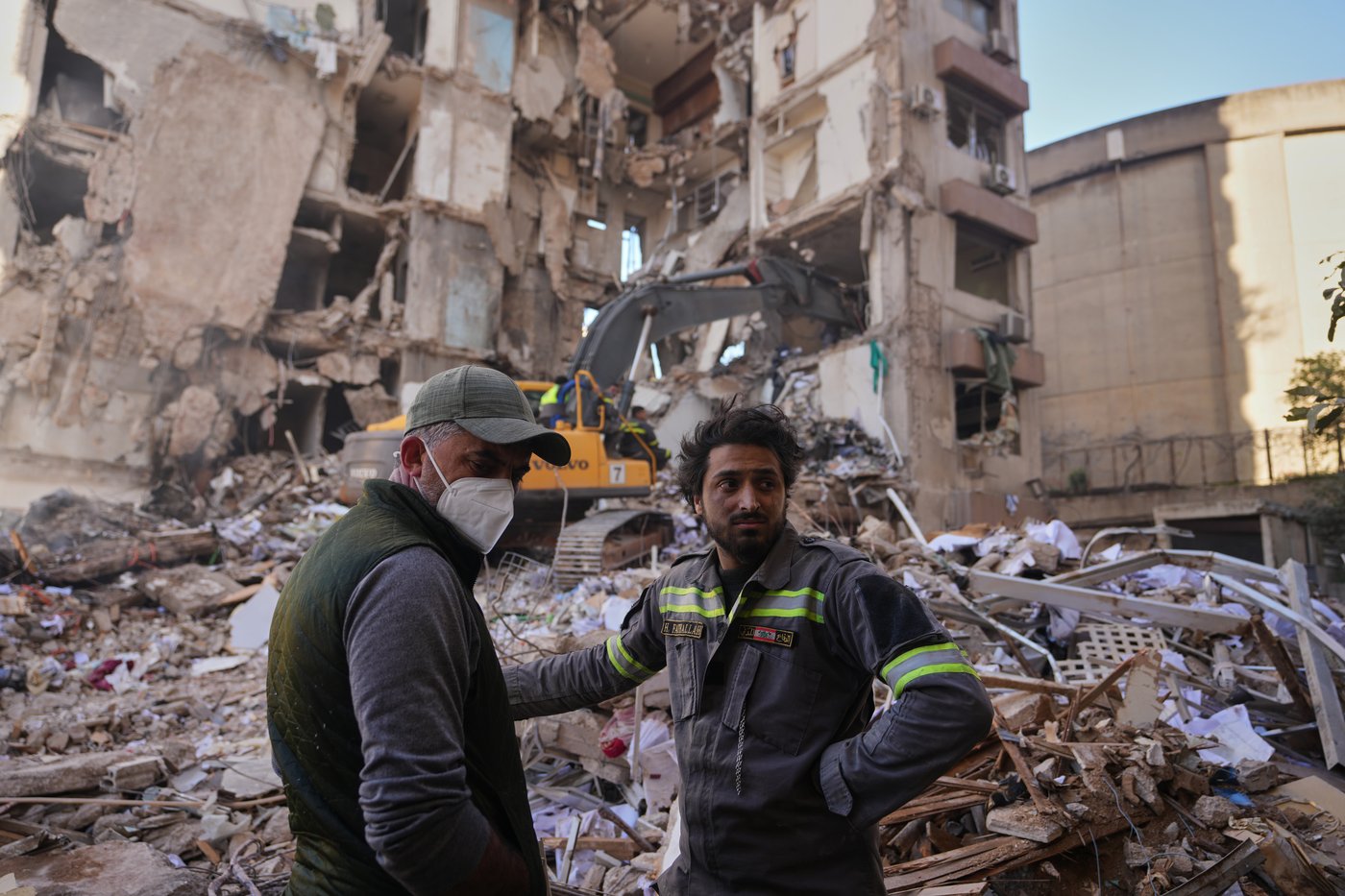
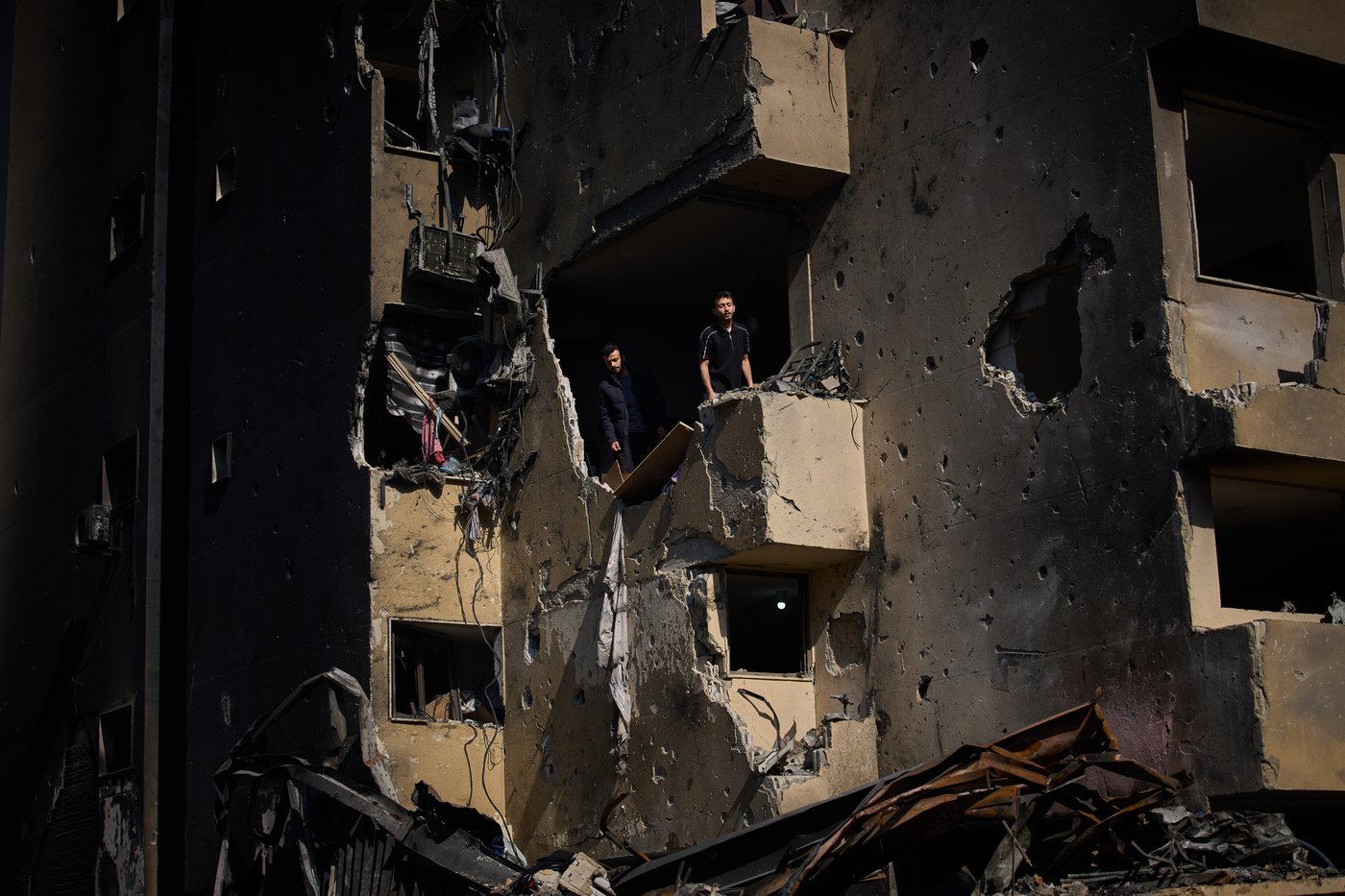
In the Ain al-Mraisseh neighborhood along Beirut’s coastal corniche, where an Israeli strike on Wednesday wiped out the bottom floors of a multistory building, causing a partial collapse, stunned residents tried to salvage whatever furniture and personal mementos they could find in the rubble.
Although now homeless, some men at the scene expressed gratitude that they lost only their apartments, not their loved ones. The strikes killed more than 300 people and wounded over 1,800, authorities said.
“There is no substitute for family,” said Wissam Tabila, 35. “Everything else can be replaced. The house and other things can be replaced, but parents, children, or a wife, this is the most important.”
WHO: Israel pledges not to attack 2 key Lebanese hospitals
The World Health Organization said Israel forces had previously issued an evacuation order for Beirut’s Jnah area, which includes the Rafik Hariri — the main public hospital in the city — and Al Zahraa Hospital.
WHO’s top representative in Lebanon said Friday that Israel provided “assurance” after late-night talks with U.N. officials that Israeli forces would not attack the hospitals as they continue military action against Hezbollah.
Dr. Abdinasir Abubakar, speaking to reporters in Geneva, said U.N. officials “got some assurance back saying that these two hospitals will not be attacked.”
Separately, Abubakar said Israeli forces warned that “ambulances will be attacked.” An Israeli army spokesman wrote on X that Hezbollah is “deliberately using ambulances for terror purposes.” Abubakar said WHO was not able to independently confirm those claims.
Iran official says over 3,000 people killed in the war
A top medical official in Iran has put the death toll in the war with Israel and the United States at over 3,000 people.
The state-run IRAN daily newspaper quoted Abbas Masjedi, head of the Legal Medicine Organization, as saying “more than 3,000 people were killed in enemy attacks.” Masjedi did not elaborate on the breakdown in civilian versus military casualties. Iran’s government has not provided any definitive death toll from the weekslong war.
South Korean president shares 2024 video of Israeli soldiers dropping body off roof
South Korean President Lee Jae Myung shared on his X account what appeared to be a 2024 video showing Israeli soldiers throwing a body from a rooftop in the occupied West Bank, and wrote: “humanitarian law must be observed under any circumstances.”
Lee, in his posts Friday, did not make a direct comment on the ongoing conflict in the Middle East or Israel’s current war operations, but said, “Lessons marked on the painful wounds of the past must not be repeated as recurring tragedies.”
Lee said the video, which he reposted from another account, was from a “shocking” incident in September 2024 that was also investigated by Israeli authorities. Lee’s office did not immediately provide an explanation for why he posted those messages. Lee’s government earlier on Friday said it was sending senior diplomat Chung Byung-ha as a special envoy to Iran to discuss the safety of its citizens and Iran’s chokehold on the Strait of Hormuz.
Singapore rules out restrictions on fuel exports
Singapore’s Prime Minister Lawrence Wong said the island state will not restrict fuel exports from its refineries due to Iran war disruptions. Singapore was Australia’s largest supplier of refined petroleum products.
“We do not plan to restrict exports. We didn’t have to do so even in the darkest days of COVID, and we will not do so during this energy crisis,” Wong said at a news conference with his Australian counterpart, Anthony Albanese. “It’s hypothetical. It won’t happen,” Wong added.
Albanese said Wong had given the same assurance in their bilateral meeting. “The prime minister’s just as confident in private as he is in public,” Albanese said.
Ukrainian forces shot down Shahed drones during Iran war, Zelenskyy says
Ukrainian military personnel shot down Iranian-designed Shahed drones in multiple Middle Eastern countries during the Iran war, President Volodymyr Zelenskyy said, describing the operations as part of a broader effort to help partners counter the same weapons used by Russia in Ukraine.
Zelenskyy made his first public acknowledgment of the operations Wednesday in remarks to reporters that were embargoed until Friday.
Zelenskyy said Ukrainian forces took part in active operations abroad using domestically produced, battle-tested interceptor drones.
Oil gains and Asian stocks are mostly higher ahead of planned U.S.-Iran talks
Asian stocks were mostly up Friday while oil prices also rose on the fragile Iran war ceasefire and ahead of Iran-U.S. negotiations in Pakistan over the weekend.
South Korea’s Kospi was up 1.5% to 5,862.58. Tokyo’s Nikkei 225 climbed 1.9% to 56,952.60.
Hong Kong’s Hang Seng gained 0.8% to 25,954.15, while the Shanghai Composite index was also 0.8% higher at 3,996.34.
Brent crude, the international standard, was 1% higher at $96.92 per barrel. Benchmark U.S. crude was up 0.8% to $98.62 a barrel.
For oil prices, “$65-70 a barrel is not coming back,” Ajay Rajadhyaksha of Barclays wrote in a recent research note, referring to the pre-Iran war oil price levels. The bank predicts that Brent crude could remain at around $85 per barrel on average for this year.
“A ceasefire is not a refund,” he wrote. “Ceasefires end wars; they don’t undo them.”
Islamabad locked down ahead of US-Iran talks
Pakistan’s capital fell unusually quiet Friday as authorities locked down Islamabad ahead of high-stakes talks between the United States and Iran aimed at securing a lasting ceasefire after weeks of war.
Roads lay nearly empty, checkpoints were set up at major arteries, and a two-day public holiday kept residents indoors.
Behind the calm, diplomatic activity intensified.
U.S. Vice President JD Vance is set to leave for Pakistan Friday, while an Iranian delegation was also expected there.
Security was tightened, with additional troops and police deployed across Islamabad.
Talks are set to begin Saturday, drawing global attention and placing Islamabad at the center of efforts to bring an end to the war.
Air defense fire and explosions heard in Iran
Multiple times overnight into Friday morning, people around Iran’s capital, Tehran, and other parts of the country said they heard what sounded like air defense fire and explosions.
However, Iran’s government did not acknowledge any attack during that period.
After past exchanges of fire with Israel, similar incidents happened as troops remained on edge.
Japan releases more oil reserves
Japan said it will release an additional 20 days’ worth of oil reserves in May, in a second round address supply uncertainty over the war in the Middle East.
Japanese Prime Minister Sanae Takaichi said the planned release of the government reserves will start in early May, after an earlier release last month.
Japan started releasing about 50 days’ worth of oil reserves in March, including from those held by the state, the private sector and oil-producing Gulf nations.
As of April 6, Japan had 230 days’ worth of oil reserves, including 143 days’ worth in government stockpiles, according to the Natural Resources and Energy Agency.
Takaichi said her government is working to secure oil imports via routes that do not include the Strait of Hormuz, while Japan seeks to diversify suppliers.
Pakistan to issue visas on arrival ahead of talks
Pakistan said Friday it would issue visas on arrival for those traveling to Islamabad for the Iran-U.S. talks, signaling the interest in the world’s media in the event.
News from © The Associated Press, . All rights reserved.
This material may not be published, broadcast, rewritten or redistributed.

This site is protected by reCAPTCHA and the Google Privacy Policy and Terms of Service apply.
Want to share your thoughts, add context, or connect with others in your community?
You must be logged in to post a comment.