Elevate your local knowledge
Sign up for the iNFOnews newsletter today!
Elevate your local knowledge
Sign up for the iNFOnews newsletter today!
Select Region
Selecting your primary region ensures you get the stories that matter to you first.
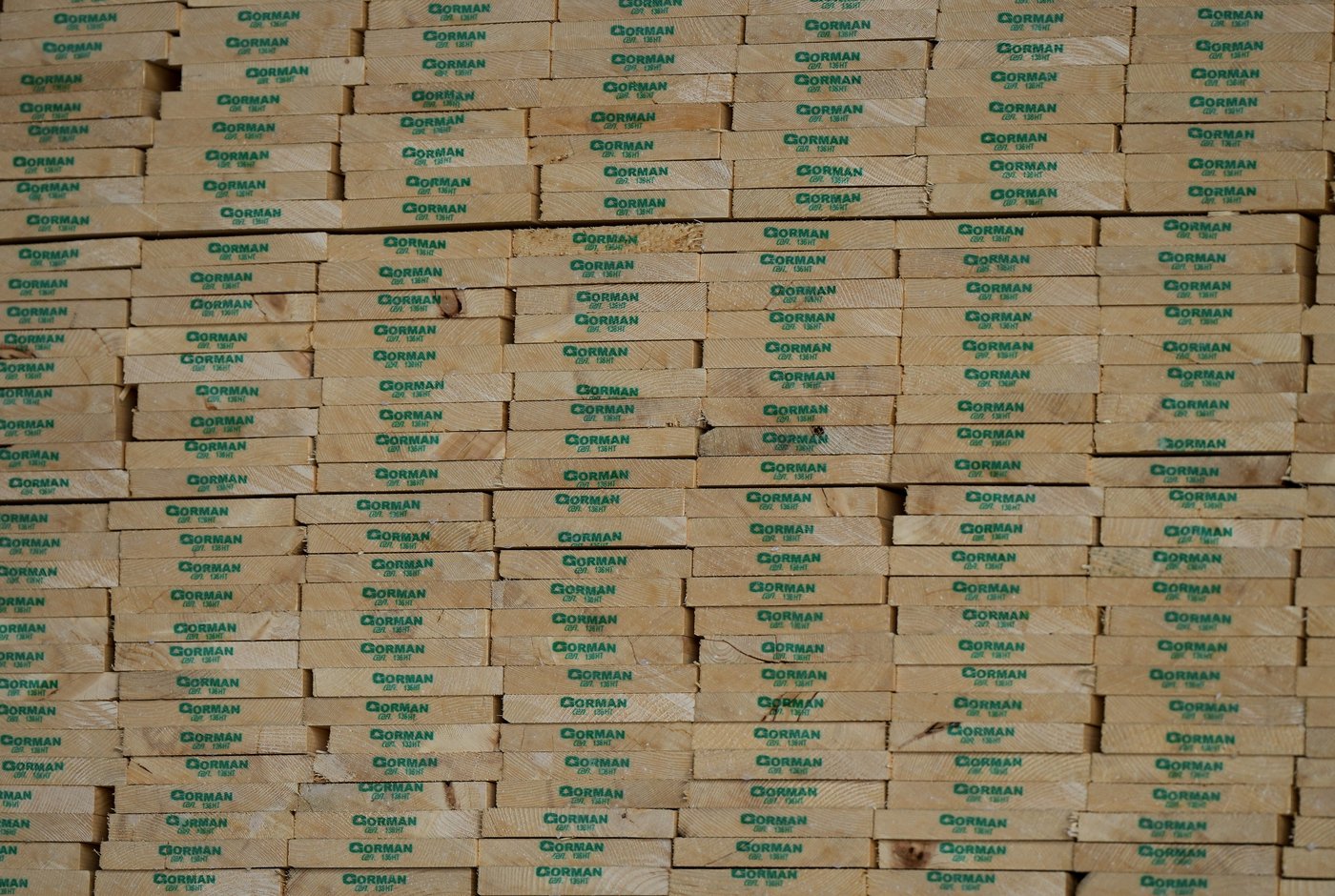
VANCOUVER — Ottawa must make a case of “mutual benefit” with the United States as it advocates for Canada’s softwood lumber industry during trade negotiations, British Columbia Premier David Eby said Friday.
The United States cannot produce enough wood to meet its domestic demand and instead of looking to Canada, it has “dramatically” increased imports from Europe and Russia to fill the gap, Eby said.
“It is more expensive for American consumers. It drives up the cost of home building,” he told delegates at the annual Council of Forest Industries convention in Vancouver.
The premier’s remarks came after the U.S. Department of Commerce posted its preliminary tariff determination for the sector, with total duties estimated at just short of 25 per cent, lower than the current rate of more than 35 per cent.
Eby said duties collected by the United States in the long-standing dispute could be used to develop the sector in both countries.
“There’s $8 billion in a tariff bank account that is jointly held between Canada and the United States,” he told media ahead of his address at the convention.
“(It) could go support forest manufacturers on both sides of the border, all of whom are struggling right now, partly due to trade policy, partly due to low lumber prices.”
Eby said Friday his government has been working to raise the profile of the forest sector with Ottawa, describing it as bigger than the steel and auto parts industries, with a greater impact on Canada’s GDP.
“Part of that means encouraging the federal government, when the Americans come to the table, prioritizing the sector for negotiation and for settlement with the U.S.,” he said.
Kim Haakstad, president of the Council of Forest Industries, agreed with the premier, saying it’s important for B.C. to ensure softwood lumber doesn’t “get lost” among other industries based in Eastern Canada.
While the dispute wears on, the forest sector is facing “really challenging times,” she said, with more than 20 mills closing in the province in recent years.
B.C.-based groups representing lumber producers and wood processors issued statements in reaction to the latest softwood ruling from the United States, saying the duties hurt the sector in both countries.
The Independent Wood Processors Association said the U.S. ruling was “further evidence” the softwood lumber dispute mechanism has become a “broken process” that punishes businesses and consumers on both sides of the border.
The group said wood manufacturers do not hold timber tenures, harvest Crown timber or receive subsidies, and shouldn’t be included in the dispute.
“Our businesses buy wood the same way American companies do — we go into the market and pay the market price,” executive director said Brian Menzies said in a statement.
“This is beginning to look less like trade enforcement and more like protectionism masquerading as trade policy.”
After nearly a decade, Menzies said it’s clear the current dispute-resolution mechanisms aren’t working.
An existing process in the Canada-United States-Mexico Agreement, also known as CUSMA, has not yielded meaningful progress, the group said.
It called on both governments to “break the cycle of endless litigation” and prioritize direct negotiations.
“If the U.S. industry has real concerns, then let’s hear them,” Menzies said. “Enough hiding behind paperwork, bureaucracy, and endless administrative rulings.”
“Businesses on both sides of the border need certainty,” he said.
The wood processors association said that while it appears tariffs may be lowered, it cautions there is still uncertainty on whether the final rate — expected in August — will actually represent a reduction of the current duty.
The BC Lumber Trade Council, too, said an additional 10 per cent tariff imposed by the U.S. government last fall means total duties could remain close to 35 per cent.
The latest decision shows Canadian lumber producers continue to face “unjustified and punitive trade measures that hurt workers, communities, and families on both sides of the border,” council president Kurt Niquidet said in a statement.
“Americans are already facing elevated housing costs and a shortage of homes,” he said. “These duties continue to make it more expensive to build homes at a time when both countries should be working together to improve housing affordability.”
B.C. Forests Minister Ravi Parmar said the province was disappointed the United States had “signalled that it will continue to impose unwarranted and unfair duties on Canadian softwood lumber products.”
“These duties serve only to damage both of our economies by harming B.C. and Canadian communities, and increasing the cost of housing and renovations for American families,” he said.
This report by The Canadian Press was first published April 10, 2026.
News from © The Canadian Press, . All rights reserved.
This material may not be published, broadcast, rewritten or redistributed.

This site is protected by reCAPTCHA and the Google Privacy Policy and Terms of Service apply.
Want to share your thoughts, add context, or connect with others in your community?
You must be logged in to post a comment.