Elevate your local knowledge
Sign up for the iNFOnews newsletter today!
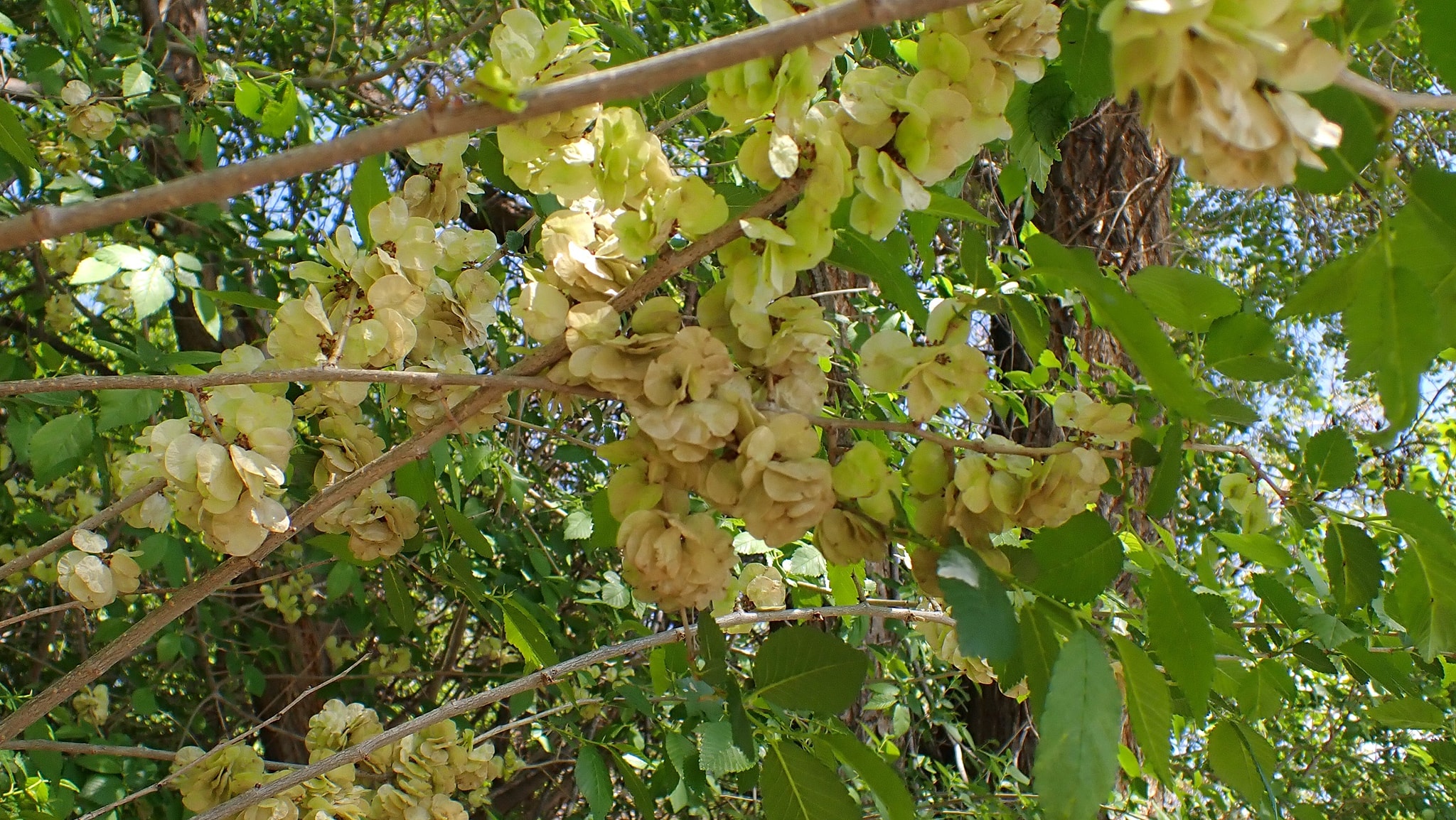
Growing on public and private properties throughout the Thompson-Okanagan, the invasive Siberian elm tree is one of the most prolific reproducers and hardest to get rid of.
Originating in China, the deciduous trees grow up to 21 metres tall, and every spring they drop thousands of tiny seeds encased in papery wings.
For longtime Kamloops gardener Darlene Doricic the trees are a regular pain.
“They take over everything and grow exponentially every year, you can’t even keep up with cutting them down,” she said. “In a couple of weeks, my entire yard will be covered with seeds from this thing.
“They’re easy enough to clear away but there are so many you could never get them all. I’ll be plucking out all the saplings.”
Some elms have woven into Doricic’s chain link fence. Her large yard backs onto a public road where several elms are growing along a ditch on city property. The elms also grow on the river near her house.
“Because of where we are, seeds just blow into our yard, it’s beyond anything we can manage,” she said. “It’s an ongoing problem for the gardening community here, you learn to live with it the best you can.”
Property owners have their hands full with the elms for a number of reasons.
The elms grow quickly, can form thickets and reproduce vigorously through seed and stump sprouts, according to the Thompson-Nicola Regional District.
The most effective way of getting rid of them is through stump removal, however other mechanical methods of removing include girdling and uprooting smaller trees. Some herbicides can control the culprits either by applying on leaves when the trees are young or cutting into the trunk and squirting herbicides into the cut.
Siberian elms were one of four invasive species removed from public land throughout the South Okanagan as part of a three-year project headed by the Okanagan and Similkameen Invasive Species Society. The society also created demonstration sites on municipal land in Penticton, Oliver and Summerland.
The removed trees are being replaced with native trees and shrubs to enhance habitat for native wildlife and increase species diversity. The elms out compete native plants and threaten local ecosystems, alter hydrology, contribute to soil degradation and act as a preferred host for the invasive elm seed bug, among other harms.
“This is a project that helps support our Urban Forest Management Plan goals,” City of Penticton parks supervisor Todd Whyte in a media release. “Removal of invasive trees will help increase biodiversity in the area and it will also limit the spread of invasive trees throughout the city.”
Part of the project goal is to encourage private property owners to follow the same process.
The invasive species society provides tips for property owners to minimize the spread of invasive plants here.
Go here to report invasive species sightings to the Invasive Species Council of BC to help them identify and manage invasive species, including areas with new infestations.
News from © iNFOnews.ca, . All rights reserved.
This material may not be published, broadcast, rewritten or redistributed.

This site is protected by reCAPTCHA and the Google Privacy Policy and Terms of Service apply.
Want to share your thoughts, add context, or connect with others in your community?
You must be logged in to post a comment.