Elevate your local knowledge
Sign up for the iNFOnews newsletter today!
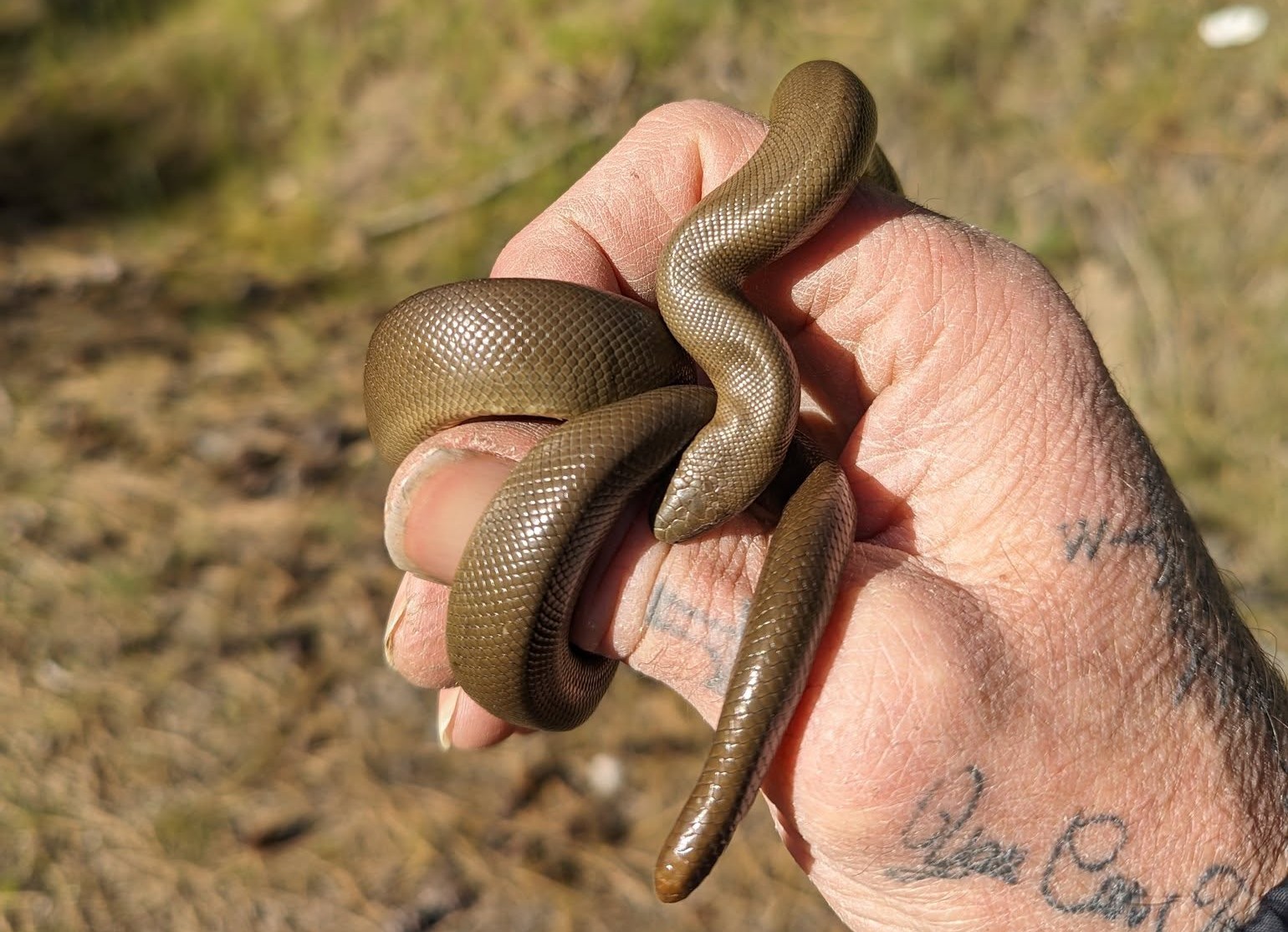
It appears warm spring weather has brought out snakes in the Thompson-Okanagan region and some nature lovers are finding northern rubber boas basking on the trails.
The smooth, rubbery looking snakes are the only species of boa in the country and the most docile species of snake in the province, known to curl around a wrist peacefully when picked up.
South Okanagan resident and avid hiker Rick Heddle came across a northern rubber boa in the middle of a trail on in the morning of April 27. He picked up the snake it curled around his hand.
“It was dead centre of the walking path and we’d had an unusually cold night so I assume it was grabbing some sun and trying to warm up,” he said.
“He wasn’t moving very fast so I just moved him to some safe cover and he took right off, he was super docile.”
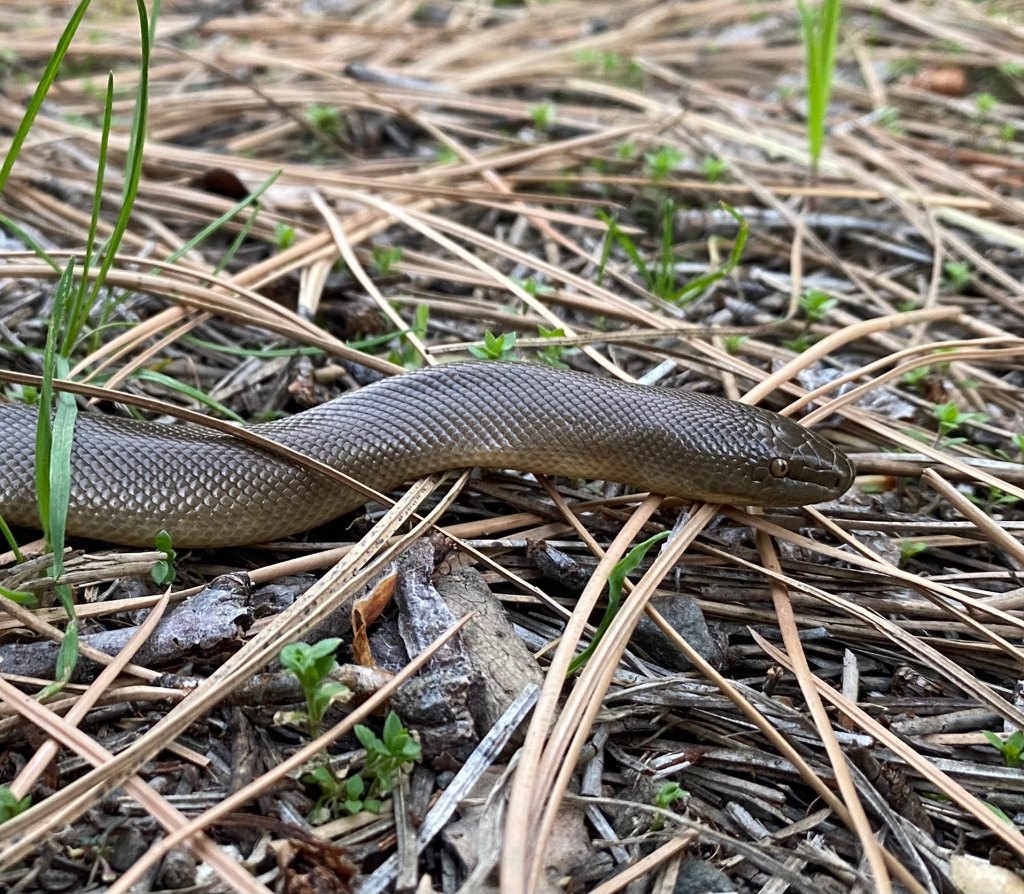
North Okanagan resident Duke Peters has seen several of the snakes while cycling in the evening this spring, and captured photographs of one a few days ago.
“They are an amazing snake and definitely very relaxed in contrast to other snakes I’ve encountered,” he said in a message to iNFOnews.ca.
“My encounters with the boas have primarily been to urge them off the road.”
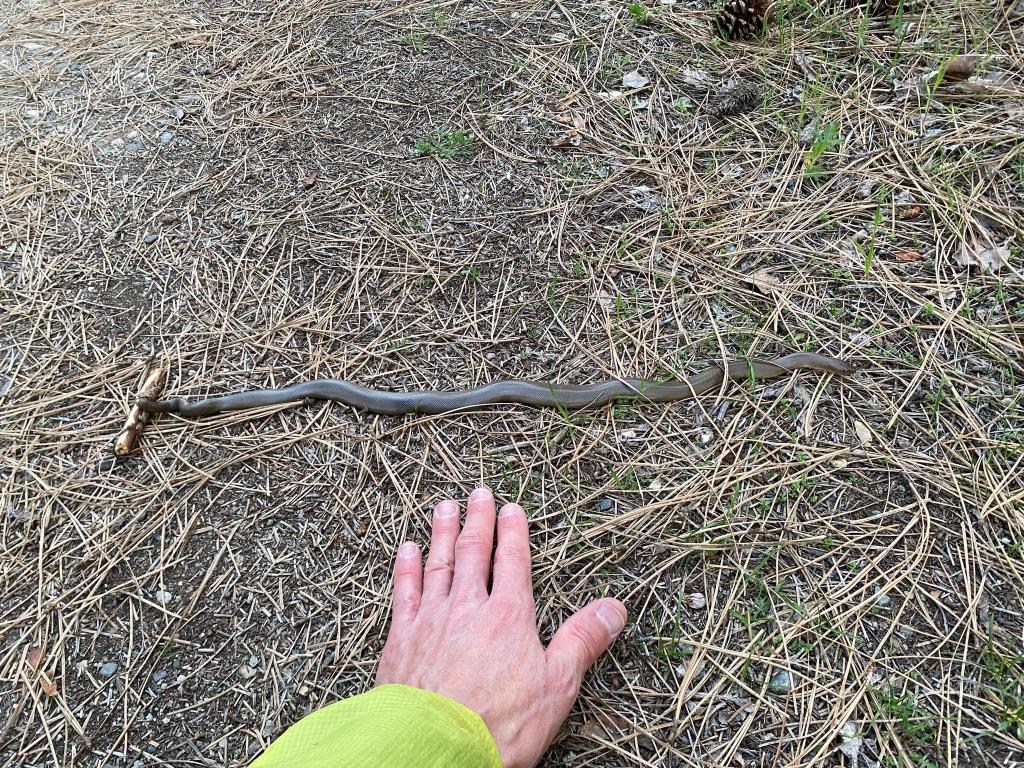
Northern rubber boas are found in North America across the Pacific Northwest as far south as northern California, according to the B.C. government’s B.C. Reptiles and Amphibians website. In BC, they are found as far north as Quesnel with high densities in the southern part of the province and along the US border.
The snakes are small and distinctive looking with thick bodies and solid colouring. Their skin is loose with smooth scales that give them their unique rubbery appearance.
Northern rubber boas overwinter in dens in rocky crevices below the frost line before emerging in spring to mate.
At this time of year, they are out during the day to warm up and in the summer will be nocturnal to avoid the heat. They will give birth to up to eight live young in late summer.
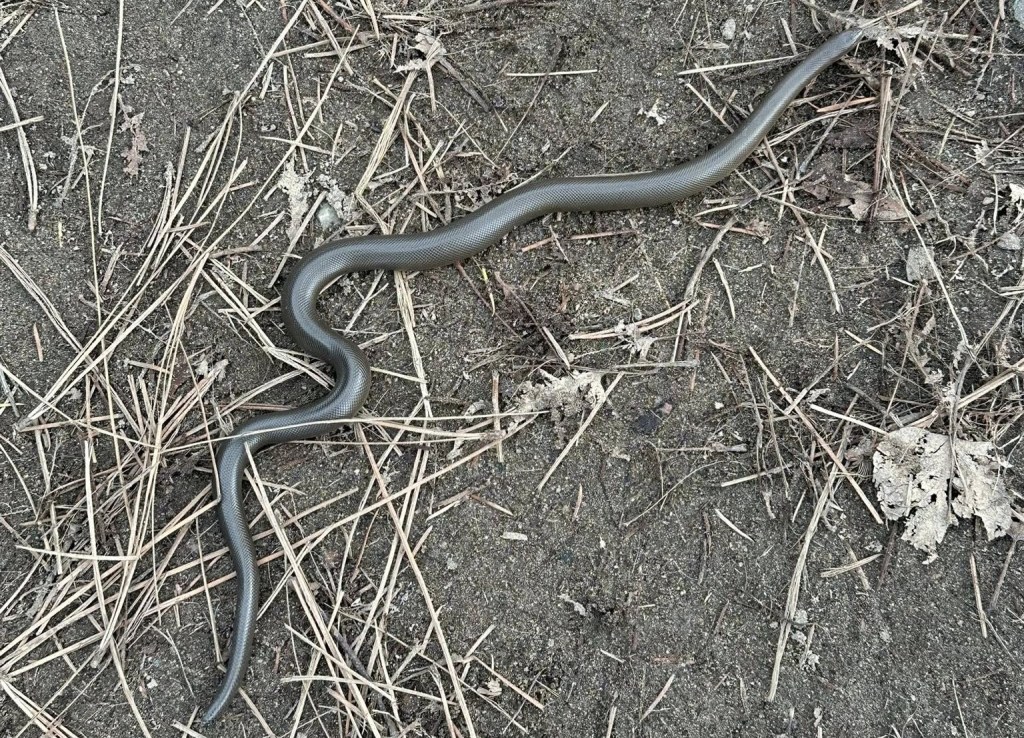
Their favourite snacks are newborn mice and shrews which they get by invading rodent nests.
When being attacked by a predator the snakes curl into a ball and tuck their heads into the middle of it, then they harden the ends of their tails and wave them about. If further provoked , they release a smelly odour.
While the snakes are yellow-listed according the BC Conservation Status Ranking and therefore not considered at risk of extinction, their patchy distribution and low reproductive rates combined with habitat loss could lead to population declines.
All wildlife in B.C. is protected under the Wildlife Act. Amphibians and reptiles are considered ‘wildlife’ and it is illegal to capture, possess, move, harm or kill them.
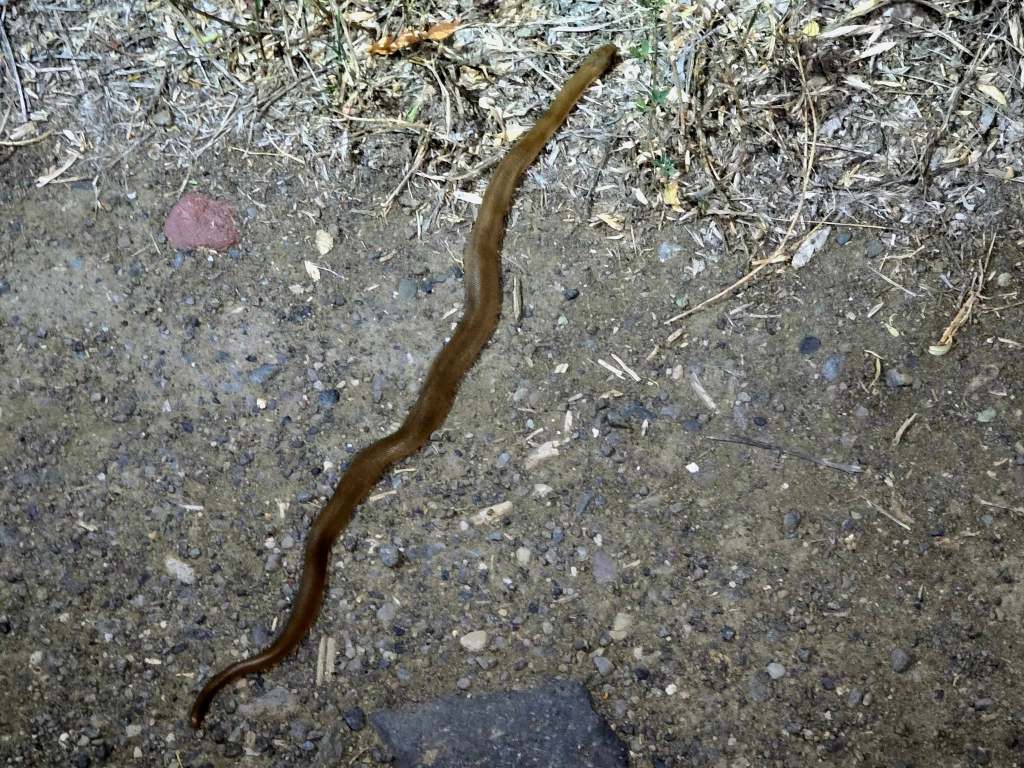
If you find a northern rubber boa you can send a photo of it with its location, date and time to the BC Boa Project, a citizen science initiative that collects data to better understand and conserve the snakes in the region.
News from © iNFOnews.ca, . All rights reserved.
This material may not be published, broadcast, rewritten or redistributed.

This site is protected by reCAPTCHA and the Google Privacy Policy and Terms of Service apply.
Want to share your thoughts, add context, or connect with others in your community?
You must be logged in to post a comment.