Elevate your local knowledge
Sign up for the iNFOnews newsletter today!
With their son in the throes of a mental health crisis last November, Bill and Faith Piersing did what they’d been told to do countless times before: They dialed 911.
The couple were hoping for a helping hand to deescalate the situation and transport him to a hospital.
Instead, the law enforcement officers who showed up at their home seemed intent on arresting their son, sparking an altercation that would quickly escalate, Bill Piersing told Bridge Michigan.
“They came in the house and made him a felon,” he said.
Bailey Piersing, the 23-year-old son with bipolar type schizoaffective disorder, did not respond well. His parents say he resisted arrest, bit an officer and was tased multiple times before he was taken to the hospital, and then jail.
On Monday, he was sentenced to 10 months in jail and 30 months of probation on a felony count of assaulting, resisting or obstructing a police officer causing injury, with credit for 148 days already served, Ottawa County court records show. The agreement was part of a plea deal, down from two felony counts.
After years of taking his son to appointments and working to connect him with appropriate treatment and resources, “all I know is the results of my efforts have been futile,” Bill Piersing said. “A lot of people understand, but nobody can do anything.”
A spokesperson for the Ottawa County Sheriff’s Office was not available to discuss the arrest, and Bridge Michigan’s Freedom of Information Act request for the incident report remains pending.
“It is clear all aspects of this case, including the mental health of the defendant and the injuries to our law enforcement officers, were considered and presented to the court who made the ultimate determination of sentencing,” Ottawa County Prosecuting Attorney Sarah F. Matwiejczyk said in a statement.
The Piersings’ experience is far from unique as families, friends, officials and law enforcement agencies across Michigan grapple with how to respond to mental health emergencies in which an already unpredictable situation can quickly turn volatile.
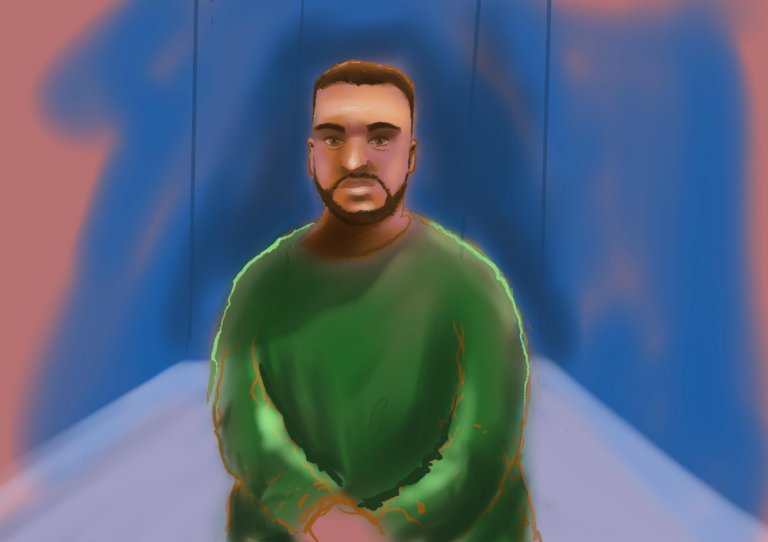
The debate was thrust into the spotlight earlier this year, when a 911 call reporting a man’s erratic behavior with a sword in Ypsilanti triggered a more than 30-hour standoff involving multiple law enforcement agencies, a SWAT team and a wide range of police tools like tear gas and flashbangs. The man, Ruben Peeler, was charged with multiple felonies for resisting arrest, sparking community backlash and calls for meaningful reform.
Advocates for change point to myriad solutions that could help improve outcomes, from increasing participation in crisis training for law enforcement to making unarmed mental health professionals primary responders in certain situations. In the state Capitol, lawmakers are considering bills aimed at improving access to outpatient mental health treatment.
The goal should be early intervention, said former Wayne County probate judge and state court administrator Milton Mack.
He likened the current process for getting mental health treatment to telling someone with cancer to “come back when you’re stage four.”
“We should treat people before they become homeless, before they get incarcerated, before they become permanently disabled,” said Mack, who helped draft many of the legislative recommendations. “This is fixable. We can do a better job.”
Call and response
Though there have been growing calls statewide for alternatives, experts say a 911 dispatch remains the go-to option in situations where a person experiencing a mental health crisis is in danger of hurting themselves or others.
Nearly 12.5 million people contacted 911 in 2024, according to the latest annual report from Michigan’s State 911 Committee. While state statistics don’t specifically track how many of those calls are related to mental health emergencies, researchers estimate that at least 10% involved behavioral health crises.
In the city of Detroit alone, police said they responded to more than 16,000 mental health calls in 2024, about 40 calls a day.
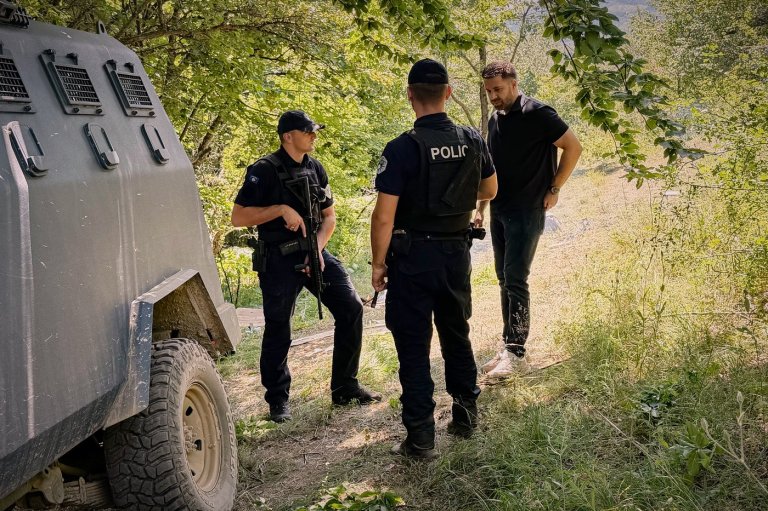
To help streamline response, Detroit’s department has a mental health co-response unit that features trained officers and behavioral specialists. Some communities, including Washtenaw and Oakland counties, have designated local mental health crisis helplines operated by community mental health officials.
Several agencies across Michigan have established crisis intervention teams, an evidence-based model designed to build community partnerships between law enforcement, mental health and addiction professionals and people with lived experience of mental illness.
Statewide, about 15% of sheriffs and police chiefs say they’ve implemented some kind of alternative response program for mental health calls, according to the spring 2024 Michigan Public Policy Survey conducted by University of Michigan’s Center for Local, State and Urban Policy.
Lawmakers in 2025 approved funding for a new state office to work with agencies on creating or improving crisis intervention teams. The process entails 40-hour, in-person training sessions that familiarize first responders with mental health disorders, de-escalation tactics in crisis situations and people actively managing their own or their loved ones’ mental health conditions.
“You can’t afford not to invest in this,” said Kevin Fischer, executive director of both the state’s CIT office and the National Alliance on Mental Illness Michigan, pointing to research showing that communities that have adopted the model have experienced an increased use of behavioral health care resources and overall cost savings, as well as reductions in use of force and injuries to officers and civilians.
One big issue Michigan’s office is facing: because there are no formal regulations or requirements, it’s hard to tell which Michigan communities with crisis intervention teams are using best practices, Fischer said.
Another issue is long-term funding. The office, which operates on a $500,000 budget, won’t be funded past October if it’s not included in the next state budget currently being negotiated in the Legislature.
“A half million dollars is a drop in the bucket compared to the return on investment,” Fischer said. “It’s anywhere from three to 10 times more expensive to incarcerate a person with a mental illness than it is to get them services through the community mental health system.”
‘It just depends on who you get’
Increased mental health training isn’t necessarily a guarantee for positive outcomes in emergency situations.
In October 2022, a response team led by a crisis intervention-trained officer in Detroit shot and killed a man with schizophrenia experiencing a psychotic episode, prompting a wrongful death lawsuit.
And in Ypsilanti, the county’s crisis negotiation team was involved in the multi-day response to the mental health call for Peeler, who barricaded himself in his home with a sword as responders attempted to make contact. Law enforcement eventually used tear gas, a fire hose and punched a hole through the front of the house to retrieve Peeler.
The Washtenaw County Sheriff’s Office at the time credited responders’ “unwavering dedication to service” as the reason why no one was seriously injured or killed, but neighbors and community members have insisted that law enforcement did not handle the situation appropriately.
Matt Saxton, CEO and executive director of the Michigan Sheriffs’ Association, told Bridge Michigan that law enforcement has seen far more interactions with people with mental health concerns in recent decades since the closure of state-run psychiatric hospitals in the 1980s and 1990s.
It’s not unheard of, he said, for law enforcement to get called to emergency rooms to assist with people in mental health crises who are acting out. Many individuals “get lodged in a county jail when really they need medical mental health treatment” if their response to intervention turns volatile.
“Law enforcement, to a great extent, tries everything that they can do to use the least amount of force necessary and try to de-escalate the situations,” he said. “But in some cases, those individuals mentally aren’t in the spot where they can de-escalate with conversation…so it is difficult.”
Ottawa County, where the Piersings live, has had a crisis intervention team since 2021, and has also launched a co-response program where clinicians respond with the sheriff’s office and Holland Police Department to behavioral health crisis calls.
Currently, that co-response team is only available during weekdays. But Tim Piers, director of crisis services at Ottawa County Community Mental Health, said the county is actively working to expand it 24/7 and hopes to be fully operational by the end of the year.
“As we’re building out the service, the community needs to be able to count on it every time, and it’s very important to us that they are able to do so,” Piers said. “It’s going to be just a really critical service for our community, because behavioral health crises continue to be something our community is identifying as an issue that we can address better.”
The team currently responds to between 1,200 to 1,500 behavioral health crisis calls a year, Piers said, but noted that’s during business hours. Going by national averages, he said the county could have as many as 10,000 to 20,000 calls per year that could be served by behavioral health professionals.
“We’re working really hard to give them the kind of services that we would all want for our family member or our neighbor or anyone facing that kind of situation,” Piers said.
The Piersings believe more focused training for officers on how to respond to mental health emergencies might have helped in their situation in Grand Haven and potentially prevented the altercation that landed their son in jail.
Prior to the November 2025 call that led to his eventual arrest, their son had been taking medication and going to appointments at Ottawa County Community Mental Health, but struggled to connect with his caseworker, and the family had required emergency assistance on other occasions.
“If you call in a mental health emergency like we had done previously, it just depends on who you get,” Bill Piersing said. “The previous time, they took him to the hospital as requested. This time turned into an ordeal.”
The Piersings said they’d managed to calm their son down enough to agree to go to the hospital and told the two responding officers they no longer needed their assistance, but that the officers insisted on making contact and the situation escalated quickly from there.
“He was trying to fight back in any way he could, and a bite — that was it,” Faith Piersing said. “They had him down on the ground.”
Barriers to reform
A wide majority of local sheriffs and police chiefs are on board with improving mental health responses. But many don’t see a viable pathway to getting it started in their communities.
As of 2024, more than 80% of county sheriffs and local police chiefs supported some type of alternative approach for responding to 911 mental health calls, the 2024 University of Michigan survey found.
Support was highest for co-response, which involves adding behavioral health specialists to a team of trained law enforcement. As a group, law enforcement leaders were more skeptical of allowing autonomous non-police mental health experts to handle mental health calls, an approach favored by some advocates.
Nearly 60% of police chiefs and more than half of sheriffs who responded believed lack of funding, staffing concerns and the added difficulties of keeping civilian responders safe would make it hard to adopt such an approach in their communities.
Debra Horner, the survey’s senior program manager, said it’s easier for urban communities to envision novel approaches to mental health response in part because there are more specialists available. In small towns where dollars and personnel are already stretched thin, it’s a tougher sell without additional support, she said.
“If you’re in a small, rural county…your sheriff’s department doesn’t have people who they can call upon to take out with them on some of these calls,” Horner said, later adding: “In the places in which it’s relatively easy to develop and initiate this, they’ve done it.”
Fischer, who runs the state’s crisis intervention team office, said rural communities are equally susceptible to mental illness, yet typically have the lowest access to behavioral health care resources.
Even in communities where those resources aren’t available, there are options responding agencies can take, he said. Both he and Saxton of the Michigan Sheriffs’ Association cited one option where officers carry iPads into the field to connect with mental health professionals on scene if they’re dealing with a crisis situation.
“Across the country, in many communities, law enforcement is the only response available to people who are experiencing a mental health crisis,” he said. “We have to start somewhere.”
Early intervention
Advocates for change say getting people treatment before it escalates to a crisis is just as important as preparing first responders to divert people with serious mental illnesses away from the courts or jail.
Statewide, Michigan has a mental health court system designed to keep people with various conditions out of criminal courts, as well as a variety of jail diversion programs.
There are limitations to who can participate, however, particularly when a person is charged with violent crimes. Experts say outcomes can also vary widely based on where the incident takes place, the individual circumstances of the case and whether judges offer leniency in order to divert people with diagnosed mental health conditions to treatment instead of jail.
Mack, the former probate court judge, said the biggest challenge and opportunity in Michigan is to better connect all of the groups dealing with mental health emergencies on a day-to-day basis — law enforcement, crisis centers, emergency rooms, hospitals, schools, courts, community mental health systems — and adopt a recovery-oriented model.
He believes bills pending in the state Legislature would be a “substantial improvement” to the status quo.
As written, the House-passed bills would ease involuntary-admission procedures, extend court-ordered care, shift more authority to community mental health agencies and create a pathway to divert misdemeanor defendants into treatment.
The state Senate passed similar legislation earlier this session. Sen. Kevin Hertel, D-St-Clair Shores, recently told Bridge he’s optimistic about finalizing meaningful reforms this year.
“These bills…would make it easier for families to intervene early in the course of their loved one’s mental illness and get outpatient treatment,” Mack said. “And we know that works.”
The Piersings would welcome any mental health assistance they can get for their son once they sort out his current legal troubles. After years of searching for solutions, they still don’t have answers, but they’ll continue to fight for a future for their son that doesn’t involve homelessness or jail.
They plan to remain in Grand Haven while they sort out their son’s legal troubles. Currently, they’re working with court officials to see if he can serve out the remainder of his sentence in psychiatric treatment rather than jail.
But they’re already in the process of downsizing and preparing to move out of Ottawa County.
Their top priority in a new home: robust, easily accessible mental health resources that prepare their son to live on his own when they’re no longer able to care for him.
Much remains up in the air, but Bill Piersing knows one thing for sure. He’ll never call 911 on his son again.
“If this is their help, yeah, I don’t want it,” he said. “We were having a crisis and trying to get help, and that didn’t do anything but throw gas on the fire and get us in this predicament that we’re in right now.”
___
This story was originally published by Bridge Michigan and distributed through a partnership with The Associated Press.
News from © The Associated Press, . All rights reserved.
This material may not be published, broadcast, rewritten or redistributed.

This site is protected by reCAPTCHA and the Google Privacy Policy and Terms of Service apply.
Want to share your thoughts, add context, or connect with others in your community?
You must be logged in to post a comment.