Elevate your local knowledge
Sign up for the iNFOnews newsletter today!
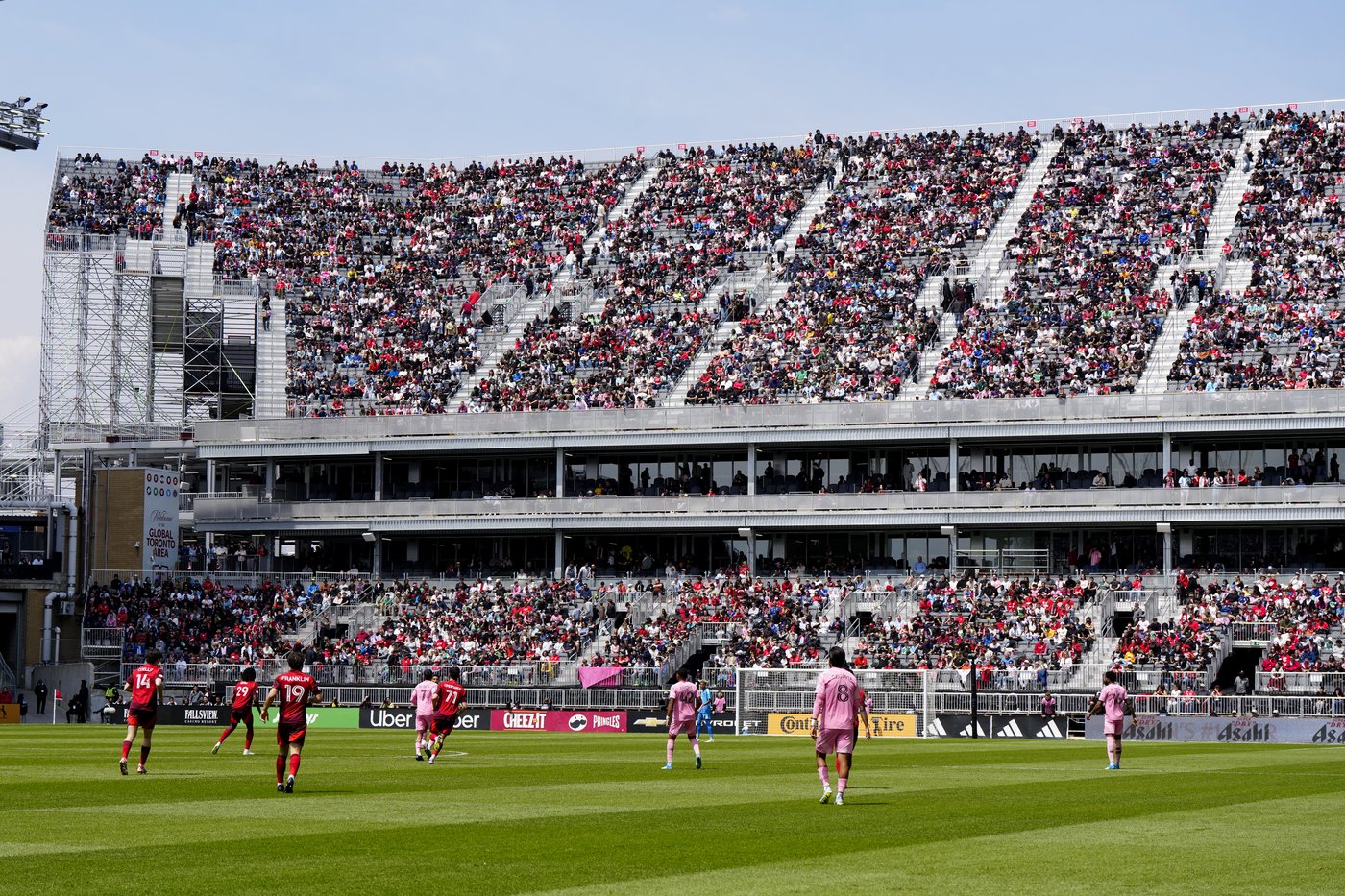
TORONTO — As thousands of soccer fans prepare to descend on Toronto and Vancouver next month for the FIFA World Cup, Rogers Communications Inc. says it has kicked in $27 million to upgrade cellular capacity at Canada’s two host venues and surrounding areas.
The company announced Thursday it spent $22 million to improve the 5G+ network at BMO Field and the nearby area, and an additional $5 million to enhance network coverage in key regions across Vancouver ahead of the tournament.
Some of those efforts will improve performance on devices no matter which of the Big Three carriers a customer is subscribed with, while certain upgrades would only be felt by Rogers customers.
Canada is set to host 13 matches during the World Cup in June and July, including seven at Vancouver’s B.C. Place and six at Toronto’s BMO Field, which is being dubbed Toronto Stadium during the event.
BMO Field has added an extra 17,756 temporary seats for the World Cup, bringing total capacity to 45,736, while B.C. Place can hold around 54,000 fans.
But with higher attendance comes an expected surge of wireless traffic, creating the need for greater cellular capacity so service doesn’t get spotty.
Nowadays, sports fans and concertgoers are eager to not only access web and messaging services at live events, but also share their experiences in real time, said Neel Dayal, Rogers’ senior director of partnerships and innovation.
He said it’s critical to sustain the level of service that customers are used to in their daily lives.
“Everybody is a social media star and everybody wants to share those moments that are really special to them,” he said Wednesday during a panel at the Canadian Telecom Summit in Toronto.
“The margin for error to give a poor network experience is so low when someone’s experiencing something so special.”
Peter Linder, head of thought leadership Americas at Ericsson, said a working phone is a key part of the fan experience today.
“Your ticket is on your phone, and it’s a dynamic ticket, so you need to have great cell coverage,” he said in an interview.
Networks can also face pressure during big moments where everyone has their camera out to film and share live video.
At major events, Linder said there are public connectivity issues but also challenges for business operations at the venue, who also require access.
“You typically either have a dedicated private network or you have a virtual private network, so you’re taking a piece of the public network and guaranteeing capacity for things like payment terminals, security screening, payment terminals for food, merchandise, and so on,” he said.
“There, you really want fast processing times.”
In Toronto, Rogers said a 30-member crew spent almost 40,000 hours planning and installing new network infrastructure. That included enhancing the in‑stadium wireless system, which it said was the equivalent of adding 16 cell towers in downtown Toronto.
Rogers is also deploying additional 5G+ spectrum — the electromagnetic frequencies that enable smartphone communications — to deliver faster speeds.
The company said it also installed additional network infrastructure outside the stadium and at fan zone locations throughout the city, as well as hotels and key transportation hubs including Pearson International Airport, Union Station and some TTC subway stations.
Portable mobile towers, known as Cells on Wheels and Cells on Light Facilities, will be stationed temporarily in high‑traffic areas in downtown Toronto and Vancouver to help boost speeds throughout the tournament.
In Vancouver, Rogers said it is deploying additional 5G+ spectrum and technology at B.C. Place, which builds on its $10 million network investment at the venue ahead of Taylor Swift’s Eras Tour stop in December 2024.
Rogers said it made further 5G+ upgrades at fan zone locations, hotels and SkyTrain stations.
Linder said that ensuring connectivity during the World Cup goes beyond the just venue where the match is taking place.
“The emphasis is in and around the venue as well and across the city. I think cities might have seen that we have better capacity this year than last year, enabled by the fact that people have been preparing the whole city to be a little bit better,” he said.
“And around the venue, it’s so important because if you look at what’s happening, you have tailgating, there are people waiting in line. You’re probably going to spend more time around the venue than you’re actually going to be in the venue.”
The Swift tour served as a stress test on Rogers’ networks as the artist brought legions of fans to highly concentrated venues in both Vancouver and Toronto.
In anticipation of massive amounts of data consumption associated with those concerts, Rogers boosted its upload speeds at the venues by 2.7 times, and delivered 3.8 times the usual download speeds, said vice-president of consumer wireless Shelly Fernandes.
“Taylor was a huge success,” she said at the telecom conference.
“Her songs are very long and (attendees) were uploading full songs. Being able to … have that shared immediately with their group — their influencer group, their families, their friends — really made a difference for them.”
This year’s World Cup tournament will be the biggest ever, with 48 nations taking part. A total of 104 games will be played in 16 host cities across Canada, the United States and Mexico.
This report by The Canadian Press was first published May 14, 2026.
Companies in this story: (TSX:RCI.B)
News from © The Canadian Press, . All rights reserved.
This material may not be published, broadcast, rewritten or redistributed.

This site is protected by reCAPTCHA and the Google Privacy Policy and Terms of Service apply.
Want to share your thoughts, add context, or connect with others in your community?
You must be logged in to post a comment.