Elevate your local knowledge
Sign up for the iNFOnews newsletter today!
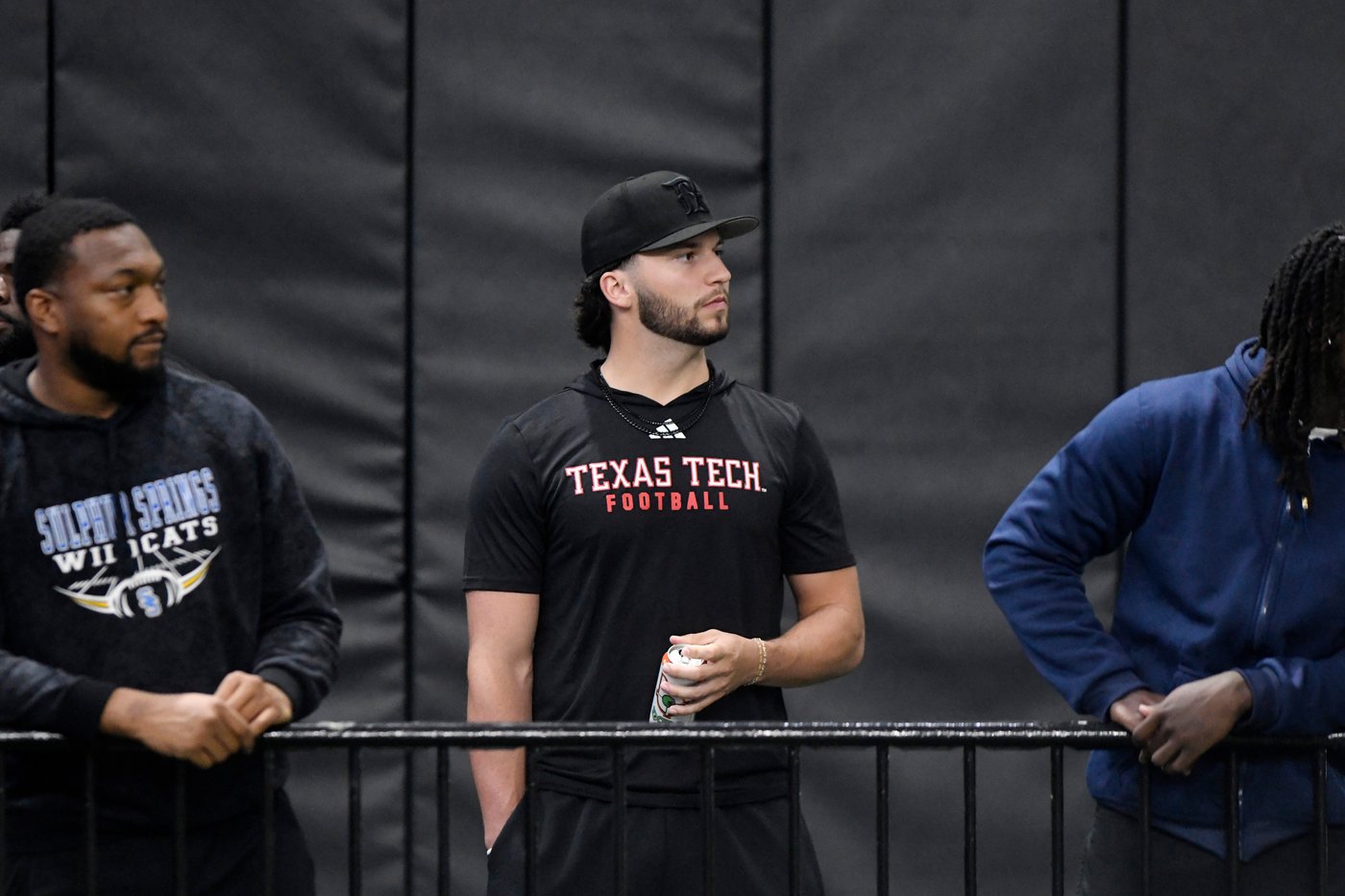
Texas Tech quarterback Brendan Sorsby, who entered residential treatment for a gambling addiction three weeks ago, filed a lawsuit Monday seeking to have the NCAA restore his eligibility.
Sorsby had landed a multimillion-dollar deal to return to his home state for his final college season, but his eligibility was jeopardized when he acknowledged wagering on sports.
His lawsuit, filed in Lubbock County, Texas, by local attorney Dustin Burrows, asks for an injunction that would allow him to practice and play for the Red Raiders. The filing said legal action was taken because of the “NCAA’s wholesale abandonment of its obligations and duties to promote the well-being” of Sorsby.
His gambling addiction, the lawsuit said, is a “clinically diagnosed” disorder recognized by the American Psychiatric Association’s Diagnostic and Statistical Manual of Mental Disorders.
“The NCAA has weaponized his condition to shore up a facade of competitive integrity, while simultaneously profiting from the very gambling ecosystem it polices,” the lawsuit said, adding that Sorsby had taken accountability for violating NCAA rules and offered to accept “reasonable discipline” but not a full loss of eligibility.
Texas Tech announced Monday that after finalizing an agreed-upon stipulation of facts between the school, NCAA and Sorsby, the school has declared Sorsby ineligible.
“Texas Tech intends to quickly initiate the reinstatement process,” the school said in a statement. “Texas Tech’s primary focus remains supporting Sorsby’s health and well-being.”
The NCAA said it has not received a reinstatement request for the Sorsby case as of late Monday afternoon.
“The NCAA generally doesn’t comment on pending reinstatement requests, but the Association’s sports betting rules are clear, as are the reinstatement conditions,” the NCAA said in a statement. “When it comes to betting on one’s own team, these rules must be enforced in every case for the simple reason that the integrity of the game is at risk. Every sports league has these protections in place, and the NCAA will continue to apply them equally because every student-athlete competing deserves to know they’re playing a fair game.”
Sorsby started his college career at Indiana in 2022 before a transfer to Cincinnati to play the past two seasons. ESPN, citing unidentified sources, previously reported Sorsby made thousands of online bets on a variety of sports via a gambling app.
NCAA rules were eased in 2023 to recognize the proliferation of legalized gambling but still call for a permanent ban for athletes who bet on their own games.
ESPN reported Sorsby bet on Indiana football games in 2022 and only to win. He did not place a wager on the one game in which he appeared that season as a freshman.
Sorsby’s lawsuit called the NCAA’s position on gambling “hypocritical” because it has a partnership with Genius Sports to distribute real-time data feeds to sportsbooks, publicly touted gambling as a “major opportunity” and presided over an enterprise in which $3.3 billion was wagered on its basketball tournaments in 2026.
Sorsby’s legal team is headed by Jeffrey Kessler, the lead attorney for players in the groundbreaking House settlement that accelerated the professionalization of college sports.
___
Get poll alerts and updates on the AP Top 25 throughout the season. Sign up here. AP college football: https://apnews.com/hub/ap-top-25-college-football-poll and https://apnews.com/hub/college-football
News from © The Associated Press, . All rights reserved.
This material may not be published, broadcast, rewritten or redistributed.

This site is protected by reCAPTCHA and the Google Privacy Policy and Terms of Service apply.
Want to share your thoughts, add context, or connect with others in your community?
You must be logged in to post a comment.