Elevate your local knowledge
Sign up for the iNFOnews newsletter today!
KRYVYI RIH, Ukraine (AP) — After Iryna Nakonechna lost her left leg last year in a Russian missile attack that also killed her husband, the Ukrainian woman decided everything tied to her former self had to go.
She cut off her dark wavy hair and removed furniture, clothes, trinkets and photographs from her home. Just one reminder of her previous life remained: a portrait of herself and her husband, Serhii Nakonechnyi.
Shedding her old identity was necessary, she said, to endure the painful reinvention required to build a life with a prosthetic.
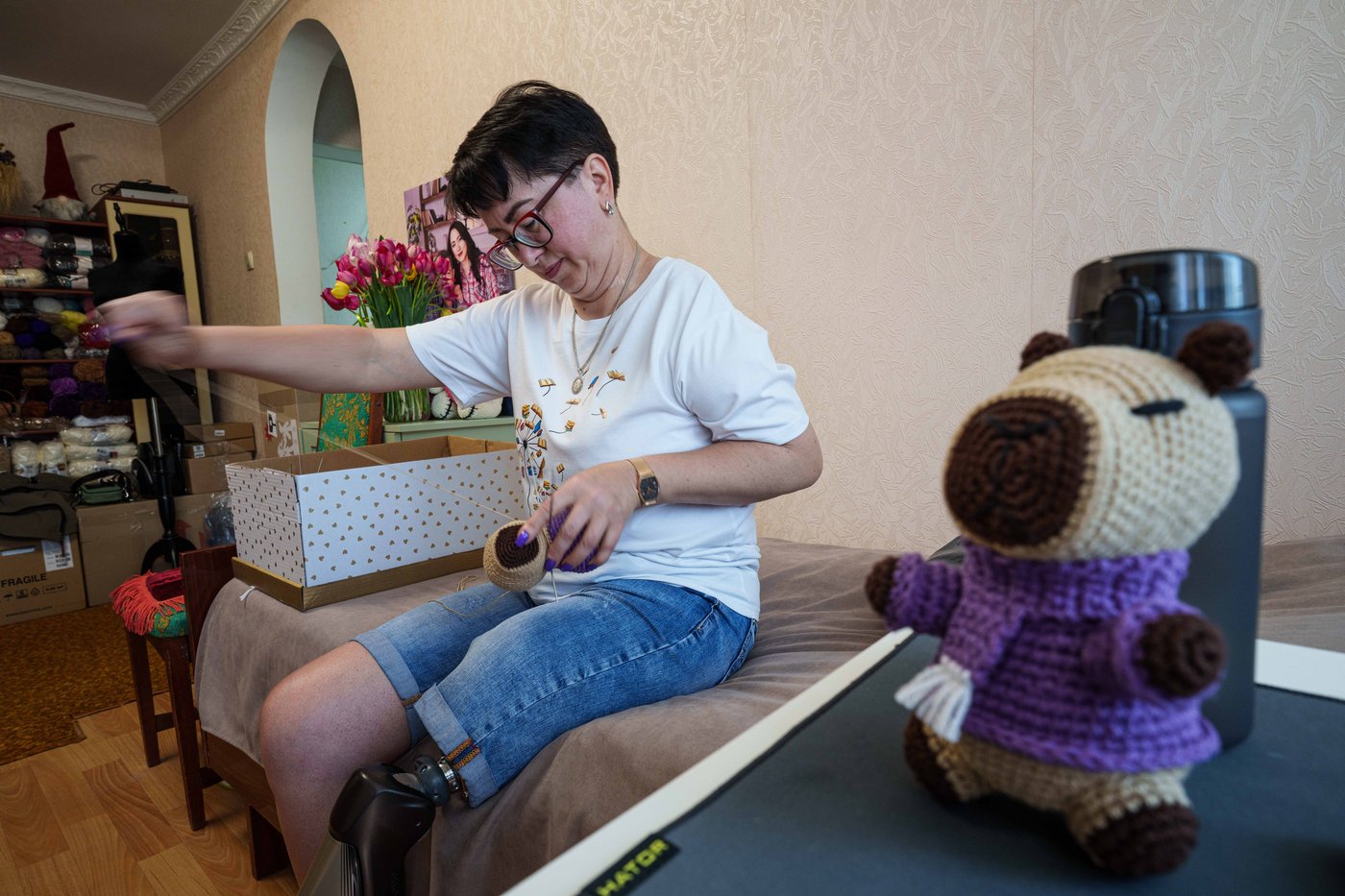
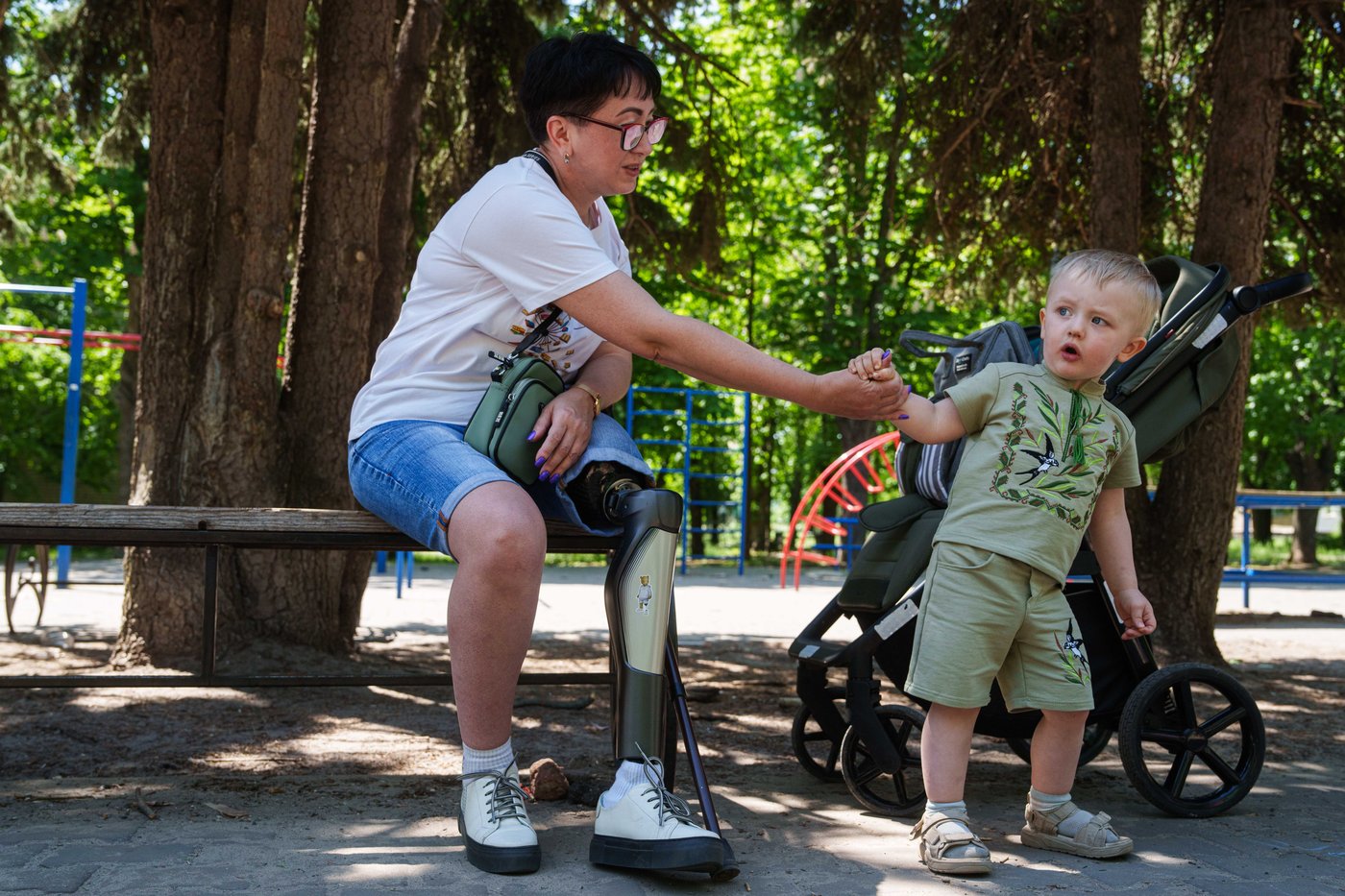
Today, Nakonechna is quick-witted and effervescent, her laughter loud and sudden. She wears a pixie haircut and bold red cat-eye glasses, and knits small toy capybaras — an animal that has become an unofficial symbol among amputees in Ukraine. But beneath the sparkle in her eyes lies a grief woven into the painful process of becoming someone new. It’s an often unspoken reality beneath the narratives of resilience surrounding the tens of thousands of people in Ukraine who have lost limbs in the war that began more than four years ago when Russia launched a full-scale invasion.
“The hardest thing was accepting myself with these injuries, wounds that are not only physical,” she said. “Coming to terms with how much my life has changed has been very difficult.”
The exact number of war amputees in Ukraine is unknown, but it continues to rise as landmines, artillery, and missile and drone strikes inflict catastrophic injuries on soldiers and civilians. The increase has fueled an expansion of rehabilitation and prosthetics services, while also reshaping Ukrainian society. Prosthetic limbs have become increasingly visible and powerful symbols of survival and defiance.
Nakonechna, 50, still walks with a limp and uses a cane as she learns to trust the prosthetic that reaches her upper thigh. The airstrike also left her with limited mobility in her arms, making it difficult to lift heavy objects.
Walking with confidence
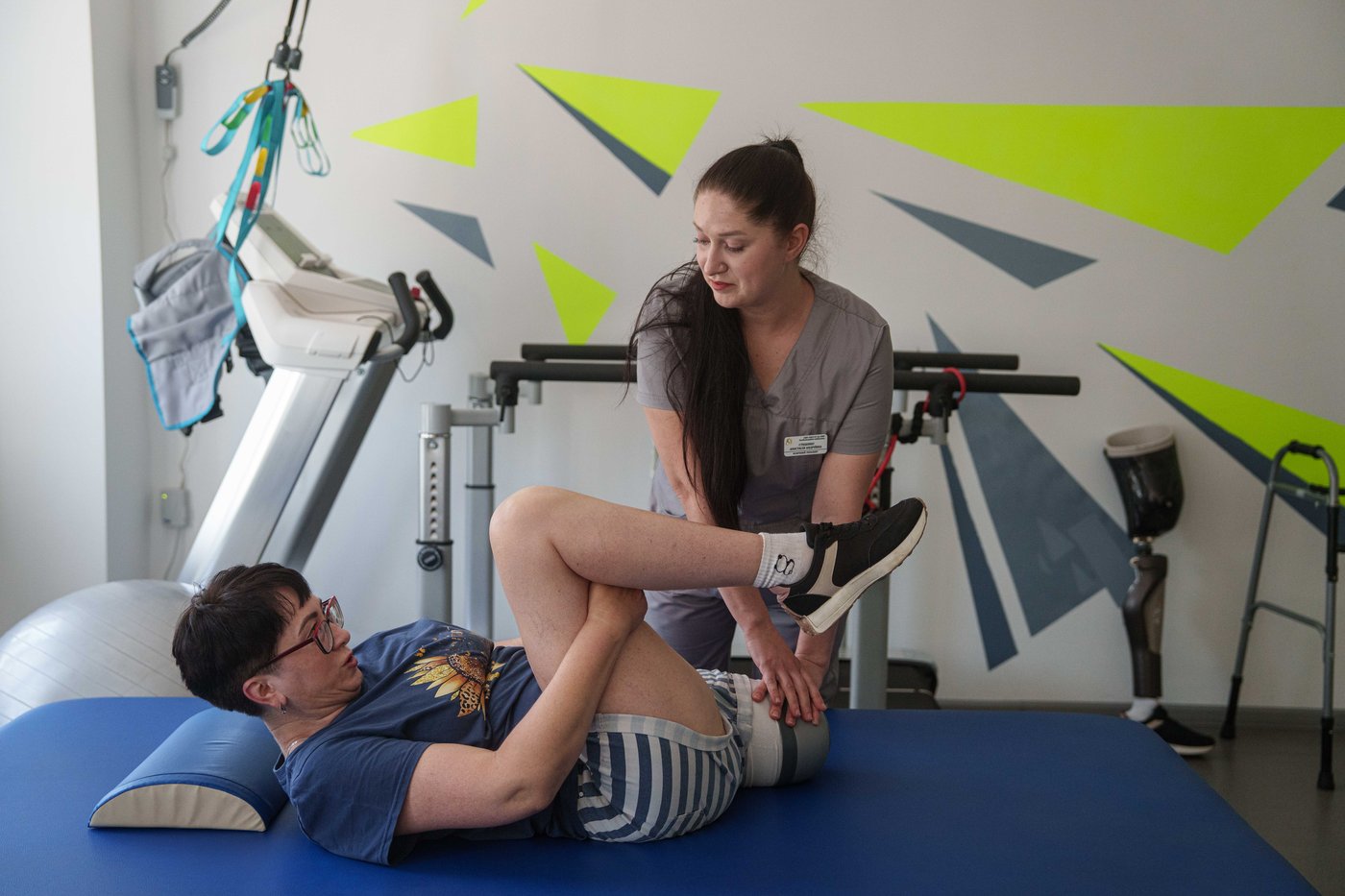
The next step in Nakonechna’s rehabilitation is learning to walk without a cane, her physical therapist, Anastasiia Stetsenko, said.
She must not only build her strength, but also her confidence. She must trust herself through movements most people take for granted: climbing stairs, squatting to pick something up, navigating uneven streets, or chasing after her 2-year-old grandson at the playground.
Nakonechna’s weekly hourlong sessions with Stetsenko begin with removing her prosthetic and resting it against the wall.
Then, Stetsenko has Nakonechna lift a plastic bar while seated, timing the movement to her breathing.
“You are a demon,” Nakonechna says to Stetsenko, when the exercises become taxing.
Later, Stetsenko has Nakonechna lie back and rotate her amputated limb in slow circles, testing the limits of her range of motion.
“This feels like an extreme sport,” Nakonechna jokes.
Finally, Stetsenko suggests she squat while gripping a ballet barre, one of the hardest movements for her to relearn.
“I will respond as my grandson would,” Nakonechna says. “Just no.”
The two women break into peals of laughter, sounding more like old friends than therapist and patient.
The day of the attack
The attack happened on March 5, 2025. After dinner, Nakonechna and her husband took advantage of unseasonably warm spring weather with an evening stroll.
They were near the entrance of hotel in central Kryvyi Rih when a Russian missile tore through the building, hurling them in opposite directions.
Her ears rang as her husband, now several meters away, screamed.
She pushed herself upright and felt her left shoulder crunch. The bones were broken. She reached for her left leg but couldn’t feel it.
The couple ended up at different hospitals. Her husband died the next day.
“I never got to say goodbye,” Nakonechna said. “I wasn’t even at the funeral.”
Over the next two months, the days dissolved into a blur as Nakonechna underwent two surgeries a week.
By May of that year, she could finally sit up again.
She felt relieved, she said, but it was only the beginning.
A new life
The apartment Nakonechna once shared with her husband is now almost unrecognizable.
“I had to get rid of everything from the past,” she said. “And focus on living my life, even if it was half the life I had before.”
Nakonechna invited her 77-year-old mother, who has dementia, to move in with her. At lunch, her mother carefully sets a pot of borscht on the table. Nakonechna said such tasks are no longer easy for her.
She laments that she still cannot lift her grandson, Tymofii. One day, the boy placed a sticker of a cartoon capybara wearing a prosthetic leg onto her own prosthetic. She left it there.
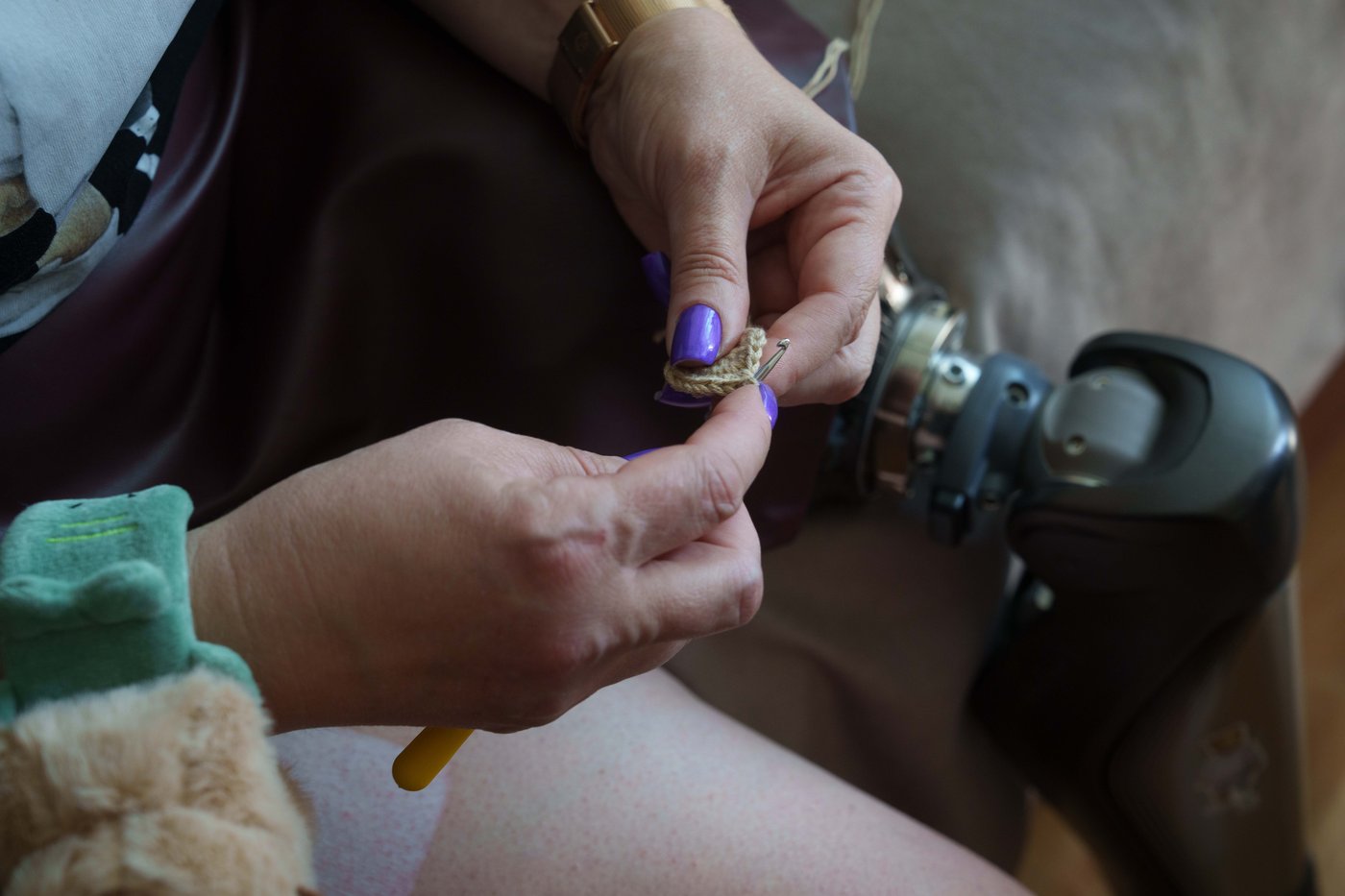
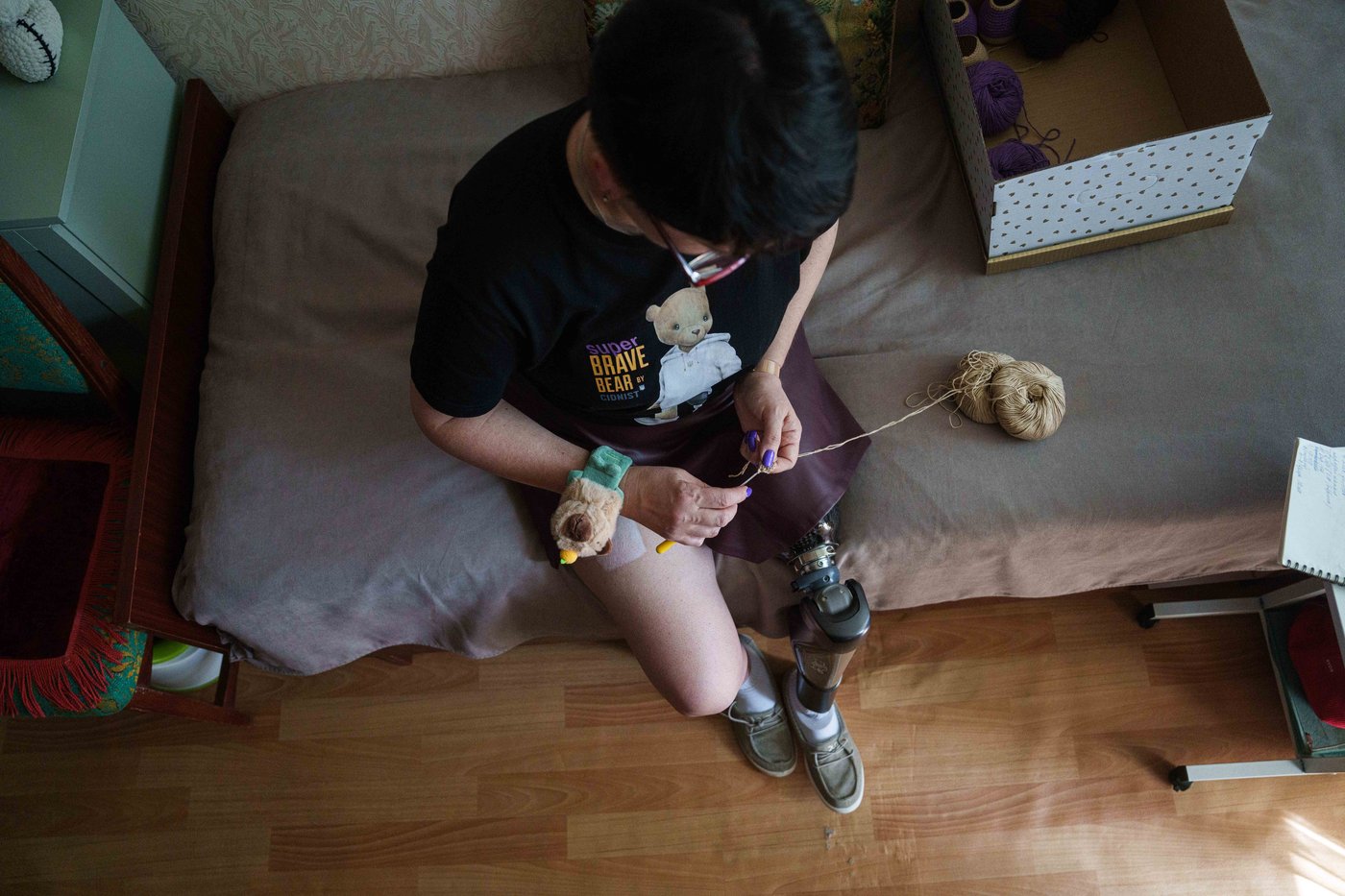
A meticulous craftswoman, she later began knitting toy capybaras through Superhumans, a modern war-trauma center specializing in prosthetics and rehabilitation. During the war, veterans started putting the toys and stickers of the fuzzy, playful animals on their limbs to put strangers at ease. The capybara has since come to symbolize resilience and the determination to reclaim joy after devastation.
Nakonechna’s toys quickly became popular, and she spends hours knitting them. Her favorite part is assembling the pieces at the end, when the toy becomes whole.
“When I count the stitches, I think only about the stitches, not about the life that could have been and unfortunately is not,” Nakonechna said.
Recently, she marked a personal victory: For the first time since her injury, she wore shorts.
The small act marked a powerful shift.
“I accepted myself as I am,” she said.
___
Associated Press journalist Vasilisa Stepanenko contributed to this report.
News from © The Associated Press, . All rights reserved.
This material may not be published, broadcast, rewritten or redistributed.

This site is protected by reCAPTCHA and the Google Privacy Policy and Terms of Service apply.
Want to share your thoughts, add context, or connect with others in your community?
You must be logged in to post a comment.