Elevate your local knowledge
Sign up for the iNFOnews newsletter today!
Elevate your local knowledge
Sign up for the iNFOnews newsletter today!
Select Region
Selecting your primary region ensures you get the stories that matter to you first.
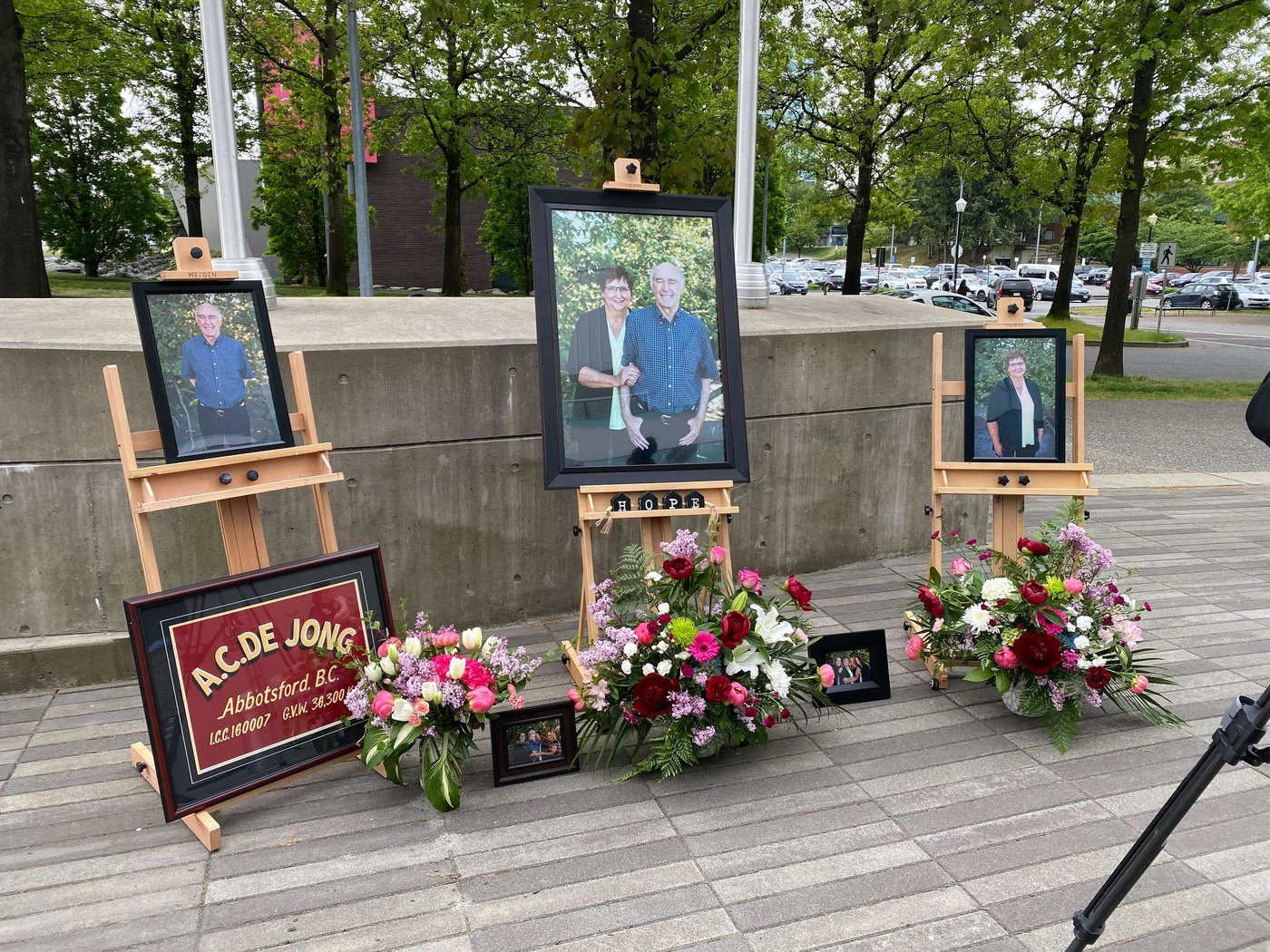
ABBOTSFORD — Family and friends of Arnold and Joanne De Jong filled a courtroom in Abbotsford, B.C., on Thursday for the reading of anguished victim impact statements, weeks after three men were convicted of murdering the couple.
Abhijeet Singh, Gurkaran Singh and Khushveer Toor sat hunched over with their heads down as the De Jongs’ daughters and other family members detailed their life-changing loss.
Sandra Barthel told the court that describing the impact of her parents’ murders seemed like an “impossible feat.”
“How does one describe hell in words?” she said. “What happened to my parents, Arnold De Jong and Joanne De Jong, on May 9, 2022, did not simply take two lives. It fractured our entire family and permanently altered every part of who I am.”
The trial heard that 77-year-old Arnold De Jong died by asphyxiation, with his entire head and face wrapped in duct tape, while 76-year-old Joanne De Jong was bludgeoned and had her throat slashed.
Barthel said her parents were deeply loved, known for their generosity, their faith and their hardworking natures.
Barthel said her world has been “shattered,” and she’s been left “unable to understand how something so immensely evil could happen to such loving people.”
“My parents were not just part of our lives, they were the heart of it,” she said.
The suspects were found guilty this month of the first-degree murders of the couple, who were found dead in their home after a home invasion.
Barthel told the court she had been plagued by sleepless nights and the torture of imagining the suffering of her parents in their deaths.
Brian Barthel, the De Jong’s son-in-law, said his daughter had been “robbed” of years with her grandparents.
Kimberley Coleman said the “pain and evil” visited upon her parents had been passed onto her, and she spoke of hurtful rumours that swirled around the crime before the details were revealed at trial years later.
Heather Hoogland, the couple’s youngest daughter, said she won’t upgrade her cellphone because it contains the last recordings of messages from her parents.
She said that when her sons see monarch butterflies, “they’ll say, ‘hi Grandma Jo.”
When they see eagles they are reminded of feathers gifted to them by their grandfather, she said.
“My youngest often sees the little hummingbird looking through our window and not at the feeder and says, ‘it’s grandpa Arnie checking on us.”
“What mother should have to explain to their children that they will no longer be able to see their loving grandparents?,” she said. “My boys don’t know the horrific details surrounding the death of my parents, or the evil way that these cowards came into my parents’ home and decided to take their lives.”
Sandra Barthel said outside court on Thursday that getting to read their statements “finally gave us a voice.”
“Today just really gave us the chance and opportunity to try to put into words how this has shattered our lives,” she told reporters.
Helen Leusink, Joanne De Jong’s sister, told the court in her statement that “shock, anger and confusion consumed me following the death of my sister and brother-in-law.”
She said the mental images of their last moments played repeatedly in her mind, “crippling my ability to sleep at night and focus during the day.”
“Tears were my constant companion as I wrestled with the how, the why, and the unexplained loss,” she said. “I questioned whether the murderers knew me, whether I could be their next target. That fear continues to haunt me at times.”
She said the years since their deaths have been difficult, and nothing prepared her for the vivid details of the murders revealed in court.
“The helplessness and desperation they must have felt during their final moments, until their screams were silenced and their struggle ceased. They will haunt me for life,” she said.
Before the reading of the victim-impact statements on Thursday, the court heard that the defence lawyer for Toor had filed a constitutional challenge related to the so-called faint-hope clause to possibly allow an offender to apply for parole earlier than the 25-year period tied to a life sentence.
First-degree murder carries a mandatory life sentence, and offenders can’t apply for parole for 25 years.
Justice Brenda Brown set dates in June to figure out when the court can deal with the Charter challenge and media applications for access to evidentiary exhibits in the case.
Friends and family in the court gallery gasped in disappointment when a sentencing date was suggested for the fall, more than four years after the murders.
This report by The Canadian Press was first published May 28, 2026.
News from © The Canadian Press, . All rights reserved.
This material may not be published, broadcast, rewritten or redistributed.

This site is protected by reCAPTCHA and the Google Privacy Policy and Terms of Service apply.
Want to share your thoughts, add context, or connect with others in your community?
You must be logged in to post a comment.