Elevate your local knowledge
Sign up for the iNFOnews newsletter today!
Elevate your local knowledge
Sign up for the iNFOnews newsletter today!
Select Region
Selecting your primary region ensures you get the stories that matter to you first.
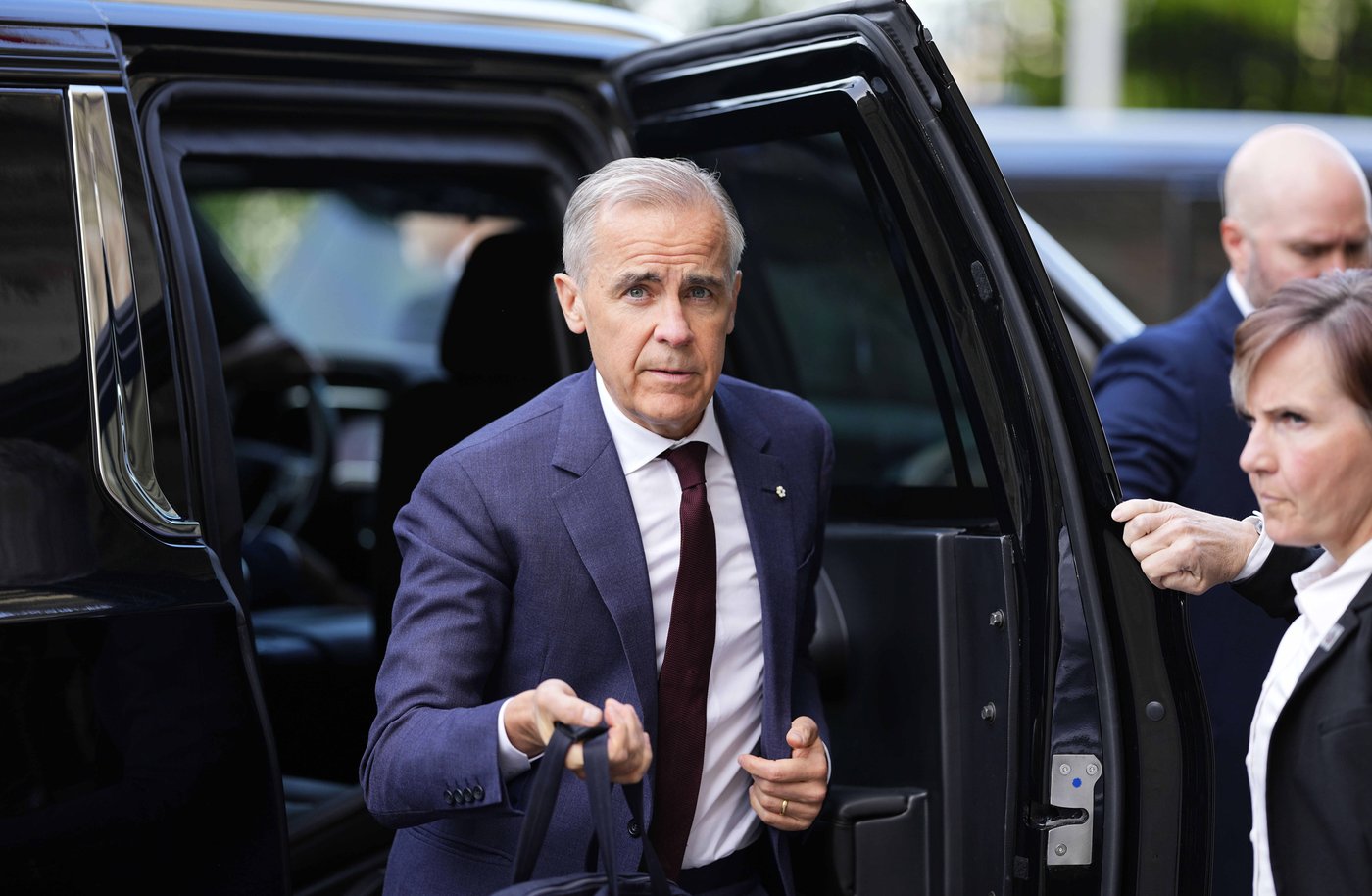
OTTAWA — Prime Minister Mark Carney says the government’s plan to build up the economy is “settling in” as work continues on getting major projects built and expanding non-U.S. trade relationships.
Conservative Leader Pierre Poilievre argued Tuesday Carney’s policies are setting Canada back and putting the country in a weaker negotiating position with the United States.
In his first public comments on the state of the economy since Statistics Canada reported two consecutive quarters of economic decline last week, Carney said the numbers show signs of “weakness.”
When asked by a reporter Tuesday morning whether he thought Canada was in a recession, Carney did not answer directly.
Carney said on his way into a cabinet meeting that cuts to immigration and government spending are weighing on growth. He also said the work to pivot the economy is going to take time to pay off.
“As we do all that, the data is going to be uneven. And we see some weakness, in part because of clear decisions by the government,” he said.
“So you have these cross-currents as the economy is being fundamentally transformed. We’re going to continue to work. We are making progress but there’s more to be done.”
The prime minister pointed to positive signs in the latest economic report, including increasing business investment in machinery and equipment and household income growth outpacing inflation.
Poilievre on Tuesday accused Carney of not being straight with Canadians about the state of the economy.
The Conservative leader pointed to job losses and a rise in insolvency rates and food bank usage over the past year as signs that Canadians are worse off since Carney took office.
“They deserve a prime minister who will look them in the eye and admit that there is a recession,” he told reporters outside the Liberal cabinet meeting.
Many economists have dismissed the recession label, arguing the recent slump doesn’t have the depth or breadth to meet that bar.
Appearing before a parliamentary committee on Monday, Bank of Canada senior deputy governor Carolyn Rogers warned MPs against putting too much stake in one economic indicator — particularly when there’s a great deal of “noise” in the data.
“Two quarters of annualized contraction in GDP does meet one definition of a recession, but simply the fact that you have to put the term ‘technical’ in front of it sort of tells you that you need to really look past that one indicator,” she said.
Canada’s latest economic news has attracted the attention of U.S. President Donald Trump.
In a post on his Truth Social platform late Monday, Trump wrote “51st State!” with a link to a news story saying Canada had hit a technical recession. The post was reshared on X by U.S. Ambassador to Canada Pete Hoekstra.
Carney was asked by reporters in Montreal on Tuesday whether that comment would affect trade negotiations. He said Trump is an “exceptionally active user of social media” but added he wouldn’t respond or react to every post.
Ontario Premier Doug Ford said again that Canada will never become a U.S. state while speaking to reporters at Queen’s Park.
“We’re a sovereign country. Enough of the nonsense, rubbish, from President Trump. I get tired of that guy. I’m going to keep fighting for Canada, keep fighting for Ontario,” he said.
Trade talks between Canada and the United States have been stalled as the mandatory review of the Canada-U.S.-Mexico agreement approaches next month.
Canada-U.S. Trade Minister Dominic LeBlanc is expected to be in Washington on Tuesday for a meeting with his U.S. counterpart Jamieson Greer.
Poilievre called Trump’s comment “ridiculous” and a distraction on Tuesday. He said a recession puts Canada in a weaker position for trade talks.
NDP MP Don Davies told reporters on Parliament Hill that he doesn’t think being in a recession will weigh on negotiations with the United States. He said the data shows that Canada has work to do at home.
Finance Minster François-Philippe Champagne touched on the latest economic results Tuesday during a fireside chat at the Energy NL conference in St. John’s, NL.
“I know some of you have seen the latest number, but I’m very confident about the strength of the Canadian economy,” Champagne said.
He cited recent International Monetary Fund forecasts that project Canada’s economy will grow at the second-fastest rate in the G7 this year and next. Champagne said government investments in defence, infrastructure, energy and housing will put Canada on a “growth trajectory.”
This report by The Canadian Press was first published June 2, 2026.
— with files from Liam Casey in Toronto
News from © The Canadian Press, . All rights reserved.
This material may not be published, broadcast, rewritten or redistributed.

This site is protected by reCAPTCHA and the Google Privacy Policy and Terms of Service apply.
Want to share your thoughts, add context, or connect with others in your community?
You must be logged in to post a comment.