Elevate your local knowledge
Sign up for the iNFOnews newsletter today!
Elevate your local knowledge
Sign up for the iNFOnews newsletter today!
Select Region
Selecting your primary region ensures you get the stories that matter to you first.
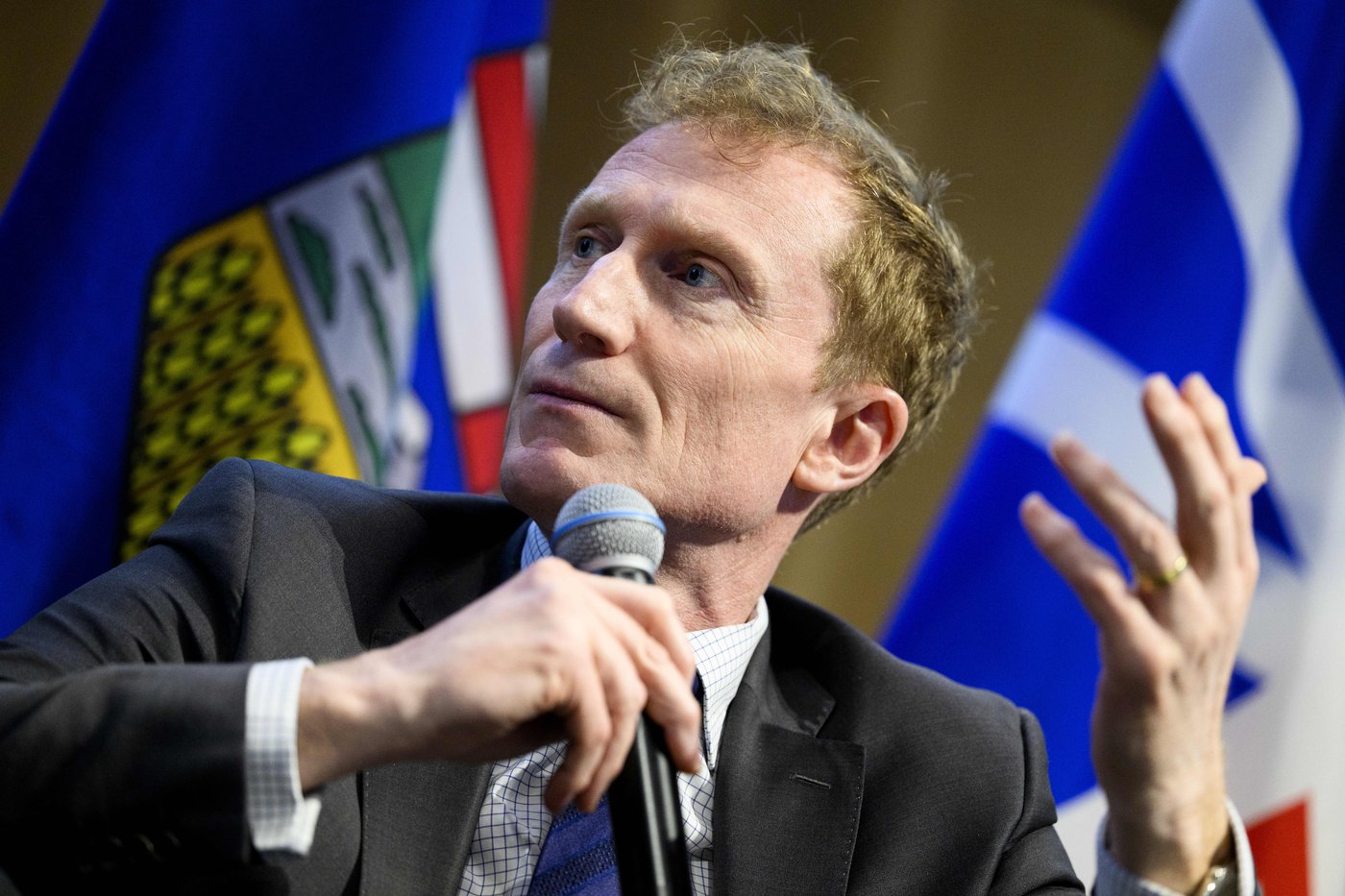
OTTAWA — Ottawa is directing the CRTC to back down on its recent decision to triple streamers’ financial contributions to Canadian content, and will instead provide $600 million to the sector, Culture Minister Marc Miller said Wednesday.
The decision comes after the Motion Picture Association, the U.S. group representing streamers, called on cabinet to reconsider the current approach, and after the U.S. ambassador to Canada called for the policy to be rescinded.
The CRTC said in May it would require large streaming services like Netflix to contribute 15 per cent of their Canadian revenues to Canadian content. It made the decision as part of its work to implement the Online Streaming Act.
Asked whether the decision is another concession to the U.S. as Canada seeks renewal of the continental trade pact, Prime Minister Mark Carney said Wednesday the government was looking at how much the new policy would cost Canadians.
“It is another step to reinforce affordability for Canadians. This is not the time to raise the costs for Canadians,” he said.
The government said in a press release the CRTC’s “new requirements would impose new costs on the companies providing these services, which could ultimately fall on Canadian consumers through higher prices.”
Miller told reporters on Parliament Hill the fact that the U.S. has identified the Online Streaming Act as a trade irritant wasn’t the only reason the government asked the CRTC to change course.
“It’s no secret to anyone that’s been paying any attention to this that the (United States trade representative) has identified these issues as a trade issue. It would be disingenuous to suggest that this is the single issue,” he said.
“The reality is we’re impatient to make sure that the sector stays vital and stays supported, and that’s why we’re making that investment of $600 million into the industry.”
Miller said the industry is suffering while money for Canadian content is frozen in litigation.
In 2024, the CRTC made an initial order under the Online Streaming Act requiring large streaming companies to pay five per cent of their annual Canadian revenues to funds devoted to producing Canadian content, including local TV news.
The Federal Court of Appeal put a pause on the payments — which are estimated at roughly $1.25 million annually per company — and has not yet issued a decision.
It’s not fully clear what the government’s announcement Wednesday means for two years’ worth of decisions the CRTC has made to implement the Online Streaming Act under the previous policy direction.
Under the Broadcasting Act, cabinet does not have the authority to overturn a specific decision on streamers’ contributions. It must instead direct the CRTC on how to broadly implement the Online Streaming Act.
The government said Wednesday Ottawa will issue a new policy direction to the CRTC to adjust how it is implementing the Online Streaming Act.
Monica Auer, a lawyer and executive director of the Forum for Research and Policy in Communications, has told The Canadian Press that if cabinet wants to issue a policy direction saying the CRTC shouldn’t implement the decision on streamers’ financial contributions, it has to first cancel its 2023 order directing the commission on how to implement the Online Streaming Act.
The work the CRTC has done since 2023 to implement the Online Streaming Act has happened under that previous policy direction.
A government official speaking on background said the policy direction is not intended to affect all CRTC decisions made under the Online Streaming Act — for example, it won’t affect the updated definition of Canadian content or requirements on discoverability of Canadian content.
The official said the government wants to remove the requirement the CRTC made in 2024 for both streamers and broadcasters to contribute to individual funds. The government also intends to adjust the amount both broadcasters and streamers must contribute to a more “reasonable rate” than the one set by the CRTC in May.
The $600 million in funding the government has announced will be annual. The official said $200 million will go to the funds that were named in the CRTC’s initial contribution decision and another $220 will go to a new fund for services of exceptional importance, such as CPAC.
The official said the idea is to replace the money that will be taken out of the system by eliminating the CRTC’s decisions on financial contributions for streamers.
Kyle Irving, chair of the board of the Canadian Media Producers Association, said in a statement the board was still reviewing the development but “we are concerned that the federal government has sold out Canadian culture in favour of big U.S. tech interests.”
Irving said the question that must be asked is whether U.S. streamers, who make “tens of billions” of dollars from Canadians, should be required to invest in Canadians telling Canadian stories.
Rachael Thomas, Conservative culture critic, accused the Liberals of backpedalling. Last week, the Conservatives put forward a motion in the House of Commons and called on the Liberals to reject the CRTC decision. The Liberals responded the government didn’t have that power.
“The Liberals were content to sit back and do nothing as Canadians were burdened with yet another cost until Conservatives drew attention to the issue and pressure was applied,” Thomas said.
Asked whether the Conservatives are in favour of the $600 million in taxpayer funding, Thomas said “more needs to be done.”
In a statement, Lindsay Doyle, director of global affairs for Netflix Canada called Wednesday’s decision “a great step in the right direction.”
The Canadian Association of Broadcasters said in a news release the government has indicated it will engage with industry to develop the new policy decision.
“While there is much to be determined, the CAB is encouraged to see the government take action to help ensure that the implementation of the Online Streaming Act remains fair to Canadian broadcasters, while attempting to ensure that this implementation is not delayed any further,” the release said.
Bloc Québécois Leader Yves-François Blanchet said Carney has repeatedly given concessions to the U.S. but has received nothing in return.
“The main victim of this might be Quebec, French media, at the end of the day, and content for the whole of Canada at the end of the day,” he said.
Asked about Carney’s claim that the decision is about affordability, Blanchet said that’s a “conservative argument.”
“We should close government, eliminate all taxes, and any contribution from any company, and if there’s no culture left, we don’t give a damn,” he said.
U.S. Ambassador to Canada Pete Hoekstra welcomed the announcement in a post on X.
“American firms want to invest in Canada’s creative sector, and a fair, nonburdensome framework makes that possible,” he said.
This report by The Canadian Press was first published June 3, 2026.
News from © The Canadian Press, . All rights reserved.
This material may not be published, broadcast, rewritten or redistributed.

This site is protected by reCAPTCHA and the Google Privacy Policy and Terms of Service apply.
Want to share your thoughts, add context, or connect with others in your community?
You must be logged in to post a comment.