Elevate your local knowledge
Sign up for the iNFOnews newsletter today!
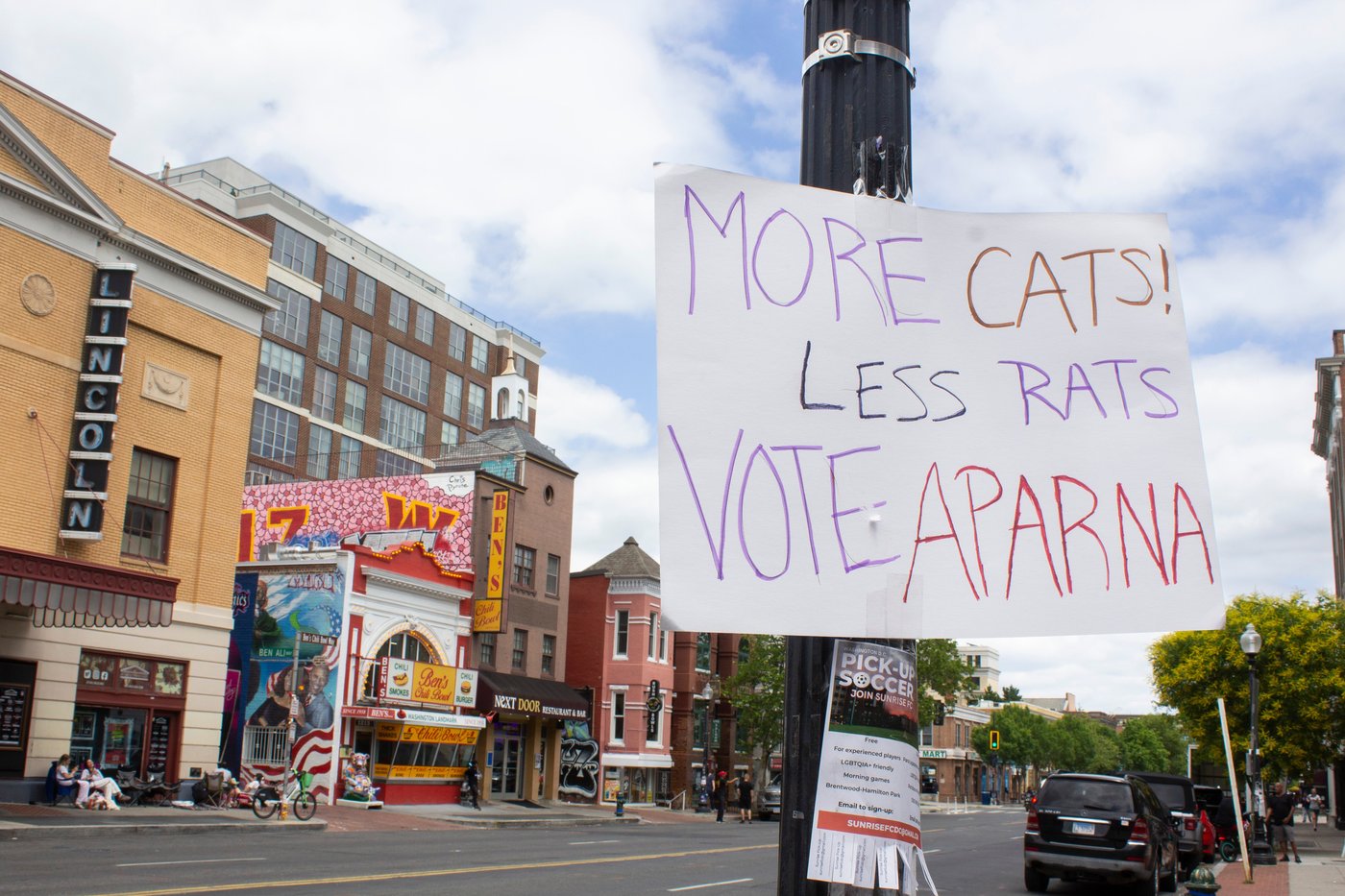
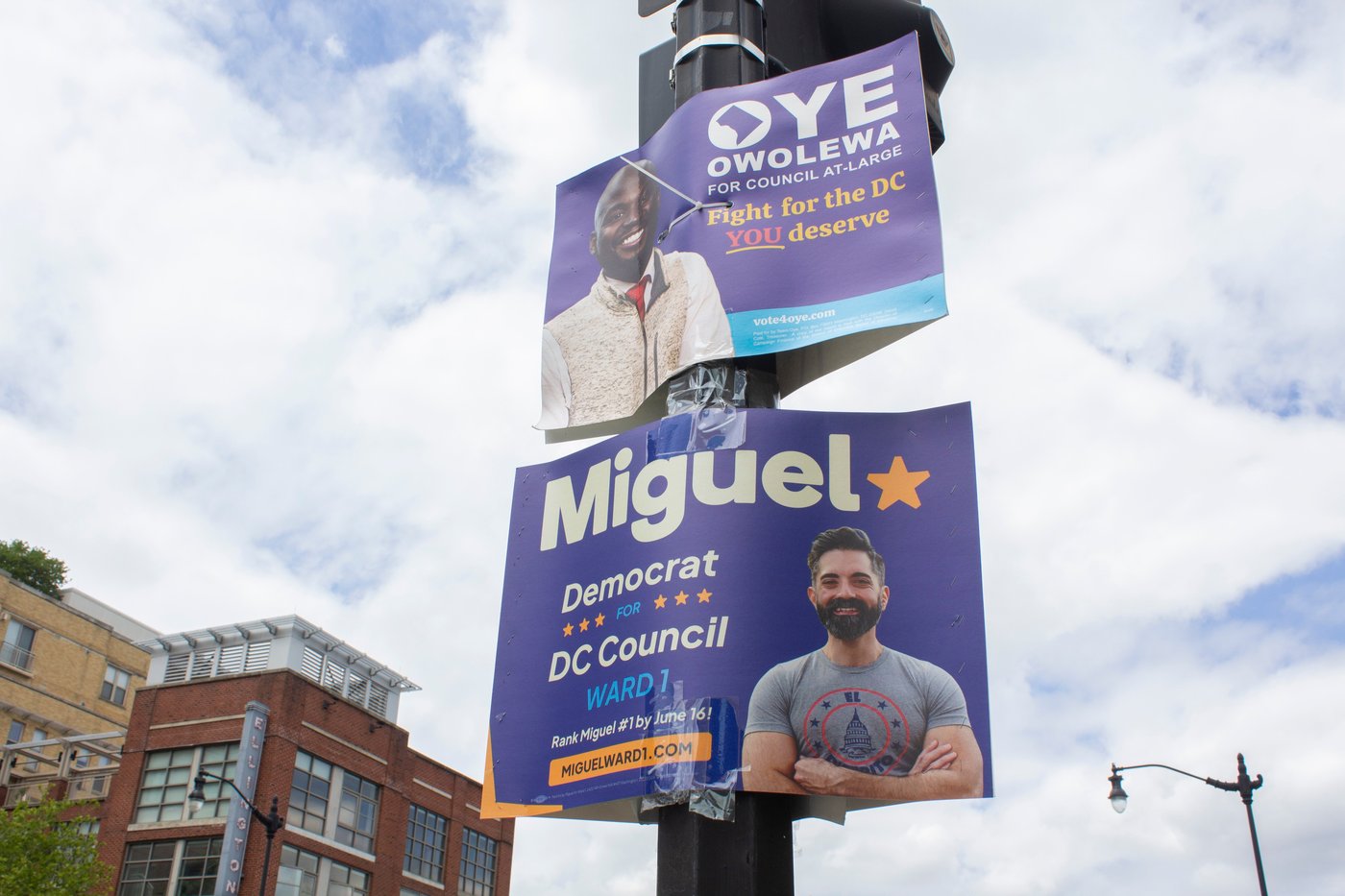
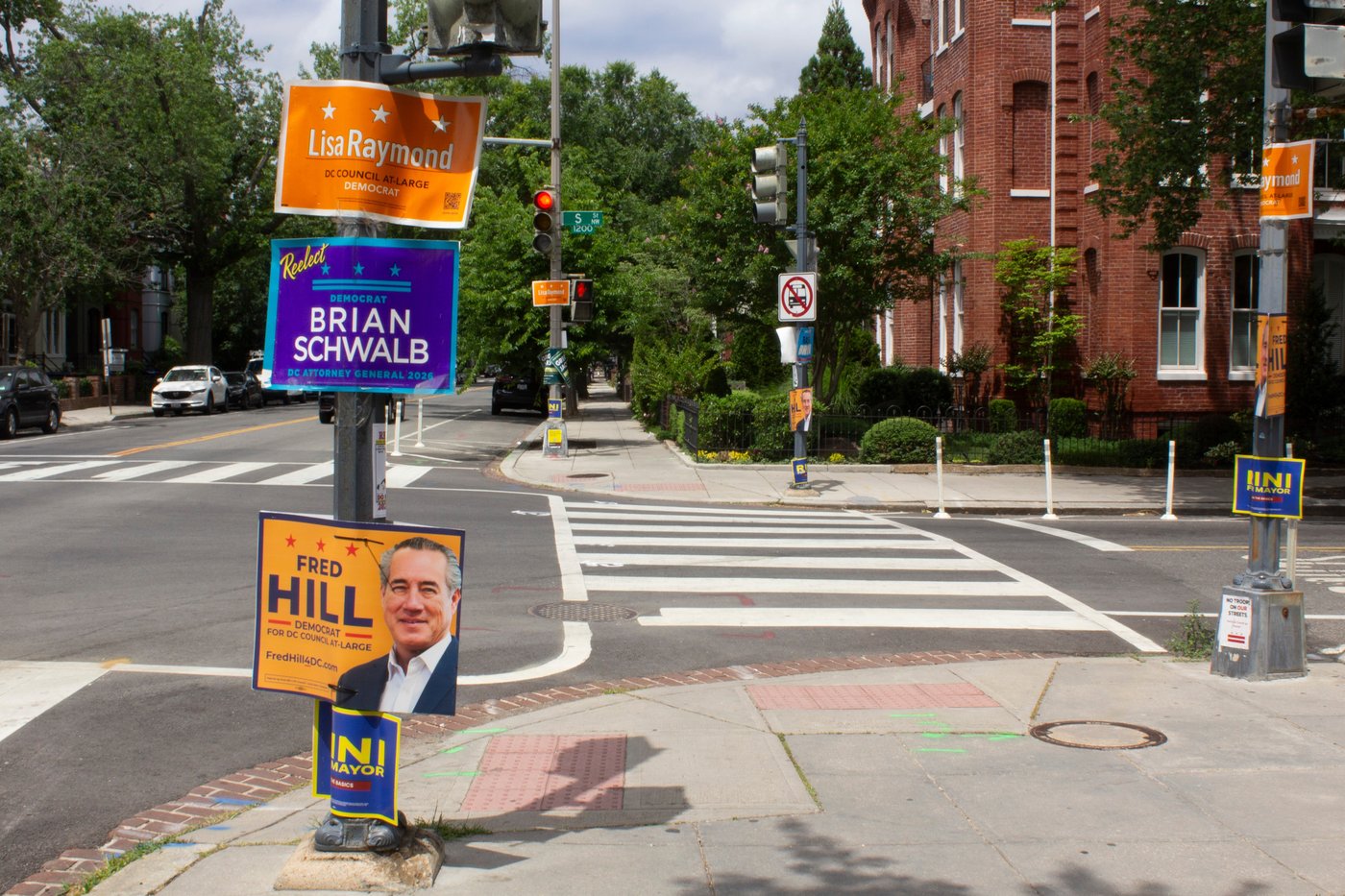
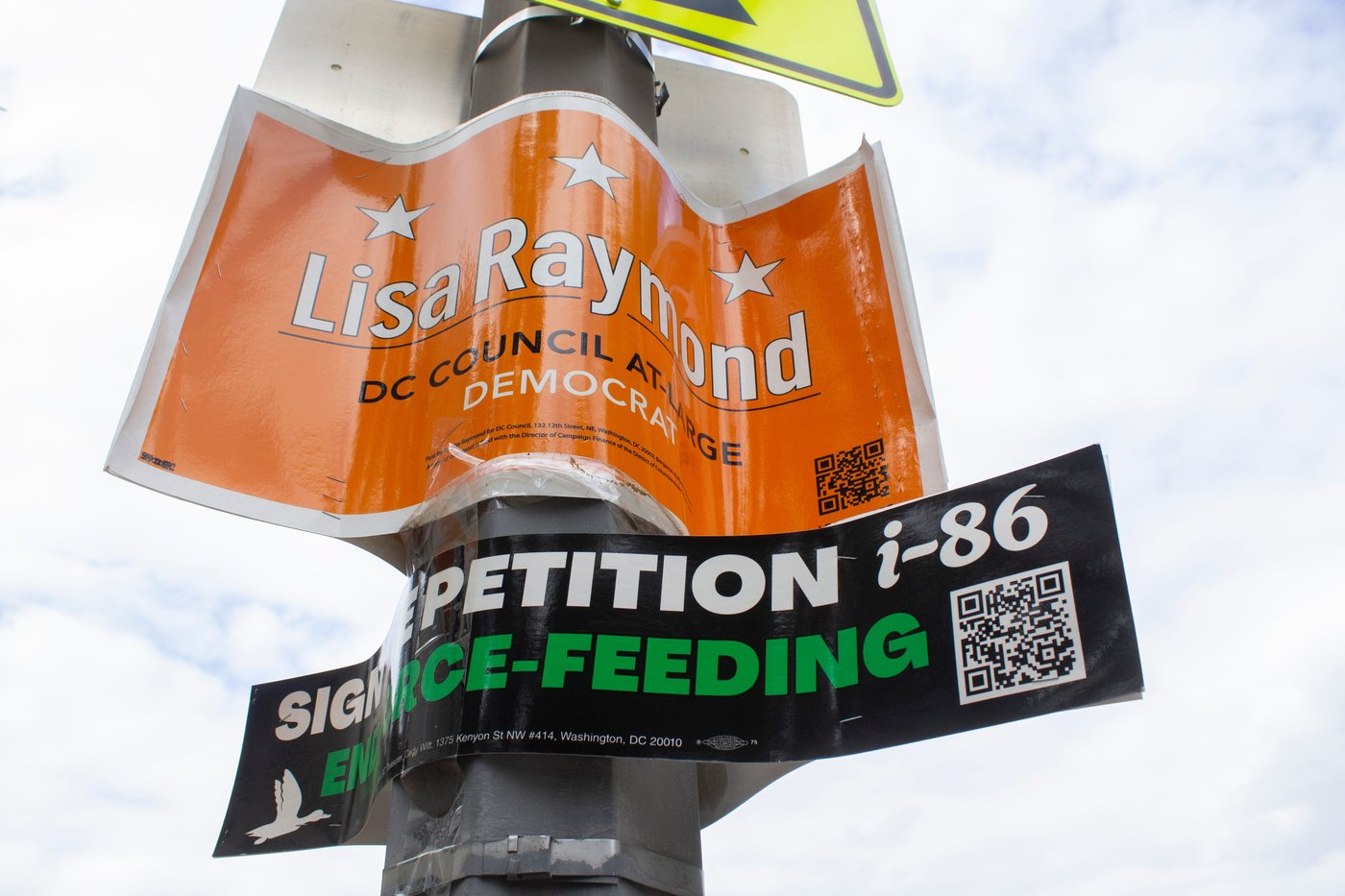
WASHINGTON (AP) — Washington, D.C., on Tuesday will hold a districtwide primary for federal and local offices that will be unlike any election the nation’s capital has previously held.
The primary takes place against a uniquely complex backdrop. Residents are contending with an unprecedented level of ongoing federal intervention by President Donald Trump in how the district looks and functions. A rare combination of open seats in top offices has caused a ripple effect down the ballot. And local election officials are rolling out a new ranked choice voting system.
The competitive Democratic primary field for mayor includes Ward 4 Councilwoman Janeese Lewis George, former At-Large Councilman Kenyan McDuffie and five others. Their key endorsements suggest the fault lines that have formed between the party’s establishment and its more progressive wing.
Lewis George has endorsements from four of her fellow council members, including at-large member Robert White, who is running for U.S. delegate to Congress. She also has the backing of several progressive organizations including the Working Families Party, the Metro D.C. Democratic Socialists of America and Our Revolution, a political committee affiliated with allies of independent Vermont Sen. Bernie Sanders, who caucuses with Democrats.
McDuffie’s endorsements include former Mayors Sharon Pratt and Anthony Williams, outgoing At-Large Councilwoman Anita Bonds, former longtime Councilwomen Charlene Drew Jarvis and Linda Cropp, former U.S. Attorney General Eric Holder and former Democratic National Committee Chairmen Tom Perez and Jaime Harrison.
Although retiring three-term Democratic Mayor Muriel Bowser hasn’t made an official endorsement in the race, she has made her preferences clear. In 2025, she said at an Economic Club event that “if you like me, you’re going to love Kenyon, wink, wink,” according to NBC4 Washington. And at a June Axios Live event, she said, “I support Kenyon McDuffie, and I have always supported Kenyon McDuffie,” although she added she was not making an endorsement.
Bowser has walked a political tightrope since Trump’s return to office in 2025, balancing her role as the elected leader of a heavily Democratic city with only limited ability to self-govern. Her measured approach has drawn criticism from progressives who advocate for a more vigorous response to Trump’s Republican administration. On the campaign trail, Lewis George has made veiled barbs against unnamed leaders for “complying in advance” and who “shrink in the face of injustice.”
Trump weighed in on the race on Thursday, saying he would consider a federal takeover of the District of Columbia if Lewis George becomes the next mayor, a variation of a threat he has made since the early days of his second term.
In the race for D.C.’s non-voting seat in Congress, White, Ward 2 Councilwoman Brooke Pinto and three others are competing to replace retiring 18-term Democratic U.S. Del. Eleanor Holmes Norton.
Norton’s and Bowser’s retirements mark the first time since 1990 that both the mayor’s office and the congressional seat are open in the same year. Their decisions triggered a chain reaction of open seats as incumbent district council members and others jockey for higher office.
Washington is overwhelmingly Democratic. The city has almost 15 times more Democrats than Republicans and has never gone for a Republican presidential candidate since it gained the vote in 1964.
But the general election landslides tend to obscure fairly wide socio-economic gulfs within the district’s boundaries. For example, Ward 3 in the affluent upper Northwest has the city’s largest white majority, the highest median income and the lowest poverty rate. Ward 8 in Southeast has the city’s largest Black majority, the lowest median income and the highest poverty rate.
When Bowser first won the Democratic mayoral primary in 2014, she carried the five westernmost wards, while incumbent Mayor Vincent Gray carried Wards 5, 7 and 8 to the east.
White’s only competitive council primary in 2016 also showed an east-west divide. He carried Wards 1, 2, 3 and 6 to the west and ran almost even in Ward 4 to the north. When he challenged Bowser for mayor in 2022, he carried only Ward 1, which is in the center of the district and includes the neighborhoods of Adams Morgan, Columbia Heights and Mount Pleasant and the U Street Corridor.
In McDuffie’s successful 2022 council race, when he won the second of two at-large seats at stake, his strongest performances were in the northwesternmost parts of Wards 3 and 4.
The primary marks the first time the city will use a ranked choice voting system, in which voters rank the candidates in order of preference. If no candidate receives a majority of first-choice votes, the candidate in last place is dropped, and votes cast for that candidate are reallocated among the rest of the field according to the preferences of the dropped candidate’s voters. This process repeats until one candidate emerges with a majority of votes.
Here are some of the key facts about the election and data points the AP Decision Team will monitor as the votes are tallied:
When do polls close?
Polls close at 8 p.m. ET.
What’s on the ballot?
The Associated Press will provide vote results and declare winners in contested primaries for U.S. Delegate to Congress, mayor, attorney general and district council. There is also a special election to fill a vacant at-large council seat.
Who gets to vote?
Voters registered with a political party may participate only in their own party’s primary. Democrats may not vote in the Republican primary or vice versa. Independent or unaffiliated voters may not participate in either primary.
How many voters are there?
As of May 31, there were about 481,000 registered voters in Washington, D.C. More than three-quarters of them, about 363,000, were registered Democrats. Roughly 25,000, or 5%, were registered Republicans, and about 18%, or roughly 86,000, were not affiliated with any party.
How many people actually vote?
About 127,000 Democrats voted in the 2022 mayoral primary, or roughly 26% of registered voters. About 92,000 Democrats voted in the 2024 primary for U.S. delegate.
How much of the vote is cast early or by absentee ballot?
About 78% of all voters in the 2024 primary cast their ballots early in-person or by mail. That was slightly higher than the 76% who used the same methods in the 2022 primary.
As of Wednesday, about 35,000 ballots had already been cast in Tuesday’s election.
When are early and absentee votes released?
Results from early in-person and mail voting are usually released throughout the night along with results from in-person Election Day voting.
Election night results will not include totals from mail ballots received on Election Day by mail or by ballot drop boxes or from mail ballots received after Election Day with the necessary postmark.
How long does vote-counting usually take?
In the 2022 primary election, the AP first reported results at 8:30 p.m. ET, or 30 minutes after polls closed. The last vote update of the night was at 11:59 p.m. ET, with about 69% of total votes counted.
In contests in which the ranked choice voting process is triggered, only the results of voters’ first choices will be reported on election night. Results from subsequent rounds of vote-counting are expected by June 21 and June 24, with final round-by-round results expected on or after June 26. The certification of the election is expected on July 17.
When will the AP declare a winner?
The AP does not make projections and will declare a winner only when it’s determined there is no scenario that would allow a trailing candidate to close the gap. If a race has not been called, the AP will continue to cover any newsworthy developments, such as candidate concessions or declarations of victory. In doing so, the AP will make clear that it has not yet declared a winner and explain why.
How do recounts work?
Recounts are automatic in D.C. elections for federal offices, mayor, attorney general and district council, among others, if the margin is less than 1% of the total vote. Candidates may also request and pay for a recount regardless of the vote margin. The AP may declare a winner in a race that is subject to a recount if it can determine the lead is too large for a recount or legal challenge to change the outcome.
Are we there yet?
As of Tuesday, there will be 140 days until the 2026 midterm elections.
___
Follow the AP’s coverage of the 2026 election at https://apnews.com/projects/elections-2026/.
News from © The Associated Press, . All rights reserved.
This material may not be published, broadcast, rewritten or redistributed.

This site is protected by reCAPTCHA and the Google Privacy Policy and Terms of Service apply.
Want to share your thoughts, add context, or connect with others in your community?
You must be logged in to post a comment.