

Guard in B.C. prison needed chest compressions after drug exposure, says union

Three prison guards in British Columbia were sent to hospital, one needing chest compressions in the ambulance, after inhaling what they believed to be fentanyl powder that was “sprayed” around a cell by a combative inmate during a fight with officers, their union says.
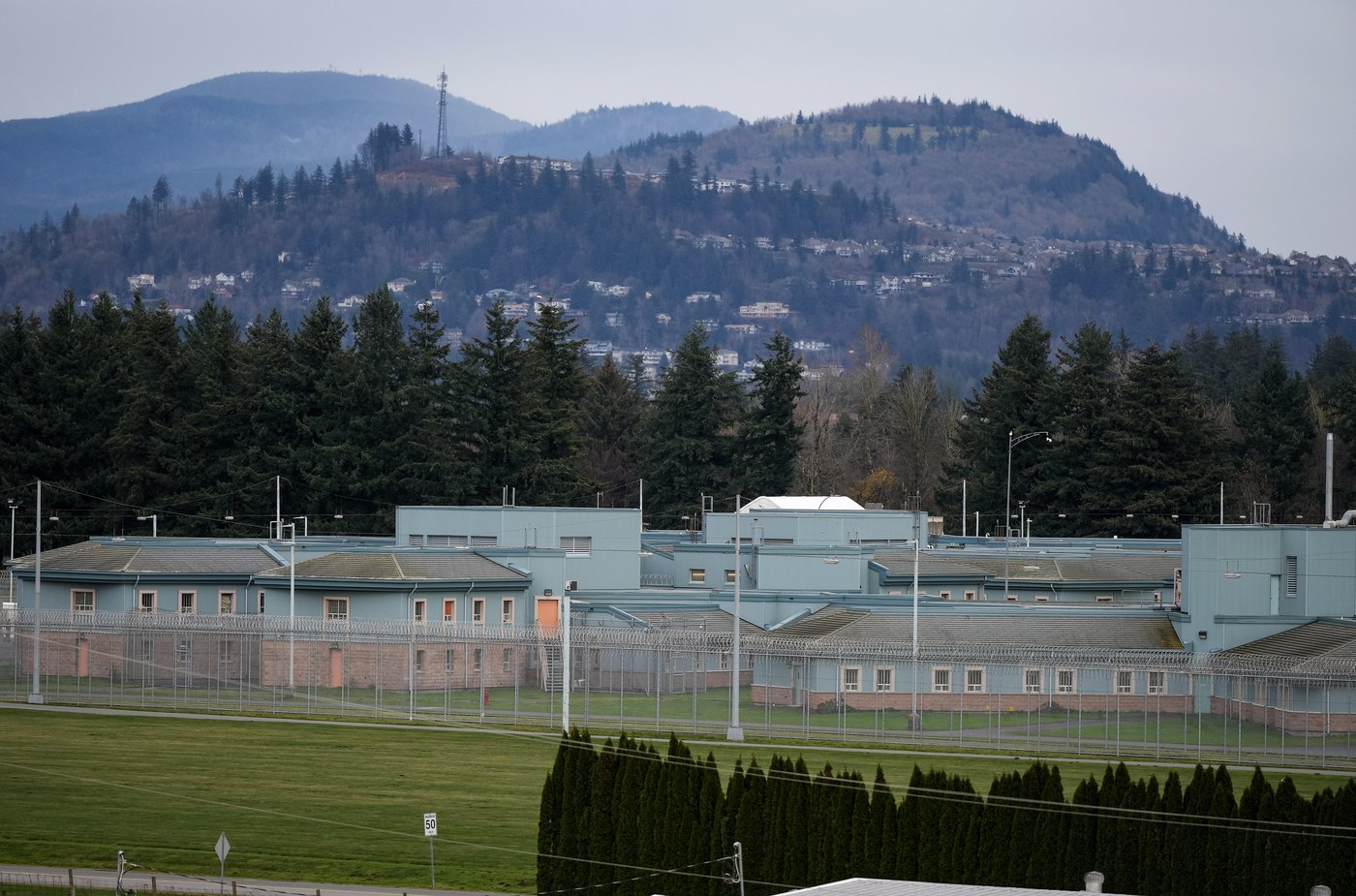
The toxic substance exposure happened at Pacific Institution in Abbotsford, B.C., on June 11, when three officers entered a cell to conduct a routine search, the union representing federal prison guards said on Monday.
John Randle, Pacific region president for the Union of Canadian Correctional Officers, said the inmate dispersed so much of the drug during the fight in a bid to destroy the evidence that the officers’ vests were “covered in the white powder.”
All three officers showed “signs of overdosing,” while two other guards who entered the cell to help after the fight broke out were also exposed but did not require hospitalization, he said.
“It was in the mix of trying to get the inmate out in custody, put him in handcuffs, and a bit of a fight there,” Randle said. “And the drugs ended up getting sprayed over the cell and went airborne.”
Randle said the guards have recovered physically and returned home, but the officer who needed chest compressions required an overnight stay in hospital before being released.
Correctional Service Canada said in a statement confirming the exposures that lab tests have shown the powder was “a mix of stimulants” and not fentanyl.
The agency said naloxone was administered to the exposed guards and confirmed that all had been released from hospital.
“We will also continue to work closely with front line staff and union partners to continuously improve safety conditions within our institutions,” the service said. “Ongoing collaboration at both the national and regional levels helps us identify pressures and implement practical solutions to them.”
The union said the exposure is the latest example of an illicit drug crisis inside federal prisons, where guards are finding illegal substances almost daily.
“This incident is not an isolated event,” says a statement from the union issued Monday. “As violence continues to rise in Canada’s federal institutions, so too does the volume of illicit drugs entering our prisons.”
Police and the union have issued several statements in the past about attempts by criminals to get drugs inside B.C. prisons, including by drone and a pigeon wearing a backpack full of methamphetamine.
In April, the RCMP and officers at the Mission Institution in B.C.’s Fraser Valley announced they found a package dropped onto the prison grounds disguised to look like a patch of loose grass.
Officers said at the time that the package showed such sophistication that it was lined with real cut grass to “seamlessly blend in” with the turf.
Inside the package, guards found about 300 grams of methamphetamine, razor blades, an iPhone and other contraband.
Randle said that last week, officers discovered another package of drugs at Mountain Institution in Agassiz, also in the Fraser Valley, but it’s happening so often that it’s no longer a surprise for guards who work there.
“It was worth probably almost $300,000,” he said. “We’re hearing numbers like that — where the 300,000-plus-dollar packages, it’s now regular to have that reported.
“It’s not even a surprise to us anymore to hear that we’re seizing those kind of packages, which is crazy.”
The union said the rise of illicit drugs found in federal prisons isn’t only due to technology used by criminals, but also because of cuts being made to security positions at the facilities that will significantly reduce the ability to intercept drugs.
Correctional Service Canada said the federal government’s spring economic update has provided targeted funding of $60.4 million over three years toward boosting its detection and disruption capacity for drone activities around prisons, as well as for enhancing security technologies.
Randle said the technology to fight ways of smuggling contraband into prisons is coming at the expense of cuts to the number of physical security positions in the facilities.
He said it makes situations like the recent drug exposure more likely due to a smaller number of on-the-ground resources to deal with physical threats.
“Our members were simply doing their jobs when they were exposed to one of the most lethal drugs on the streets. This should never happen,” Randle said.
Correctional Service Canada said savings were only made to “areas where the impact on our operations will be minimal” where there would not be repercussions on the safety of federal prisons.
“Correctional Officer posts, including Mobile Patrol posts, remain an important component of security, which are being supported by improvements in contraband detection strategies and technology, as well as continued direct supervision by operational and non-operational staff,” the agency said.
The union also criticized the lack of adequate disciplinary measures against offenders who have been caught while already behind bars.
“We should be holding inmates accountable for when they commit violent acts or introduce drugs into federal institutions,” Randle said. “But quite often from the prosecution side of the house, we keep hearing that it’s not really in the public interest because they’re already locked up in jail.
“Right now, we find it’s just a really soft approach to dealing with them, whereas if the inmates knew that there were consequences to their actions … then they might think twice because they don’t want to be in jail any longer.”
This report by The Canadian Press was first published June 22, 2026.
News from © The Canadian Press, . All rights reserved.
This material may not be published, broadcast, rewritten or redistributed.

Join the Conversation!
Want to share your thoughts, add context, or connect with others in your community?
You must be logged in to post a comment.

Chuck Chiang
The Canadian Press
Articles: 142 Related Posts
Air Canada suspends two employees after RCMP drug trafficking investigation