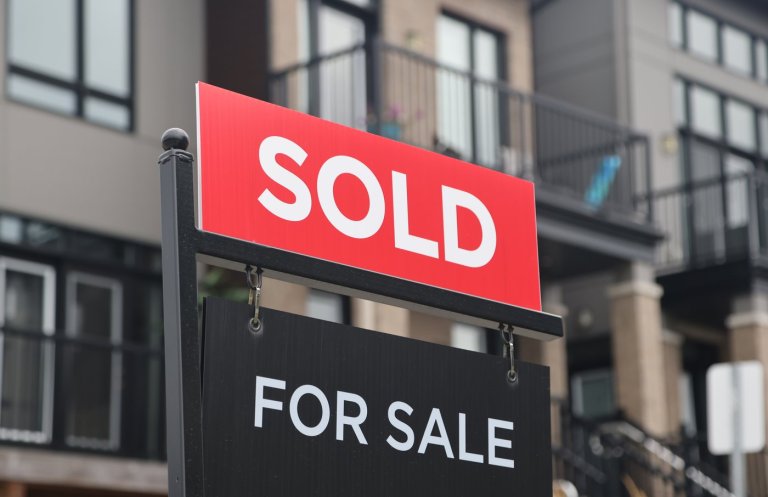


B.C. condo conversion plan might be more about financial sector than housing: expert

VICTORIA — An urban planning expert says a plan to convert empty condominiums into affordable housing in British Columbia might be more about stabilizing the financial sector than housing.
Some have criticized the federal and B.C. government’s plan to convert unsold condos in a plan that Prime Minister Mark Carney said would use “innovative financial tools” as the most efficient ways to increase housing supply.
When Carney and B.C. Premier David Eby made the announcement last week they said details would come later, but it would involve converting 2,200 unsold condos as part of a larger housing plan worth $5 billion over the next decade.
Andy Yan, the director of the city program at Simon Fraser University, says the proposal may signal to developers and their financial backers that government can stabilize the struggling sector, but key details of the plan are still unavailable.
Yan says the announcement leaves many questions unanswered, including purchase cost, which condos would be bought and why is government acting now.
He says government did not act like this in the mid-1990s, when the level of unsold condominiums was similar, but back then incomes and housing costs were more closely aligned.
“It’s speculative at this point, (but) you can kind of see this as really trying to get ahead of what happened in the United States,” Yan says, referring to the subprime mortgage crisis starting in 2007, where many borrowers couldn’t pay their mortgages, triggering a recession.
Carney told the news conference last week that with higher interest rates and weaker demand, developers “are stuck,” and don’t want to sell at a loss.
B.C. Conservative housing critic Linda Hepner says the housing crisis won’t be solved by “wasting taxpayer dollars on artificially propping up developers.”
“If prices are set too high for condo units to be sold, market forces will cause the prices to lower until people can afford them,” she says in a statement. “But if developers know that the government will simply bail them out if the condos sit vacant long enough, they will never drop their prices, making the housing crisis even worse.”
Yan says that the program raises questions about government interfering with the market.
Policy-makers and certain industry leaders have long told the public that housing has a supply problem, Yan says.
“Now, with this type of housing coming online, the market should allow prices to naturally come down,” he says.
He says the program also speaks to the problem of moral hazard, about “socializing the costs of speculations.”
It could also set a precedent for other industries to ask for financial help from the public purse, Yan said.
This report by The Canadian Press was first published June 23, 2026.
News from © The Canadian Press, . All rights reserved.
This material may not be published, broadcast, rewritten or redistributed.

Join the Conversation!
Want to share your thoughts, add context, or connect with others in your community?
You must be logged in to post a comment.

Wolfgang Depner
The Canadian Press
Articles: 57 Related Posts