Elevate your local knowledge
Sign up for the iNFOnews newsletter today!
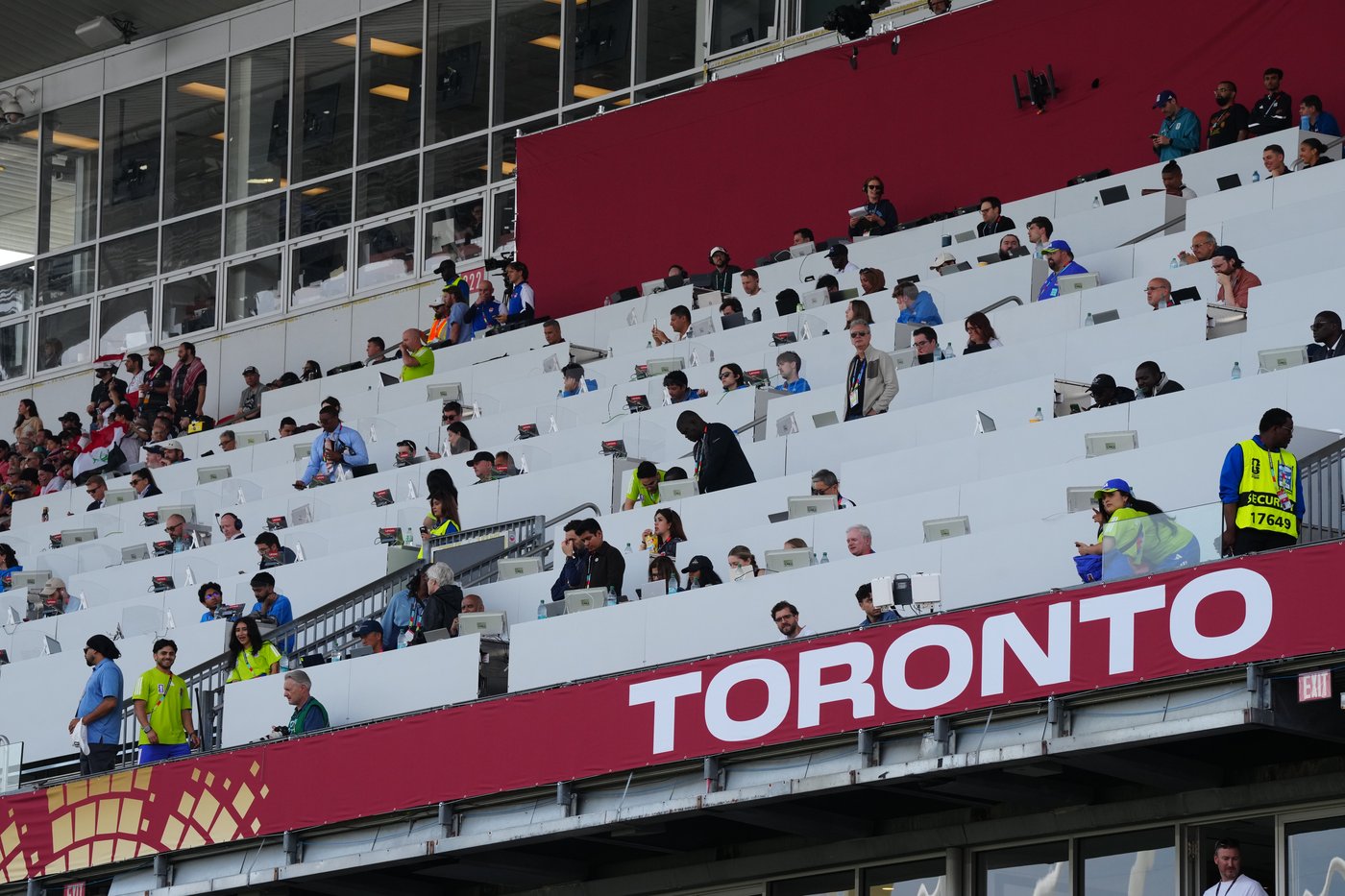
TORONTO — It’s an adage in North American sports journalism that there’s no cheering in the press box.
The idea is that reporters must maintain a sense of objectivity at all times, so that when it comes to criticizing a team — or covering when a star player gets embroiled in legal trouble — no one can doubt the fairness or accuracy of their reporting. That cultural norm has been challenged at Canadian and American stadiums during the FIFA men’s World Cup, however, as that stoicism isn’t shared by most other cultures.
“It’s a little bit jarring, I think, for Canadian or North American reporters when they cover a big event like this,” said Gareth Wheeler, lead commentator for OneSoccer.ca, who has covered several World Cups. “It’s almost like an extra cheering section, extra support section, which creates such a different dynamic.
“That shouldn’t be confused with blind loyalty because they’re as critical as it comes when their side isn’t performing.”
North American sports journalists will usually take pains not to appear biased. That includes using neutral language when interviewing coaches and players, not wearing team colours on the job, and remaining stone-faced after goals or other big plays.
Wheeler said it’s understandable that the rest of the world largely ignores those largely unspoken conventions.
“I feel like allegiances hold stronger, or at least from a front-facing perspective in soccer than any other sport,” said Wheeler while watching Senegal beat Iraq 5-0 in Toronto on June 26. “The national team’s success is accentuated because everyone’s buoyed by the success that football has in the country and the knock on effect of that.
“It’s almost like at times they’re part of the team, but when things go sideways, so does that support, so it’s tenuous when it happens.”
There’s been some evidence of those differing views on reporters’ behaviour throughout the World Cup, like when United States manager Mauricio Pochettino — an Argentine — complained at a post-match news conference following America’s 3-2 loss to Turkey on June 25 that no one had congratulated him. A local New Jersey reporter noted on X that Ecuadorean reporters excitedly Facetiming home while still in the media tribune after their team stunned Germany 2-1 that same day.
Australian reporters openly celebrated at Vancouver Stadium after beating Turkey 2-0 on June 13. Media from Bosnia-Herzegovina couldn’t contain themselves after a 1-1 draw with Canada at Toronto Stadium on June 12.
Wheeler empathized with his exuberant colleagues.
“I almost fell off my chair when Sebastian Giovinco scored the goal against New York (Red Bulls) and Toronto FC qualified for the playoffs the first time, just because it was such an incredible moment, an incredible night,” said Wheeler, noting it was the night that Jose Bautista hit his infamous “bat flip” home run at Rogers Centre as the Blue Jays rallied to beat the Texas Rangers in an MLB playoff game.
“It was just like the city was on fire, and just being a Toronto guy, like I was excited by everything that was going on.”
FIFA’s rules for accredited media stipulate that no journalist may distract or interfere with their colleagues’ ability to work. As one spokesman said, celebrating a goal is fine but participating in a chant is unacceptable.
Signs reminding reporters that they may not ask players for autographs or selfies in the mixed zone — the designated area where interviews happen — were prominently hung at all of the World Cup venues.
Some reporters got in trouble with FIFA officials in Vancouver for breaking that rule after Egypt beat New Zealand 3-1 on June 21 for that country’s first-ever World Cup victory. They asked Egypt manager Hossam Hassan for selfies after his post-match news conference.
Nelson Perez, a Venezuelan who has lived in Canada for 11 years, said that there’s a balance to be struck.
“I think it’s a personal thing, to be honest with you,” said Perez, the founder and executive director of Toronto-based Hispanic Sports Media. “It’s subjective, because there’s many instances where I feel that I’ve gone completely numb, so I don’t really even cheer for specific stuff.
“At the same time, you’re a fan first, you’re passionate, it drives you.”
Complicating this cultural clash is the different kinds of media being assigned to World Cup matches. Canadian reporters who typically cover crime, politics, or other topics aren’t necessarily aware of the social norms that their sports-focused peers adhere to. New or alternate media, like social media influencers, also blur the line.
“People consume content in silos now, and there’s a silo where fandom is what’s preferable,” said Wheeler. “Just give me how I feel, or justify how I feel in support of my team. That’s absolutely part of the equation.
“The story isn’t necessarily the game that’s happening, it’s the influencers’ reaction to a goal, or people chasing clout ‘look at me in a stadium!’ It’s just an entirely different business.”
Despite these cultural clashes, aside from FIFA officials enforcing their rules, there has been no serious conflict between North American reporters and visiting media or traditional media versus new media.
“Oh no, never, no, no,” said Perez. “I mean, I think people are respectful, honestly. I mean, here in Canada, I hardly see anything like that.
“Even in the opportunities I’ve had to cover international events, I really haven’t seen anything like that.”
This report by The Canadian Press was first published July 1, 2026.
News from © The Canadian Press, . All rights reserved.
This material may not be published, broadcast, rewritten or redistributed.

This site is protected by reCAPTCHA and the Google Privacy Policy and Terms of Service apply.
Want to share your thoughts, add context, or connect with others in your community?
You must be logged in to post a comment.