Elevate your local knowledge
Sign up for the iNFOnews newsletter today!
Elevate your local knowledge
Sign up for the iNFOnews newsletter today!
Select Region
Selecting your primary region ensures you get the stories that matter to you first.
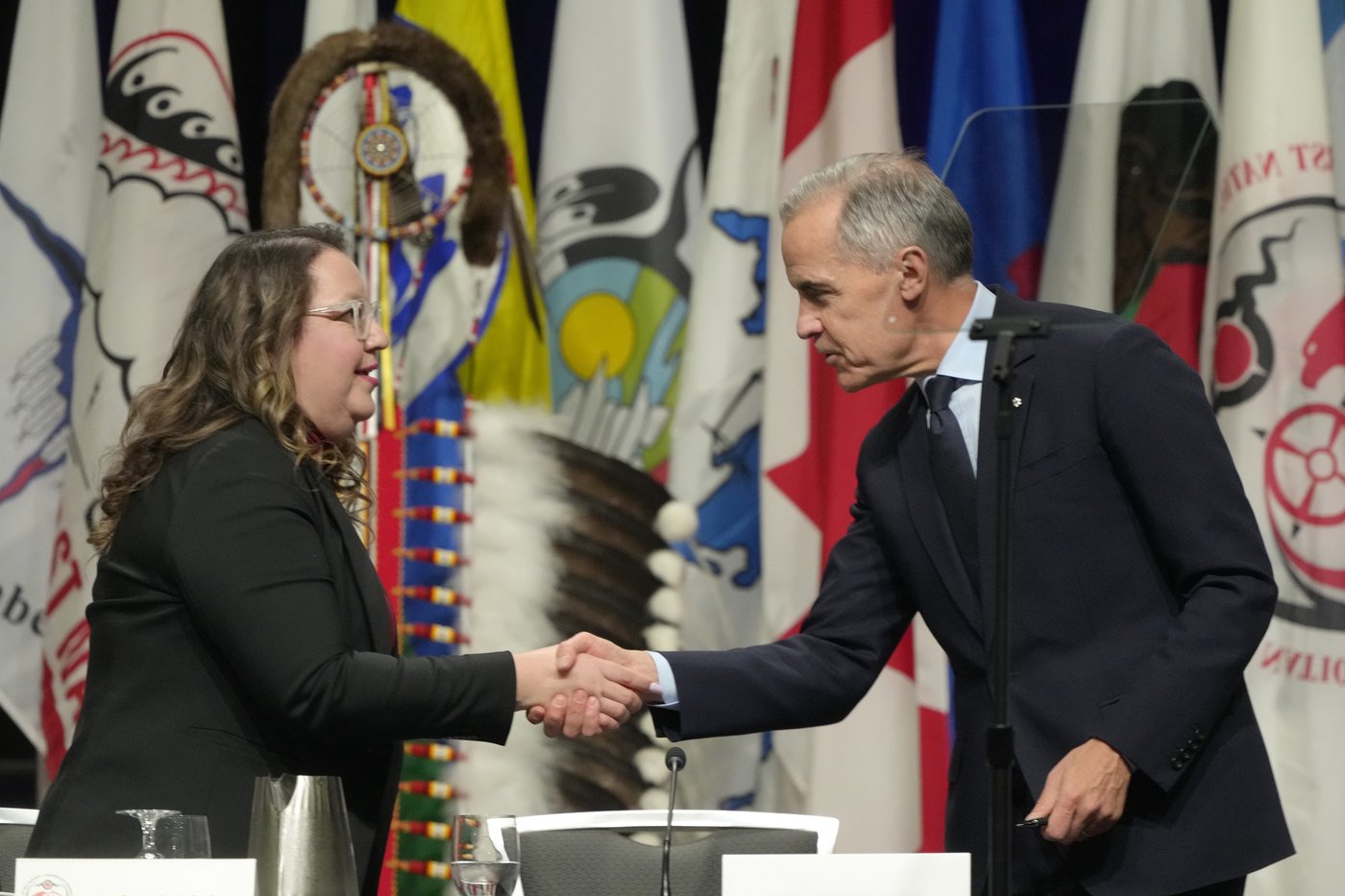
OTTAWA — A planned meeting this fall between first ministers and chiefs from across the country was hard to secure and must not be the only one of its kind, Assembly of First Nations National Chief Cindy Woodhouse Nepinak said Tuesday.
In her opening remarks at the AFN’s annual general assembly in Ottawa, Woodhouse Nepinak told chiefs the Prime Minister’s Office has confirmed the meeting will take place in October.
“Securing this meeting didn’t come easy. And part of me, I’m not going to believe it until we are there,” Woodhouse Nepinak said.
“Chiefs are united in saying that this national meeting can’t be one and done. That means establishing an ongoing federal-provincial accountability mechanism to ensure that socioeconomic gaps are addressed through deeds and not words.”
Woodhouse Nepinak has long called for First Nations to be included in meetings between prime ministers and provincial and territorial leaders. Often the leaders of national Indigenous organizations, including the AFN, are invited to participate in a side meeting before or after the prime minister and premiers meet themselves.
But a larger gathering where the chiefs of individual First Nations are invited has not happened. Prime Minister Mark Carney promised in his speech to the AFN special chiefs assembly in December that he would convene such a meeting sometime this year. It is still being discussed what the agenda is and who all will attend.
The planning comes as many First Nations have concerns about Carney’s major project agenda and consultations with their communities, and calls for this type of meeting got louder last year when the federal and provincial governments were discussing among themselves ways to fast-track major infrastructure projects.
Woodhouse Nepinak has described First Nations’ exclusion from first ministers meetings as “very disrespectful.”
“First Nations are for economic growth that will drive Canada’s collective prosperity for the next century, but not at the expense of our rights or of the Crown’s legal obligations to our people,” Woodhouse Nepinak said Monday.
She said the meeting with Carney and the premiers will be a “big test” of Canada’s ability to reconcile economic growth with First Nations rights.
“Are the conversations going to be easy? Absolutely not,” she said. “We’re not going to solve Canada’s issues in one day.”
Her speech opened the three-day summer meeting of AFN chiefs, which will including debate on 53 resolutions, including some on the federal government’s major projects agenda, the state of First Nations child welfare, Indian Act status and calls for the Vatican to rescind a series of papal decrees.
Chiefs will also hear presentations on the government’s recently tabled First Nations Clean Water Act, consultations on major projects development and child welfare reform.
The Assembly of First Nations is a national advocacy body that takes its direction from some 630 First Nations chiefs through special and annual general assemblies. It is not a rights-holding institution but it represents rights-holding chiefs.
Indigenous Services Minister Mandy Gull-Masty, Crown-Indigenous Relations Minister Rebecca Alty, Natural Resources Minister Tim Hodgson, Artificial Intelligence Minister Evan Solomon and Public Safety Minister Gary Anandasangaree are expected to attend this week’s annual meeting.
Gull-Masty reintroduced legislation this summer that seeks to ensure First Nations have reliable access to clean drinking water in their communities.
While the legislation is largely in line with a bill that failed to pass under the government of Prime Minister Justin Trudeau, it drops language in the former bill that would have immediately recognized First Nations have a right to clean drinking water — and instead says the government will work toward the “progressive realization” of that right.
A resolution proposed by Chief Roderick Gould Jr. of Abegweit First Nation calls on chiefs to demand that the right to clean water be included in the new bill.
The chiefs will also debate a resolution this week calling on Pope Leo to rescind papal bulls — official papal decrees — that critics say were used to provide religious cover for the enslavement and conquest of Indigenous Peoples around the world.
In 2023, the Vatican formally repudiated the controversial Doctrine of Discovery, which was used as the basis for European claims to territories in the Americas. Chief Dan Manuel of the Upper Nicola Indian Band said he wants the Vatican to go further by tearing up other papal decrees that served as the “blueprint” for colonization.
He said those decrees are responsible for ongoing violations of international human rights law. He is calling for the establishment of a worldwide memorial to archive and honour the effects those decrees had on Indigenous people.
The Alberta referendum is also cropping up on the agenda. Woodhouse Nepinak said First Nations have always stood up for Canada and are doing so right now by pushing back against the Alberta separation movement.
“World War One, World War Two, Afghanistan, the pandemic, now the separation,” Woodhouse Nepinak told an audience of hundreds of chiefs.
“We have made it clear that any proposal to separate from any province or territory from Canada is fundamentally illegitimate and unconstitutional without the explicit, prior, informed and collective consent of First Nations.
“We need to call it what it is, because Albertans need to know that if they vote to separate from Canada, that they’re not taking the land with them.”
The Assembly of First Nations is set to hold an election for national chief next year, as Woodhouse Nepinak’s three-year term is set to expire.
She said Monday she intends to seek re-election.
No other candidate has publicly declared their intention to run.
This report by The Canadian Press was first published July 14, 2026.
News from © The Canadian Press, . All rights reserved.
This material may not be published, broadcast, rewritten or redistributed.

This site is protected by reCAPTCHA and the Google Privacy Policy and Terms of Service apply.
Want to share your thoughts, add context, or connect with others in your community?
You must be logged in to post a comment.