Elevate your local knowledge
Sign up for the iNFOnews newsletter today!

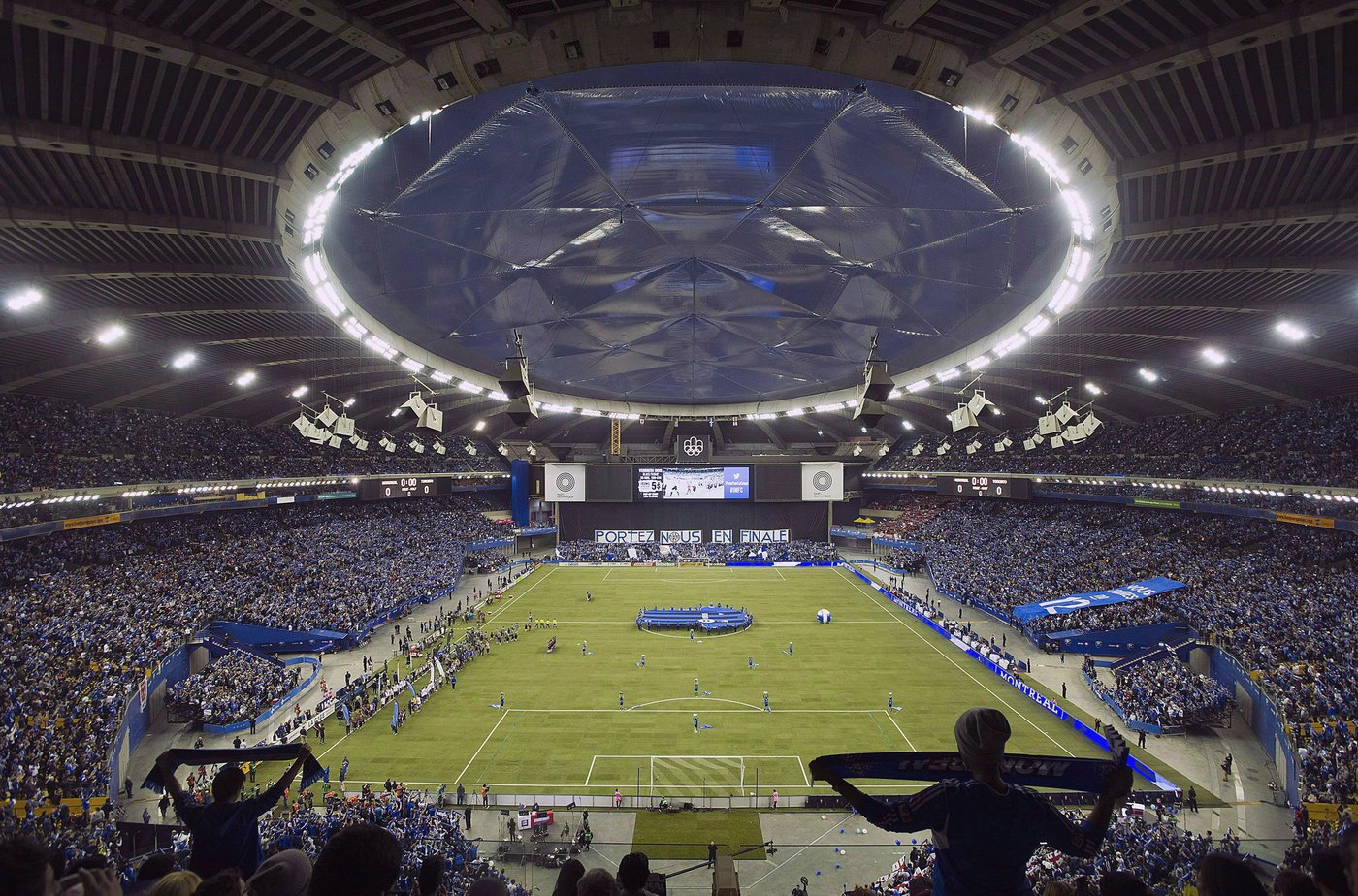
MONTREAL — The Quebec government has approved plans to renovate the interior of Montreal’s Olympic Stadium, Tourism Minister Amélie Dionne announced Friday.
The announcement comes as construction to replace the Big O’s troubled roof — and make it permanent rather than retractable — is already underway.
The government approved the $870-million roof project in 2024, citing a $2-billion cost to demolish the 56,000-seat venue instead. Its list of ongoing infrastructure projects also includes several other stadium-related investments not covered by that $870-million price tag, pushing total spending to $1.085 billion so far.
The next phase includes redesigning the seating to bring fans closer to the field and adding premium suites. The lower bowl will reportedly be reconfigured into a rectangular layout to surround a football or soccer field, with washrooms and food concessions also getting an upgrade.
The government did not reveal an estimated cost for the interior renovation, announced on the 50th anniversary of the 1976 Olympics opening ceremony. The Olympic Park has been mandated to negotiate contributions from private partners over the coming months to help cover the cost of the seating and hospitality areas work, the government said in a release.
Both the roof and interior renovations are expected to be complete by 2028.
“Today, we are taking another important step toward an Olympic Stadium built for the future. Right now, there is no other venue here capable of hosting more than 20,000 spectators for major international tours. Quebec deserves a modern facility to host those tours, as well as major sporting, cultural and entertainment events,” Dionne said in a statement.
“Let’s not forget this is the only large covered stadium in Eastern Canada that can hold more than 50,000 people for major international tours. Given market interest in a modernized venue, our stadium has everything it needs to become a major driver of prosperity for Quebec.”
Montreal has notably missed out on major events in recent years — including the World Cup and Taylor Swift’s Eras Tour — in part due to its lack of a suitable major stadium.
The announcement is good news for Major League Soccer club CF Montréal, which will need a new home for part of the year once the league shifts to a winter calendar in 2027.
MLS commissioner Don Garber pushed the government to “finish the job” during a visit to Olympic Stadium last month, saying a full interior overhaul was essential to CF Montréal’s long-term future in the league.
The club, owned and founded by Quebec businessman Joey Saputo, currently plays at the 19,619-capacity Stade Saputo, which is not winterized.
“CF Montréal welcomes today’s announcement regarding the modernization of Olympic Stadium,” the team said in a statement. “This marks an important milestone and reflects a commitment to providing the province of Quebec with sports and entertainment infrastructure that matches its ambitions.
“We commend the Government of Quebec and the Olympic Park for the work accomplished to date. We will now take the time to review the details of the project and continue our discussions with the various stakeholders to assess the next steps for the Club.”
The CFL’s Montreal Alouettes played at Olympic Stadium until moving to McGill’s Molson Stadium in 1998. The city last hosted the Grey Cup at the Big O in 2008 before a crowd of 66,308.
Olympic Stadium was originally built for the 1976 Summer Games and the since-relocated Montreal Expos of MLB.
The stadium has also been known as the “Big Owe” for its ballooning construction costs, which contributed to an Olympic debt that took 30 years to pay off.
Although the main Olympic Stadium was built just in time to host the Games, the roof wasn’t completed until 1987. It was replaced in 1998 with a non-retractable roof made of Teflon-coated fibreglass that proved equally unreliable, rendering the stadium unusable when more than three centimetres of snow fell.
The government has promised the new roof will allow the stadium to stay open year-round, almost triple gross revenue and last an expected 50 years.
This report by The Canadian Press was first published July 17, 2026.
News from © The Canadian Press, . All rights reserved.
This material may not be published, broadcast, rewritten or redistributed.

This site is protected by reCAPTCHA and the Google Privacy Policy and Terms of Service apply.
Want to share your thoughts, add context, or connect with others in your community?
You must be logged in to post a comment.