Elevate your local knowledge
Sign up for the iNFOnews newsletter today!

CHARLOTTETOWN — Several premiers came out of a meeting with Prime Minister Mark Carney on Tuesday saying they backed an urgent effort by his government to work out a trade deal with the U.S. amid threats of a dramatic escalation in tariffs on Canadian goods.
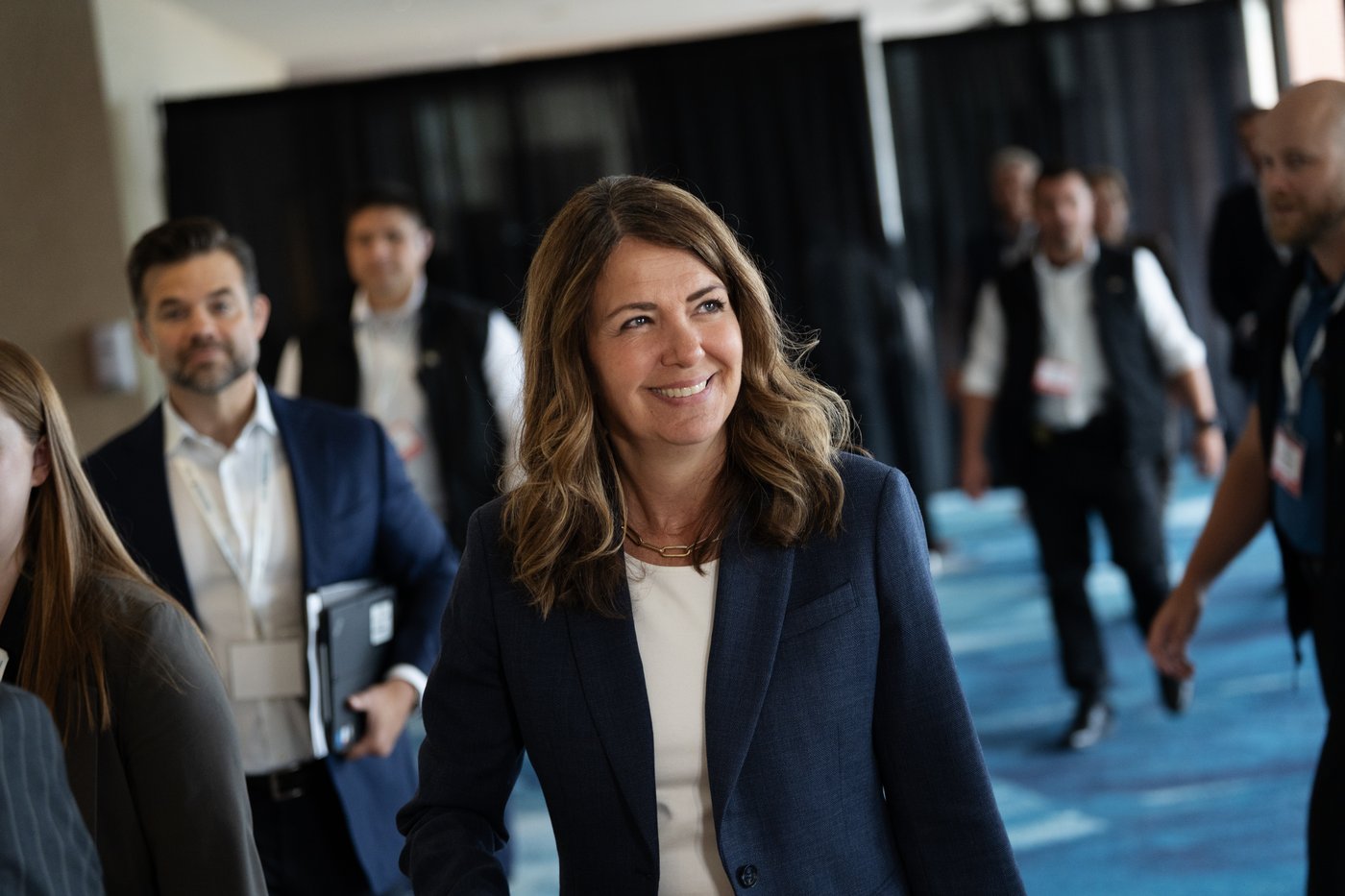
“We all want to see an intensity ramp up,” Alberta Premier Danielle Smith told reporters in Charlottetown, where she was meeting with her counterparts for an annual gathering of provincial and territorial leaders.
“The only way we’re going to get to an agreement is if diplomacy prevails and if both sides put a lot of resources into it.”
Quebec Premier Christine Fréchette agreed Ottawa needs to focus on renewing the Canada-U.S.-Mexico Agreement, a pact that has thus far shielded Canadians from a majority of Trump’s levies.
“We all share, in fact, the same objectives: intensified negotiations in order to avoid an escalation that would be very harmful,” Fréchette said.
A virtual meeting between Carney and the premiers was hastily added to the agenda Tuesday after Trump signed orders to increase tariffs by 50 per cent on a variety of goods ranging from hockey sticks to honey to cement.
A senior White House official said the tariffs, to be applied within 30 days from Monday and without exemptions, are in response to provincial bans on U.S. liquor, Canada’s supply-managed dairy system and quotas on certain U.S. vehicles.
The new tariffs will not apply to energy, potash, fish or other goods already facing separate sector-specific tariffs, the official said.
However, provincial and territorial leaders vary in what they believe is the best of course of action to renew the Canada-U.S.-Mexico trade agreement and deescalate the trade war.
While Smith maintained her strict stance against leveraging Alberta’s oil resources, New Brunswick Premier Susan Holt left open the door to using her province’s energy exports to the U.S. as a high-value chip in trade talks.
“We do sell a lot of energy products to New England. We put gas in their cars, we put jet fuel in their fighter jets and we heat and cool their homes,” Holt noted.
“And so we knew that we have those kinds of tools at our disposal should we need them.”
Before the call with the prime minister, Ontario Premier Doug Ford called on Canada to hit the U.S. back with tit-for-tat tariffs if there’s no resolution by Trump’s deadline, warning there would be a $28-billion impact to Canada if the levies go ahead.
“We are an energy powerhouse and we can dismantle the U.S. if we wanted to, if we all work together,” Ford told reporters early Tuesday afternoon.
“No matter if it’s the electricity … the potash, the oil — we’re their No. 1 customer in the world. They need to feel the pain rather than us constantly feeling the pain.”
Ford also said he wants to see more support from the other provinces when it comes to standing up to Trump’s tariffs.
“It can’t always be Ontario, it has to be a Team Canada approach, and that’s my message to my premier friends: that we have to stay united.”
Saskatchewan Premier Scott Moe urged Dominic LeBlanc, the minister in charge of U.S.-Canada trade, to “camp out” in Washington, D.C., until CUSMA is renewed.
He added Ottawa and Washington need to drop the rhetoric and get to negotiating.
Despite the different approaches, Northwest Territories Premier R.J. Simpson said his counterparts are working collaboratively towards the same goal.
“We can come together and have discussions about those ideas. Ever since I’ve been at this table, I’ve been amazed at the solidarity,” Simpson said.
“There are differences of opinions but every time we’re in that room, we’re all pulling in the same direction.”
Earlier Tuesday, British Columbia Premier David Eby said Trump’s new tariffs will harm his province’s economy but added “there is not a chance in hell” he will allow U.S. alcohol back in B.C. liquor stores.
Provinces removing American alcohol from store shelves was a countermeasure to existing U.S. tariffs and the White House has flagged it as a trade irritant. Saskatchewan and Alberta have returned American booze to store shelves.
P.E.I Premier Rob Lantz said this week’s Council of the Federation meeting hasn’t been derailed by Trump’s new threats as trade was already high on the agenda this week.
Trump’s levies on Canadian goods have continued to affect every Canadian province, including Ontario’s steel, fabrication in Alberta and aluminum production and forestry industries in British Columbia, Quebec and Atlantic Canada.
U.S. pressure on the economy has spurred an effort encouraged by Carney’s Liberal government and business advocates to tear down internal trade barriers to boost the domestic economy.
That work continued Tuesday as nine premiers signed an agreement to remove major barriers to interprovincial sales of alcohol.
The deal says provincial rules will be changed to allow brewers and distillers to sell alcohol directly to consumers, regardless of jurisdiction.
Direct-to-consumer sales of beer, wine and spirits manufactured in one province and shipped to another have been largely governed by agreements between provinces or were effectively prohibited.
All but the premiers of Quebec, the Yukon, the Northwest Territories and Nunavut signed the deal. However, a statement released by those who did sign said Quebec and the Yukon were working to join in the near future.
While the premiers may have common struggles and goals, there are also divisions within the group of 13. Chief among them could be Smith’s approach to separatism forces in her province.
“The separatism conversation continues in that province, and there are strong divisions between the premiers about how Premier Smith is handling that,” Eby said.
Meanwhile, Indigenous leaders met with premiers on the sidelines, saying First Nations voices must be heard nationwide as provincial and federal governments pursue major projects and a new trade deal with the U.S.
Assembly of First Nations National Chief Cindy Woodhouse Nepinak said she’s noticed a bit of a shift in the attitude of premiers, but more work needs to be done to ensure they’re respecting the rights of communities.
“We recognize that trade policy is led by Canada and provinces and territories,” said Metis National Council President Victoria Pruden.
“We want to be collaborative and supportive partners in this process, and be part of the solution as Canada faces these unprecedented challenges.”
This report by The Canadian Press was first published July 21, 2026.
— With files from Kelly Geraldine Malone in Washington, D.C., Erika Morris in Montreal and Jack Farrell in Edmonton.
News from © The Canadian Press, . All rights reserved.
This material may not be published, broadcast, rewritten or redistributed.

This site is protected by reCAPTCHA and the Google Privacy Policy and Terms of Service apply.
Want to share your thoughts, add context, or connect with others in your community?
You must be logged in to post a comment.