Elevate your local knowledge
Sign up for the iNFOnews newsletter today!
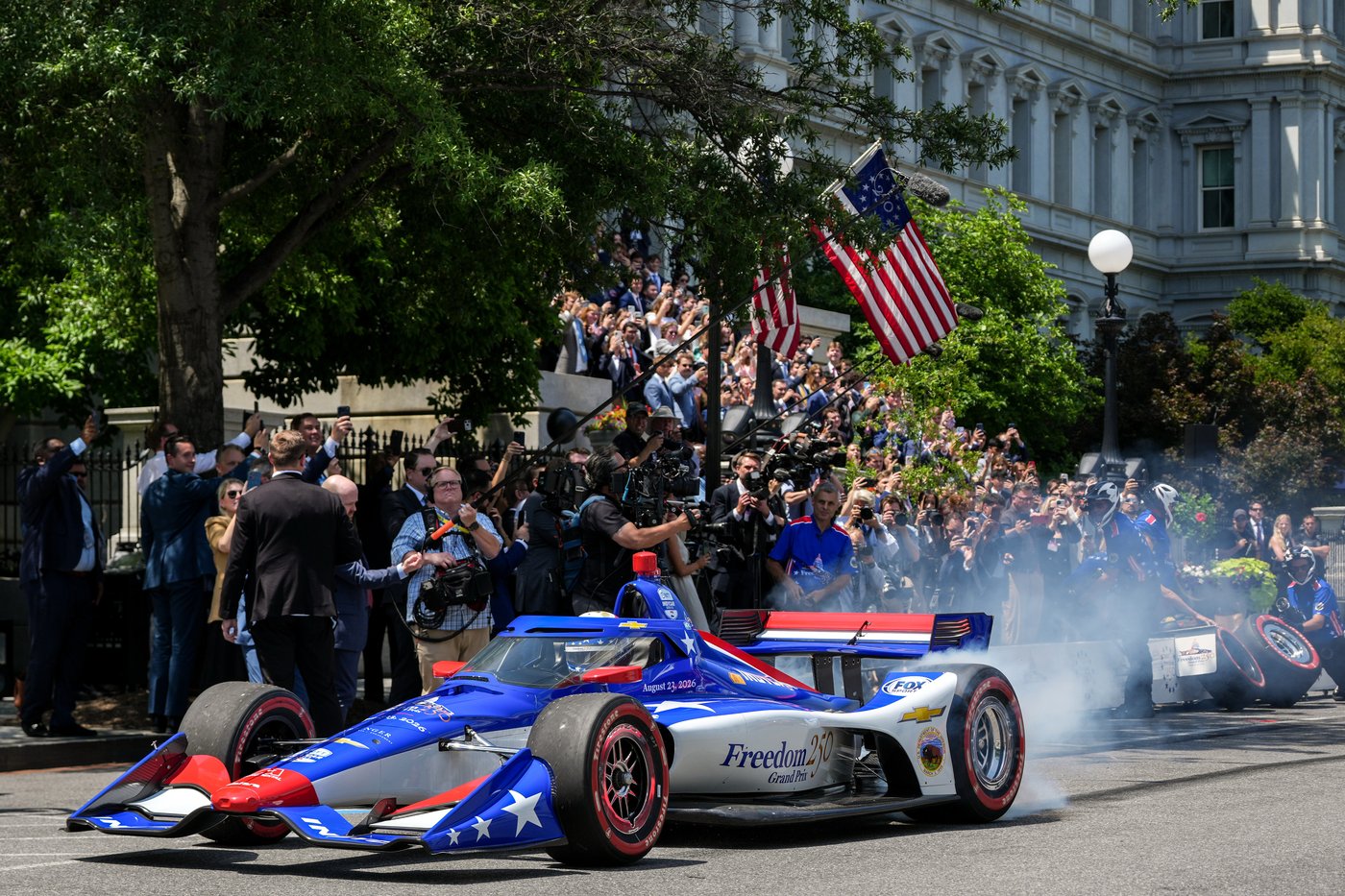
WASHINGTON (AP) — The speed limit along Pennsylvania Avenue is 25 mph.
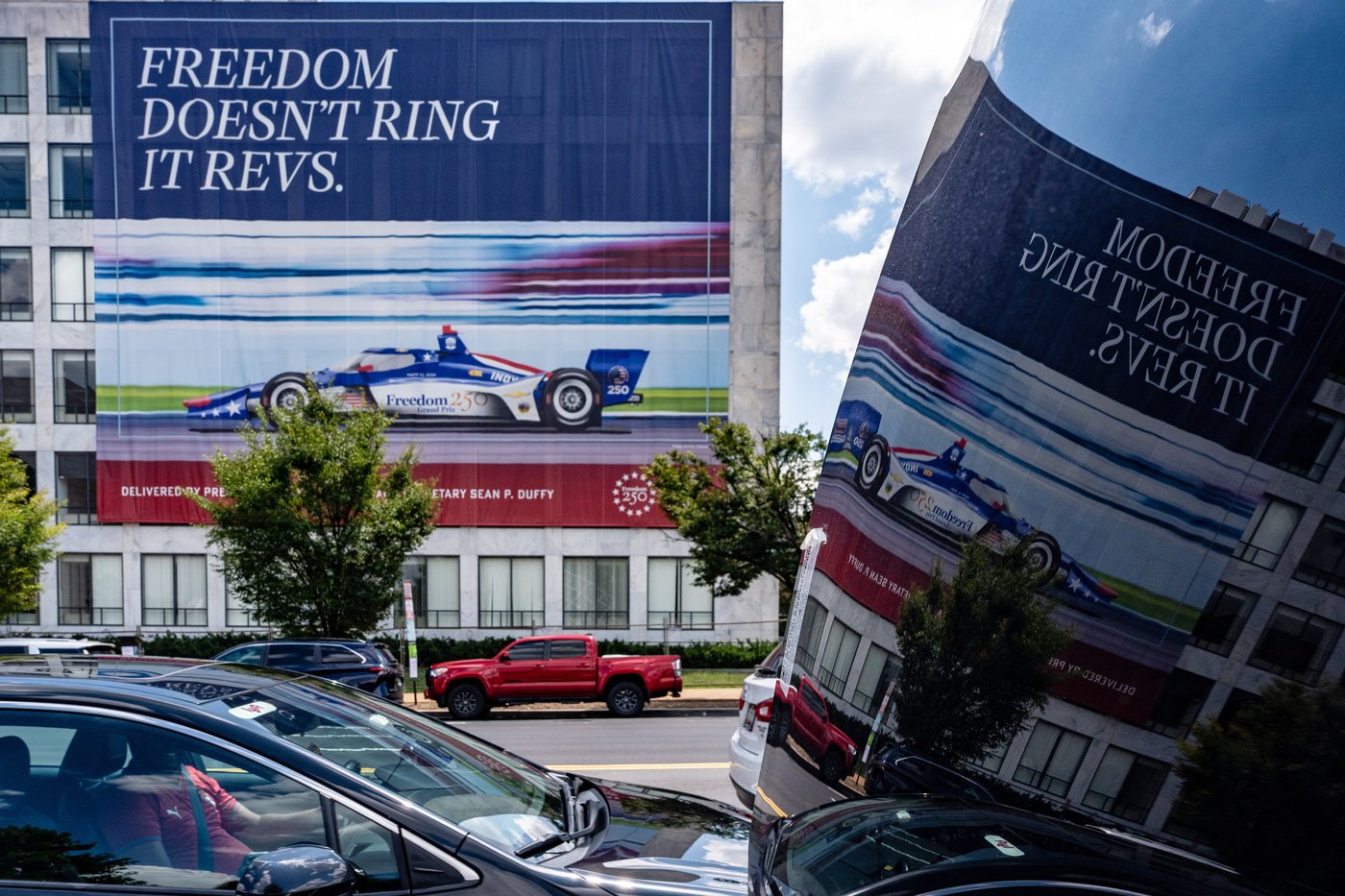
But the open-wheel race cars roaring through the longest straightaway of the upcoming Washington IndyCar race organized by President Donald Trump could be going nearly eight times that fast.
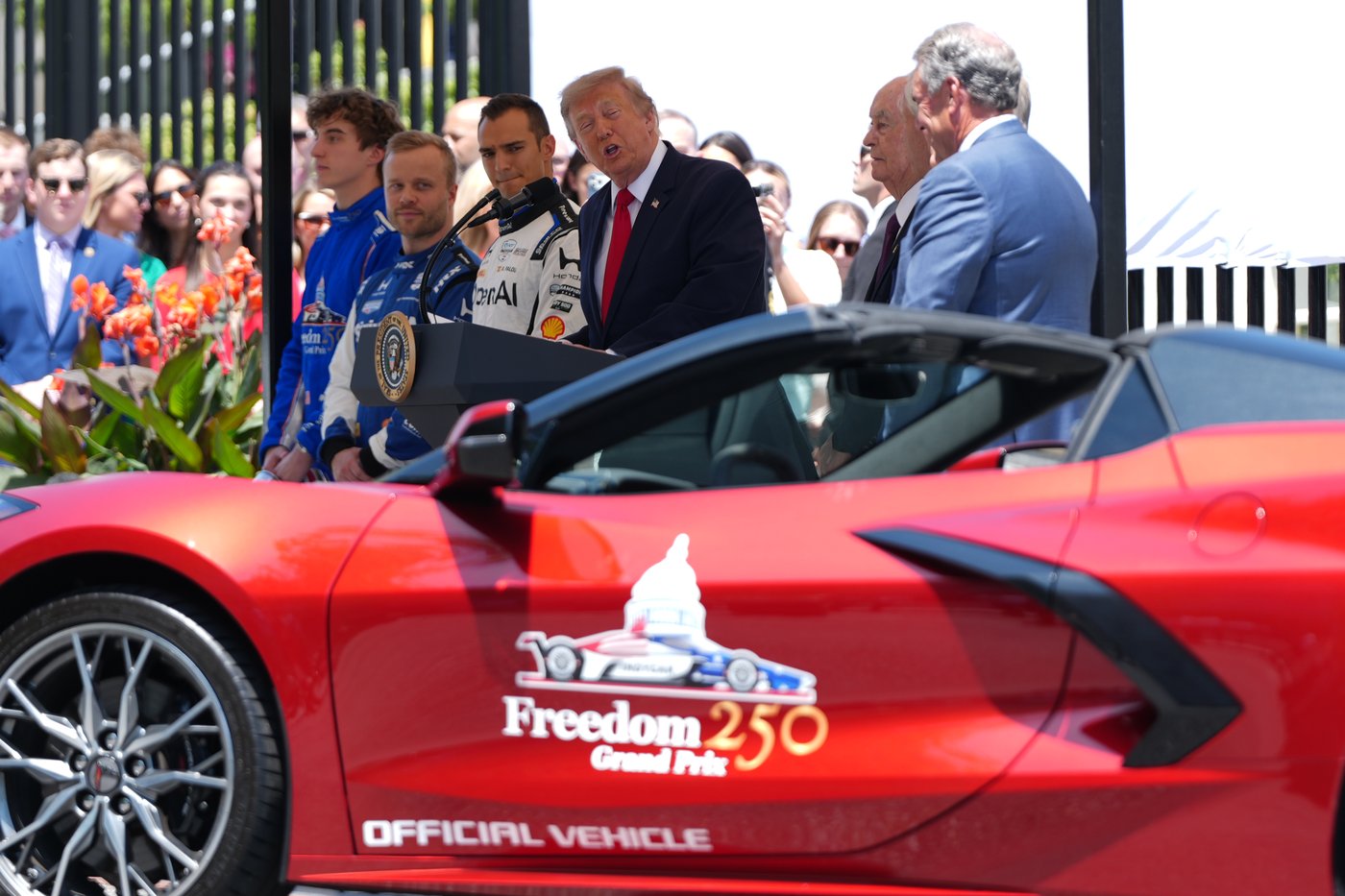
“If we did that during the regular day, I think people would be put in jail, perhaps for the rest of their lives,” Trump joked recently while hosting an IndyCar pit crew at the White House to hype the Freedom 250 Grand Prix.
The race, scheduled for Aug. 22 and 23, features vehicles that typically reach street-course speeds approaching 200 mph and have enough torque to tear off manhole covers. It is the latest — and the fastest — of the major events Trump has hosted against the backdrop of America’s 250th birthday, a larger celebration he has made as much about himself as possible.
The president staged a UFC fight on the White House’s South Lawn for his 80th birthday in June and held a rally to kick off the Great American State Fair on the National Mall after most of the event’s scheduled musical acts pulled out. He headlined another rally for July Fourth on the National Mall, ahead of a massive fireworks display marking the semiquincentennial of the Declaration of Independence’s signing.
Historian Michael D. Hattem said Trump’s events have put little focus on “addressing the specific history of the founding of the country or the 250th.” White House spokesman Davis Ingle countered that Trump “is focused on saving our country — not garnering recognition.”
Trump is “ensuring that America gets the spectacular 250th birthday it deserves,” Ingle said in a statement, adding that the series of events Trump has helped organize shows that “2026 is sparking a renewal of patriotism and national pride” under the president’s leadership.
Race preparations include securing manhole covers
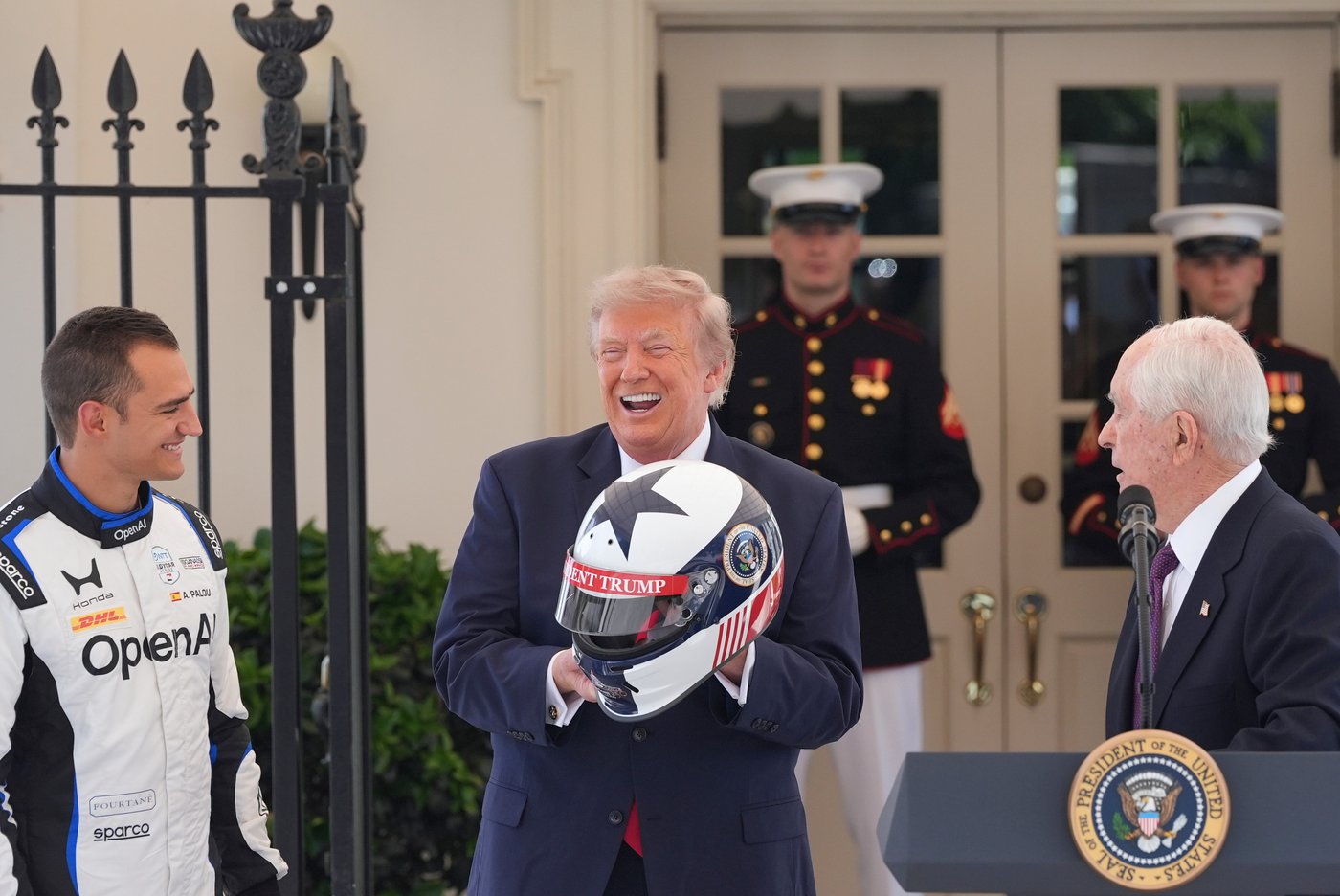
The IndyCar event will be 250 miles (400 kilometers) over 147 laps on a 1.66-mile (2.67-kilometer) track featuring seven turns. Series owner Roger Penske, whom Trump awarded the Presidential Medal of Freedom in 2019, led the effort to make the race happen in the District of Columbia. He gave the president a racing helmet, urging him to wear it “when you’re riding around in The Beast, leading the field to the green flag” — a traditional prerace kickoff that may feature the presidential limo.
D.C. Mayor Muriel Bowser suggested that the event was the “first, to be followed by second and third,” and Trump says he’d like more Washington races in future years. But Bud Denker, president of Penske Corporation and the race’s chair, isn’t committing.
“It is the first ever,” he said. “It might be the only.”
Denker said Penske is paying for the “vast majority” of the race, including road construction and improvements, while the city handles some “very limited” repaving. The District of Columbia referred questions about repaving costs to Penske.
About a third of the track needs road improvement, a cost that should come in at under $3 million, Denker said. That’s less than is often spent on road fixes ahead of other races, including in Markham, Ontario, where up to $9 million is being doled out on improvements for the IndyCar race being held the week before Washington’s event, he said.
“The roads here are in pretty good shape,” Denker said, noting that area residents are surprised when they hear him say that.
But that reflects the nature of the nation’s capital: The stretch of Pennsylvania Avenue from the White House to the U.S. Capitol is repaved every four years for presidential inaugurations. Another key area along Constitution Avenue was resurfaced after tanks rolled down it for Trump’s military parade marking July 4 last year.
One issue, Denker said, is the 220-plus manhole covers on the race circuit that had to be welded to ensure the race cars don’t suck them off the road. About 50 of those need to be fitted with silicone because they are set too deep into the road, creating a bump, he said.
Organizers also are paying to build 1,800 walls weighing 10,000 pounds (4,536 kilograms) each to ring the track and metal detectors that will be manned by the Secret Service.
Penske is relying on the federal departments of Interior and Transportation, Denker said, not for funding but for help with issues such as permitting, allowing Chevrolet to set up a car display and vendors to sell merchandise and beer on the National Mall — activities that aren’t normally allowed.
The route features monuments and landmarks
The race will go in the rain, except in the event of lightning or if major puddling makes the track slippery. Denker said that 288,000 free tickets were requested through a lottery system — exceeding the 130,000 spectators whom organizers plan to host on each of the event’s two days.
“It’s just going to be something we’ve never seen before,” said Denker, who said there will be 90 minutes of prerace show that Sunday and military flyovers like those that thundered over the National Mall for July 4.
Bob Varsha, a veteran sports announcer who long specialized in motorsports, said that a track running less than 1.7 miles (2.7 kilometers) is shorter than most street race courses and that Washington’s design may feature 90-degree corners. That means cars likely won’t be able to maintain top speeds. “It’s going to be a lot of speed up, slow down,” he said.
“It’s a huge idea,” Varsha said. “And I hope it goes as well as it possibly can.”
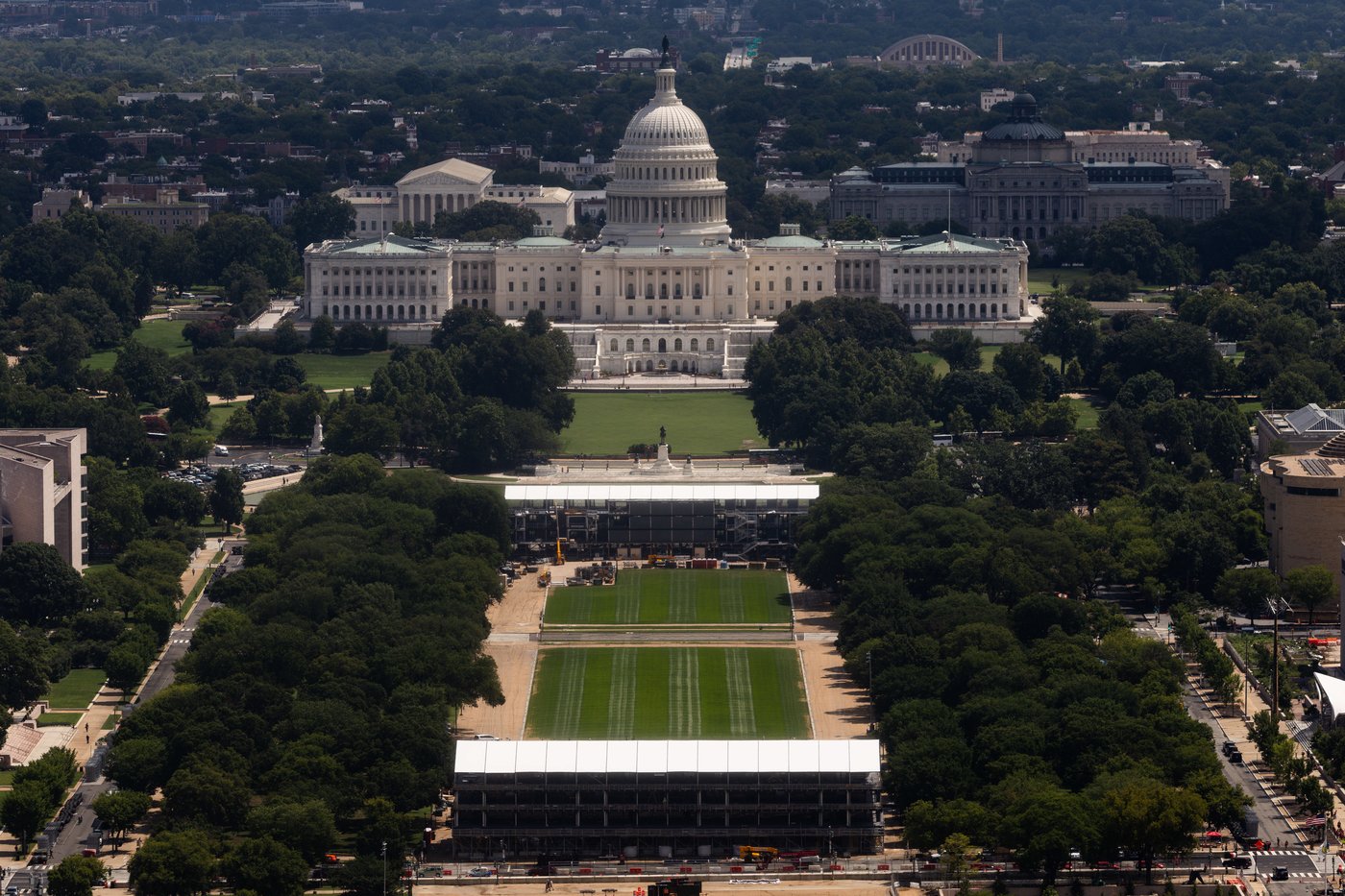
The track heads down Pennsylvania Avenue from 3rd Street to 9th Street NW, then doubles back to 7th Street, then goes south to Independence Avenue alongside the National Mall before looping back to 3rd Street.
Turn 1 has the U.S. Capitol’s west façade as its backdrop, while the pit lane is on the straightaway between Turn 1 and Turn 2, along Pennsylvania Avenue. Other sections feature views of the Washington Monument and the Smithsonian’s National Air & Space Museum.
The race has been likened to 1801, but the historical record is spotty
Transportation Secretary Sean Duffy said Washington hasn’t seen a race like this since Thomas Jefferson helped mark America’s 25th birthday on July 4, 1801.
That’s when the north grounds of President’s Park were thronged with booths, and attending crowds watched horse racing and cockfighting, according to the White House Historical Association. Jefferson eventually opened the White House and “invited everyone in to partake of his hospitality,” with ordinary people joining military officers and visiting Cherokee chiefs inside, the association said.
But Hattem, who has written extensively on how the U.S. has celebrated its independence, said that, the association’s account aside, contemporary descriptions of that celebration didn’t mention horse racing. He also said that Washington then was a sparsely populated swamp with the White House but very little actual city, meaning there wasn’t much infrastructure for such races.
Instead, Hattem said, accounts from 1801 focused on how Jefferson — the first president from the Democratic-Republican Party — handled July 4 celebrations differently than his predecessors, George Washington and John Adams, who favored the Federalist Party’s backing of a strong central government and close ties to Great Britain.
Jefferson’s festivities were more utilitarian and, according to the National Intelligencer newspaper, offered “no ostentatious homage to power.”
“That is a strong contrast between then and the present,” Hattem said.
News from © The Associated Press, . All rights reserved.
This material may not be published, broadcast, rewritten or redistributed.

This site is protected by reCAPTCHA and the Google Privacy Policy and Terms of Service apply.
Want to share your thoughts, add context, or connect with others in your community?
You must be logged in to post a comment.