

Rapid damage assessments underway following inferno outside Summerland, B.C.

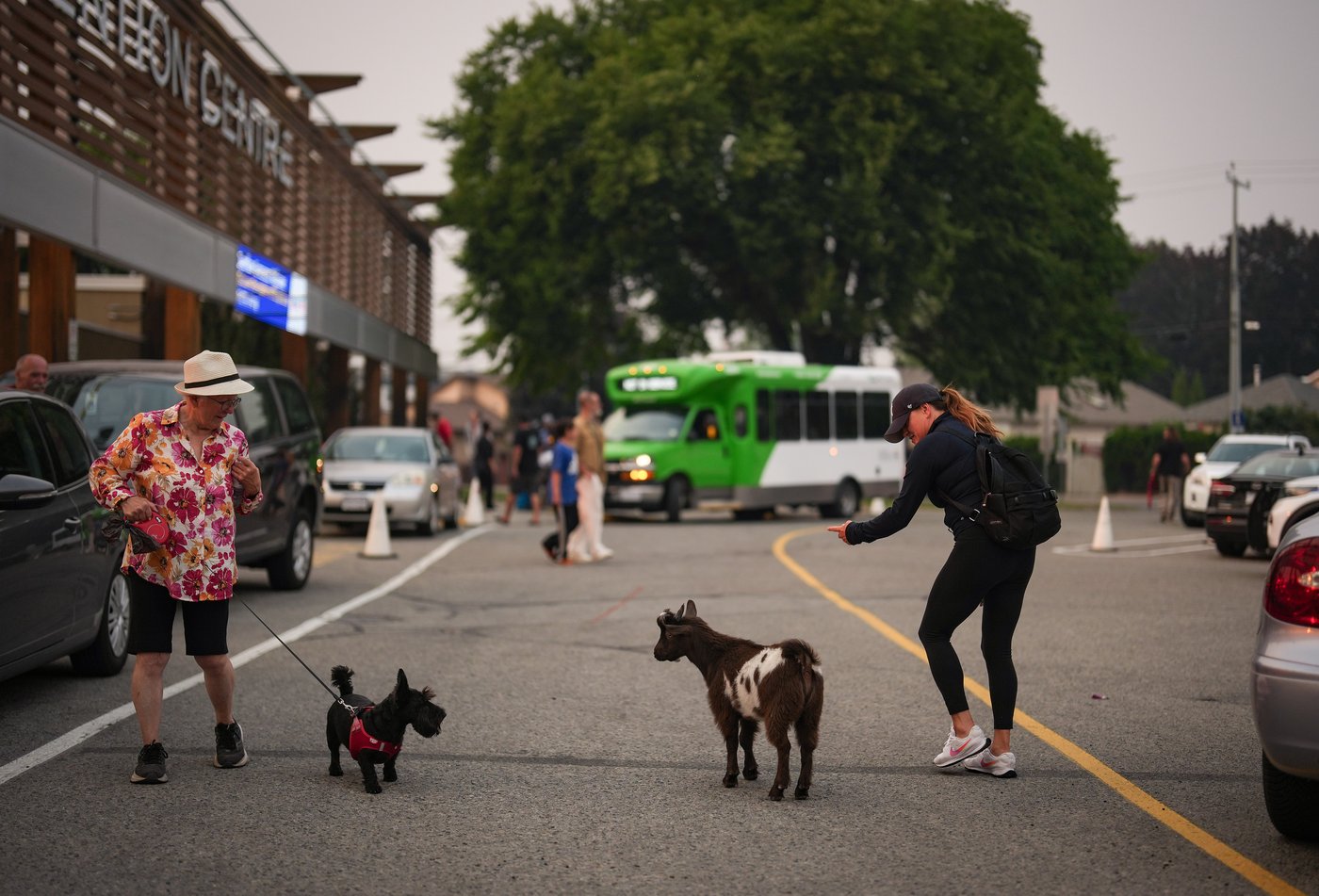
PENTICTON — The heavy blanket of smoke that covered much of British Columbia’s Okanagan region for days has thinned, replaced by clouds in Penticton, B.C., where many evacuees have gathered after fleeing an explosive wildfire Friday night.
The Bald Range wildfire, which has forced more than 20,000 people out of their homes in Summerland, B.C., and surrounding areas, spanned about 184 square kilometres on Wednesday, having grown by about 650 hectares overnight.
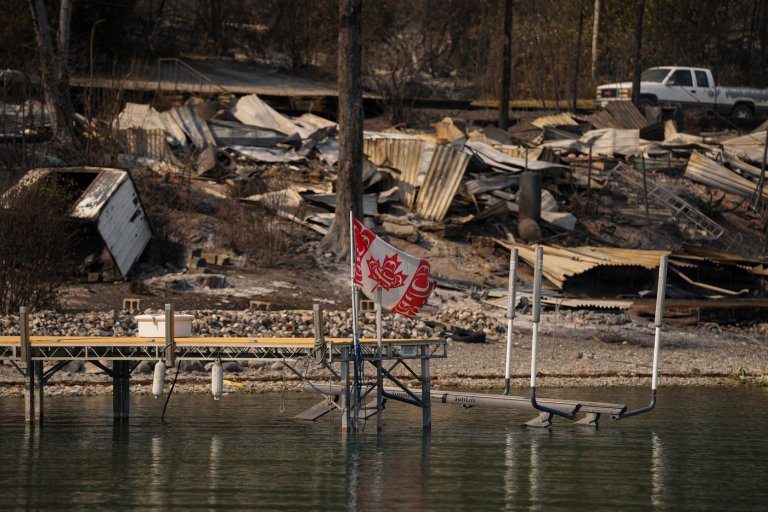
Official details of the losses inflicted by the Bald Range fire have been scant, while videos circulating online show homes reduced to blackened foundations in the community of Faulder, home to about 215 residents, west of Summerland.
An update from Regional District of Okanagan-Similkameen said rapid damage assessments started Tuesday in areas north and south of Summerland.
But the area remained an active fire zone, posing safety risks, and there was no timeline for when evacuees may be able to return home, the district said.
Premier David Eby visited the reception centre set up for evacuees in Penticton on Wednesday, briefly telling reporters there were “a lot of emotions in there, obviously,” as he left the building.
Eby was later set to address media alongside local and regional officials.
Jonathan Kiesman is among the evacuees in Penticton. He runs a pharmacy in Summerland and said he was worried about patients in his community.
“As a health care professional, I want to make sure that their medications are still synced and they’re still getting them,” he said in an interview.
He said the oncoming inferno “almost brought tears to my eyes” as he drove away.
“Summerland’s a wonderful community, wonderful people, and to see something like that coming over the hill and ravaging your town was just, it was very scary, yeah, and very sad.”
A statement from the province said hotel rooms were available for evacuees in Penticton, Kelowna and West Kelowna, along with two reception centres for those needing help. An evacuee helpline is available from 7:30 a.m. to 11 p.m. daily.
The province has asked evacuees who can stay with friends or family to do so, while officials continued to work with the tourism and hospitality sector as well as the federal government to secure additional accommodation, it said.
Highway 97 remained closed from north of Penticton to south of Peachland.
An update from the BC Wildfire Service on Wednesday said crews had been working to establish control lines along the fire’s southern flank.
It said the fire was expected to show Rank 2 and 3 behaviour on a six-level scale, with intermittent “torching” of trees.
Thunderstorm activity was possible later Wednesday, which could fan the flames; fire behaviour would “depend on the severity of convective instability associated with thunderstorms, which can produce erratic winds,” the service said.
Cloud cover was expected to increase, which could help offset fire behaviour by reducing direct sunlight and daytime heating, it added.
There are about 100 blazes across B.C., with roughly half burning out of control.
To the north of Summerland, the Central Okanagan emergency management centre said evacuation orders remained in effect for properties on the west side of Okanagan Lake due to the Quilpituk Creek fire, but crews were making progress as they worked to contain the blaze and safety assessments would soon take place.
“The re-entry plan may be in phases as assessments are conducted to support a safe and co-ordinated return home,” the centre said in an update Wednesday.
Environment Canada downgraded an air quality warning for parts of B.C.’s southern Interior on Wednesday, replacing the orange-level advisory with a yellow one spanning areas east of Pemberton to the Kootenay region.
Orange-level warnings remained for the Fraser Canyon and the south Okanagan from Osoyoos to north of Penticton.
Wildfires this season have destroyed homes around Clinton, B.C., in the south Cariboo region, as well as on Okanagan Indian Band lands in the north Okanagan.
Telecommunications giant Telus has said it was devoting $2 million to communities affected by the fires, aimed at providing network connectivity, data top-ups and bill credits for customers.
This report by The Canadian Press was first published Aug. 12, 2026.
News from © The Canadian Press, . All rights reserved.
This material may not be published, broadcast, rewritten or redistributed.

Join the Conversation!
Want to share your thoughts, add context, or connect with others in your community?
You must be logged in to post a comment.