Elevate your local knowledge
Sign up for the iNFOnews newsletter today!
ST. JOHN’S — Hydro utilities in Quebec and Newfoundland and Labrador have reached a non-binding agreement to share energy from Labrador, with help from the federal government.
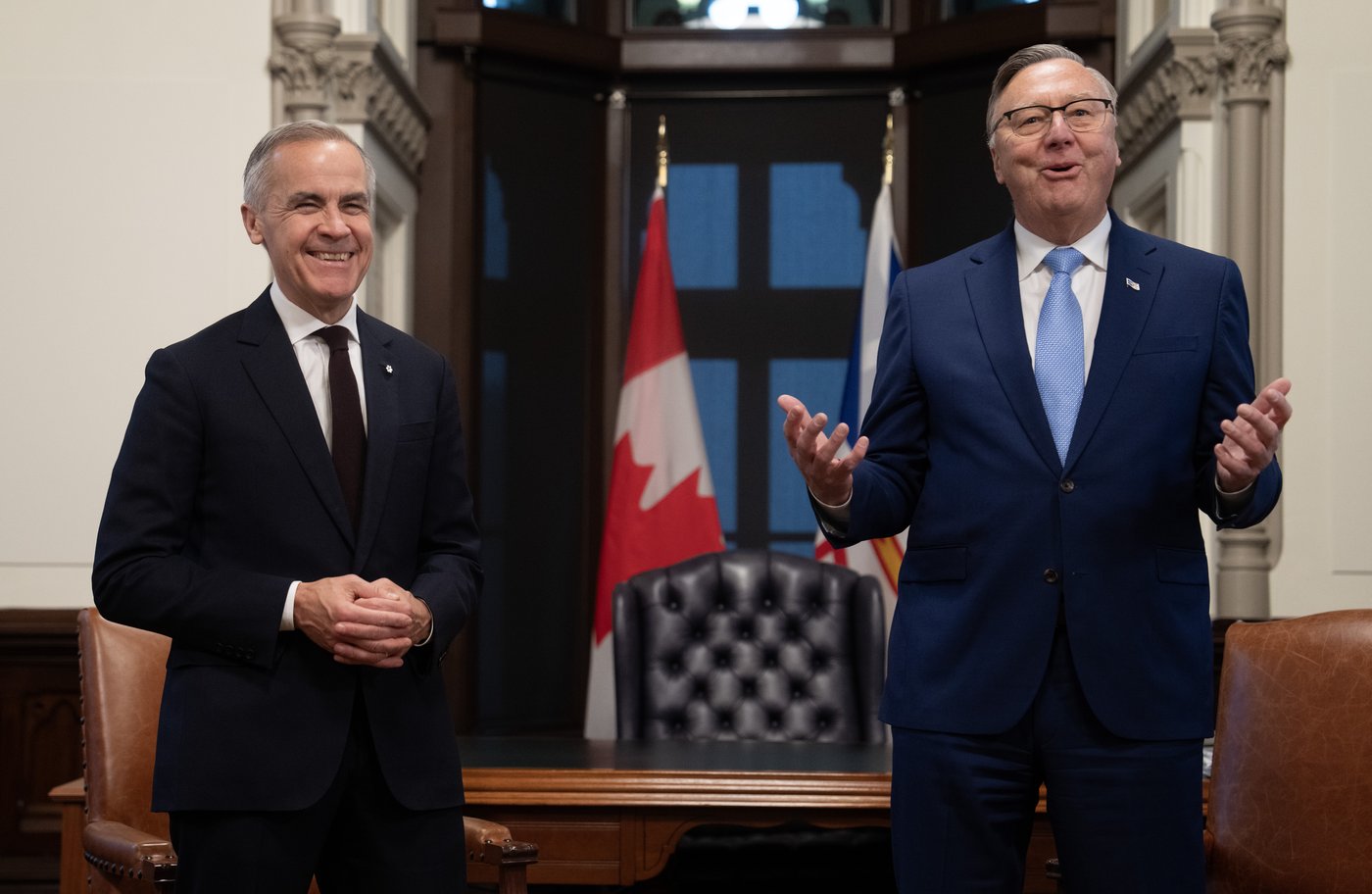
Prime Minister Mark Carney and the premiers of both provinces were on hand to unveil the sweeping tentative agreement on Monday in St. John’s.
It outlines plans for Hydro-Québec and Newfoundland and Labrador Hydro to divvy up power from the Churchill Falls generating station and launch new hydro, wind and transmission projects worth more than $50 billion.
“(It’s) enough power to light, heat (and) cool the homes in Toronto, Montreal and Vancouver combined,” Carney told a crowd gathered in St. John’s on Monday. “(It’s) to provide the power that we need to run the mines, the mills, the factory floors where Canadians will build their future.”
If finalized, the proposal would realize a long-sought goal in Newfoundland and Labrador to transmit power from Labrador — up to 985 megawatts — through Quebec to markets in the United States.
Negotiators hope to hammer out a final deal by the end of this year.
However, Quebec Premier Christine Fréchette must call a provincial election by Oct. 5 and it’s not clear how the campaign, nor the installation of a new government, could affect those goals.
“Whatever happens in Quebec will happen. I can’t control what happens in Quebec,” said Newfoundland and Labrador Premier Tony Wakeham in an interview with The Canadian Press. “I think this is a win-win-win situation,” he added about the draft agreement.
Fréchette said it’s possible a new provincial government would tear up the deal, but said her Coalition Avenir Québec government was committed to implementing it because Quebec residents and businesses need the energy it will provide.
“I see the Parti Québécois is interested in tearing up this agreement. They don’t want to implement it,” Fréchette said. “So what do they offer to Quebecers if it’s not this agreement? Where will they find the 10,000 megawatts we are bringing to Quebec?”
The province’s utilities are eyeing up to 14,000 megawatts of new and existing hydroelectric developments in Labrador and along the Churchill River.
Newfoundland and Labrador is eager to turn the river’s hydroelectric potential into revenue, and Quebec is looking to secure a reliable power supply for decades to come.
They have been in negotiations for years, and came up with a framework agreement in 2024.
However, Wakeham sent them back to the bargaining table after he and his Progressive Conservatives were elected last year. He was looking for more power, more value and transmission rights through Quebec, he said at the time.
Wakeham kicked off his election campaign last fall promising to hold a public referendum on any final deals. He walked back that promise on Monday, saying a referendum would not happen.
“I know there will be people in our province who will be disappointed in that, but I accept that,” Wakeham said in an interview. “The time was now. There was an opportunity right now.”
Monday’s agreement proposes a new, 2,700-megawatt generating station at Gull Island on the Churchill River and upgrades to the existing 5,428-megawatt power plant at Churchill Falls.
It also includes plans for transmission lines and a feasibility study to build a second powerhouse at Churchill Falls.
“It’s a partnership that will make it possible for us to ensure energy security for the next 50 years, and we’re talking about green energy, renewable energy,” Fréchette said.
The federal government will kick in $10 billion in financing for several proposed projects including transmission lines and the Gull Island development, according to a news release.
Hydro-Québec would also pay more for power from the Churchill Falls plant, beginning at 1.8 cents per kilowatt hour in 2027, according to a graph provided to the media.
That price would increase until 2077, averaging out to an effective price of 7.4 cents per kilowatt hour over the next 50 years.
The previous draft agreement signed in 2024 landed on an average effective price of 5.9 cents per kilowatt hour.
The utility currently pays just 0.2 cents per kilowatt hour under a contract signed in 1969 which was set to expire in 2041.
People in Newfoundland and Labrador have long viewed the current arrangement as unfair and even unjust, and Monday’s tentative agreement would terminate the 1969 deal and perhaps end years of frosty relations between the provinces.
This report by The Canadian Press was first published Aug. 17, 2026.
News from © The Canadian Press, . All rights reserved.
This material may not be published, broadcast, rewritten or redistributed.

This site is protected by reCAPTCHA and the Google Privacy Policy and Terms of Service apply.
Want to share your thoughts, add context, or connect with others in your community?
You must be logged in to post a comment.