Elevate your local knowledge
Sign up for the iNFOnews newsletter today!
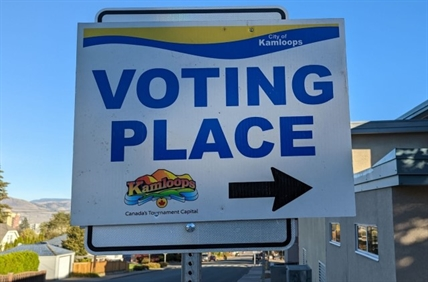
Federal elections have months and months of campaigning and attention grabbing controversies, but most people don’t get involved in what happens in their own backyard during a municipal election.
The next batch of councillors and mayors are getting ready for the municipal election in September and once elected they’ll make decisions about their communities for four years.
Candidates only need to convince a small slice of a city’s population to get out and vote because the turnout is so low.
In the last municipal election in 2022, roughly 29 per cent of eligible voters in B.C. cast a ballot. In Kelowna and Kamloops that figure was a bit higher at 30 per cent, in Penticton voter turnout was 33 per cent and in Vernon it was 24 per cent.
Former City of Kelowna city manager and ForChange committee member Ron Mattiussi said for a lot of people there are too many candidates in city elections for people to learn about compared to four major political parties in provincial and federal elections.
“People have very, very busy lives… when they see 20, 30 candidates, I sometimes think they just go, ‘what am I going to do? I don’t have time to research this,’” Mattiussi told iNFOnews.ca.
In the last election, Kelowna had five candidates for mayor and 32 candidates for city council. Kamloops also had five candidates for mayor and 23 candidates for council.
Elections at higher levels of government get far more engagement. In the last provincial election the voter turnout was 58 per cent and the federal voter turnout in 2025 was roughly 70 per cent.
Mattiussi said people rarely pay attention to city politics until something happens locally that grabs their attention like the boardwalk at Hotel Eldorado or the Kelowna Springs Golf Course controversies. Only then do they realize the kind of impact their city hall has on their day-to-day lives.
“A lot of the decisions made at a local level affect your neighbourhood. They affect your drive home. They affect whether or not your children have a park in their neighbourhood. They affect the cost of your water,” Mattiussi said.
“They impact so much of your daily life that you wonder why people don’t take a bigger interest in it.”
It’s also difficult for new faces to shake things up at city hall because most incumbents who run again are re-elected. B.C. has an elected incumbency rate of 82.8 per cent.
The entire Vernon city council was re-elected during the last municipal vote in 2022, so city council hasn’t had a new face in more than eight years. Vernon mayor Victor Cumming was re-elected with only 4,346 ballots with his name checked or just over 50 per cent of the vote for mayor.
Kamloops mayor Reid Hamer-Jackson’s controversial reign required 7,298 votes, or 31 per cent.
Penticton mayor Julius Bloomfield won with 3,374 votes or 33 per cent.
In Kelowna, mayor Tom Dyas won with 61 per cent of the vote, or 21,328 ballots in his favour.
Mattiussi said the government should focus on making it more convenient for people to get out and vote, like setting up a polling booth in the mall.
“Anything that you could do to make it easier for people, I think we should try,” he said.
Election day is Saturday, Oct. 17.
News from © iNFOnews.ca, . All rights reserved.
This material may not be published, broadcast, rewritten or redistributed.

This site is protected by reCAPTCHA and the Google Privacy Policy and Terms of Service apply.
Want to share your thoughts, add context, or connect with others in your community?
You must be logged in to post a comment.