Elevate your local knowledge
Sign up for the iNFOnews newsletter today!
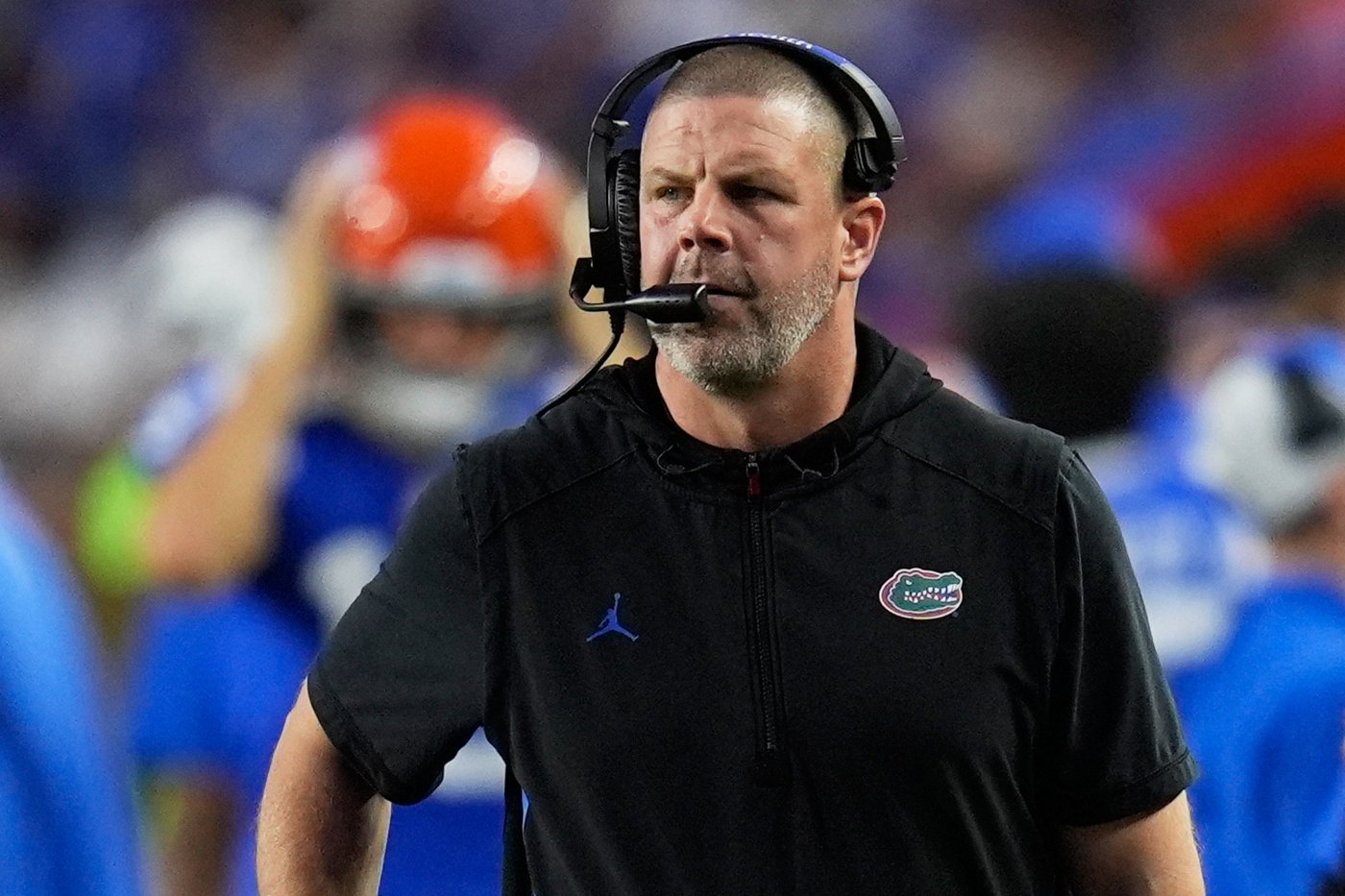
NEW ORLEANS (AP) — When Billy Napier last coached in the Sun Belt Conference, his team was the reigning league champion.
It’s almost like he’s picking up where he left off.
Napier’s firing at Florida last season was still raw when James Madison, then on its way to a 12-2 campaign that ended in the College Football Playoff, asked him to take over for outgoing coach Bob Chesney, who’d agreed to coach UCLA in 2026.
“It was humbling ,” Napier said, to get another head coaching offer so quickly — not to mention from one of the top mid-major programs in the nation. “How many guys get that chance to be a coach again on the same cycle?”
It was an offer he felt he couldn’t turn down. JMU shared with Napier plans to expand its football stadium and construct a new practice facility.
“Their alignment, their commitment to winning, their ability to solve the problems that you have in today’s world, they’re a step ahead, they’re forward thinking,” Napier said. “I was very impressed.”
Napier was granted full access to the program while Chesney was still coaching in December, allowing him to evaluate players, make a plan to retain those he could and also get a sense of their weekly routines.
“We tried to keep things intact that we thought were centerpieces of the program,” Napier said. “It was important to listen to former players and coaches (about) what has led to success.”
Returning players, including preseason All-Sun Belt defensive lineman Amar Thomas, say Napier’s experience with power programs in the SEC — not only with Florida but as one of Nick Saban’s assistants at Alabama — has been evident.
“You can tell he’s come from a higher level. He’s teaching us a lot,” Thomas said. “It’s going to be very beneficial.”
Napier had coached Louisiana-Lafayette to consecutive Sun Belt titles in 2020 and 2021 before joining the Gators for the 2022 season. Winning at Florida proved difficult; he went 22-23 in three-plus seasons before his dismissal last October.
His Florida stint overlapped with a period of significant upheaval in college football, brought on by rules changes allowing frequent transfers and player payments. Napier said he struggled to adapt, particularly with delegating so that he could focus on his own strengths as a coach.
He’s much more comfortable with the sport’s new realities now, he said, and even has given up play-calling — something he’d been reluctant to do previously.
“I wasn’t good enough,” Napier said. “I learned a lot. The key is going to be how we use that experience and that failure and the adjustments that we make going forward.
“We all continue to evolve,” Napier added. “So, I’m excited about this challenge. I’m moving on.”
Renewed rivalries
Now that Louisiana Tech has completed a contentious move from Conference USA, it sets up a renewal of old regional rivalries in both Louisiana and neighboring states.
Tech becomes the third Sun Belt team in Louisiana, joining Louisiana-Monroe and Louisiana-Lafayette. ULM is just a half-hour drive east along I-20 from Tech, meaning both fan bases could easily attend the matchups.
“It’s going to be packed. Isn’t that what college football is supposed to be about?” ULM coach Bryant Vincent said. “What that’s going to mean to north Louisiana and both universities, you can’t put a price on it.”
The drive to Lafayette, in a southern section of Louisiana known as Acadiana, takes about three hours.
“Louisiana Tech is an ideal fit for our conference,” Sun Belt Commissioner Keith Gill said.
While realignment in recent years has left many conferences with far-flung members 1,000 miles or more apart, the Sun Belt currently boasts a more traditional, regional setup, with two divisions that keep all opponents relatively near one another.
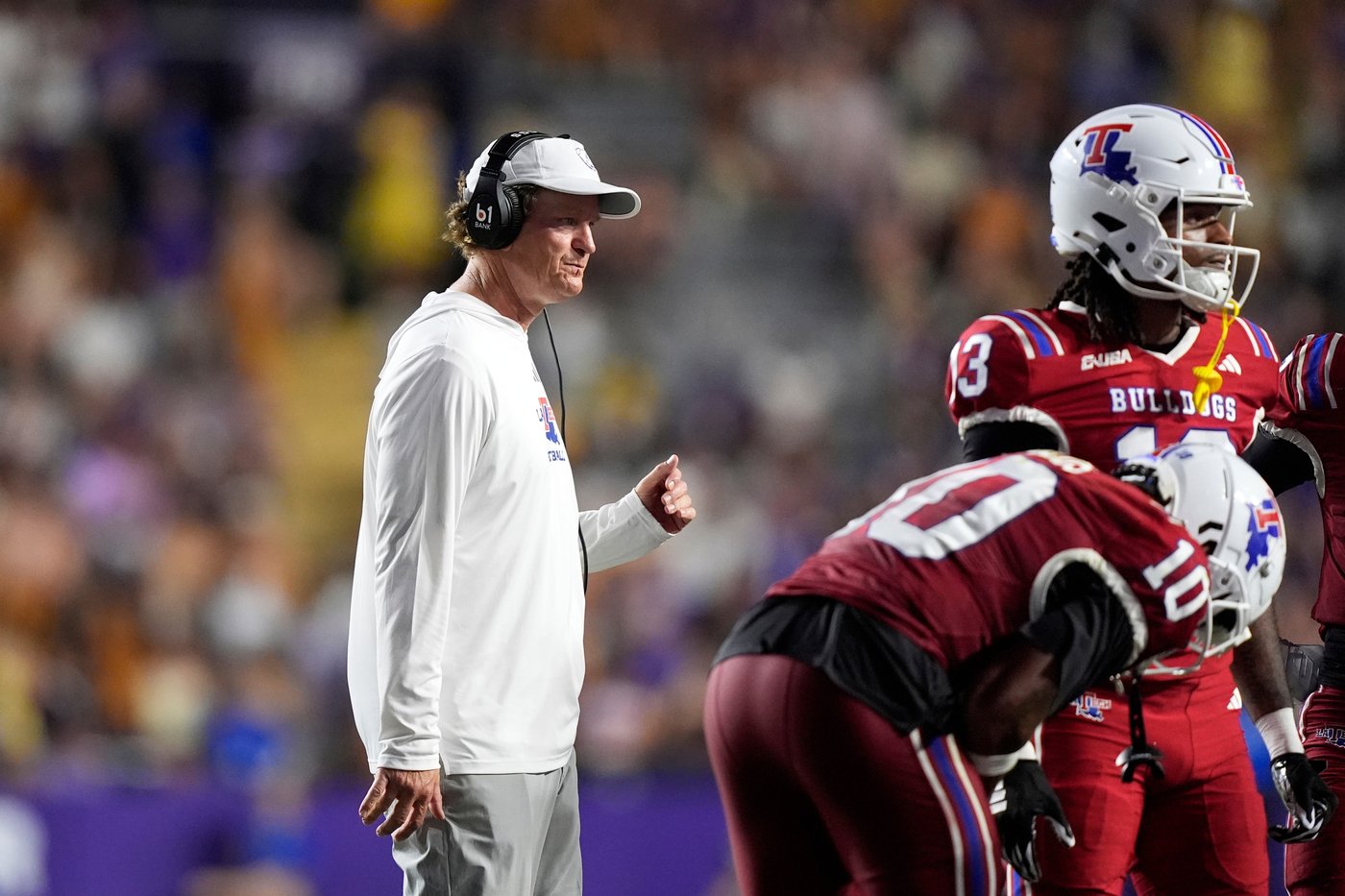
Tech coach Sonny Cumbie called the Bulldogs’ move to the Sun Belt “a marriage that makes sense in so many ways,” and one which will save his program more than $1 million in travel expenses — not to mention about 23,000 miles of travel.
The Sun Belt’s West Division is now comprised of the three Louisiana teams, plus teams in Alabama (South Alabama and Troy), Arkansas (Arkansas State), and Mississippi (Southern Miss). The East has teams in Georgia (Georgia Southern and Georgia State), North Carolina (Appalachian State), South Carolina (Coastal Carolina), Virginia (JMU and Old Dominion) and West Virginia (Marshall).
In the Sun Belt, Gill asserted, realignment has “deepened rivalries … and created compelling matchups that increase fan interest.”
Tough outs
Gill said the last four seasons comprise what is so far the most successful stint in the history of Sun Belt football, which began in 2001 at the Division I FBS level.
During that span, Sun Belt teams have post victories over members of all four power conferences (The ACC, Big Ten, Big 12 and SEC) as well as Notre Dame. JMU was the Sun Belt’s first team to reach the CFP, losing to Oregon.
“We have the best (non-power) conference and I don’t even think it’s close,” second-year Marshall coach Tony Gibson said.
There were no Sun Belt teams in the preseason AP Top 25 Poll, but JMU did receive votes.
Roster turnover
In some respects, the Sun Belt has become a feeder system for power programs — and the league’s coaches are accepting and adapting to that reality. Between graduation and transfers, teams across the league had to fill anywhere from 40 to 60-plus roster spots for 2026.
“It’s an annual process,” said Napier, whose JMU roster has a league-high 63 new players. “You fight like crazy to recruit, to develop, to retain. The reality is better players will have an opportunity to move up. You have to get comfortable with that.”
___
Sign up for Top 25 poll alerts here. Visit the Top 25 here and see AP’s full college football coverage here.
News from © The Associated Press, . All rights reserved.
This material may not be published, broadcast, rewritten or redistributed.

This site is protected by reCAPTCHA and the Google Privacy Policy and Terms of Service apply.
Want to share your thoughts, add context, or connect with others in your community?
You must be logged in to post a comment.