Elevate your local knowledge
Sign up for the iNFOnews newsletter today!
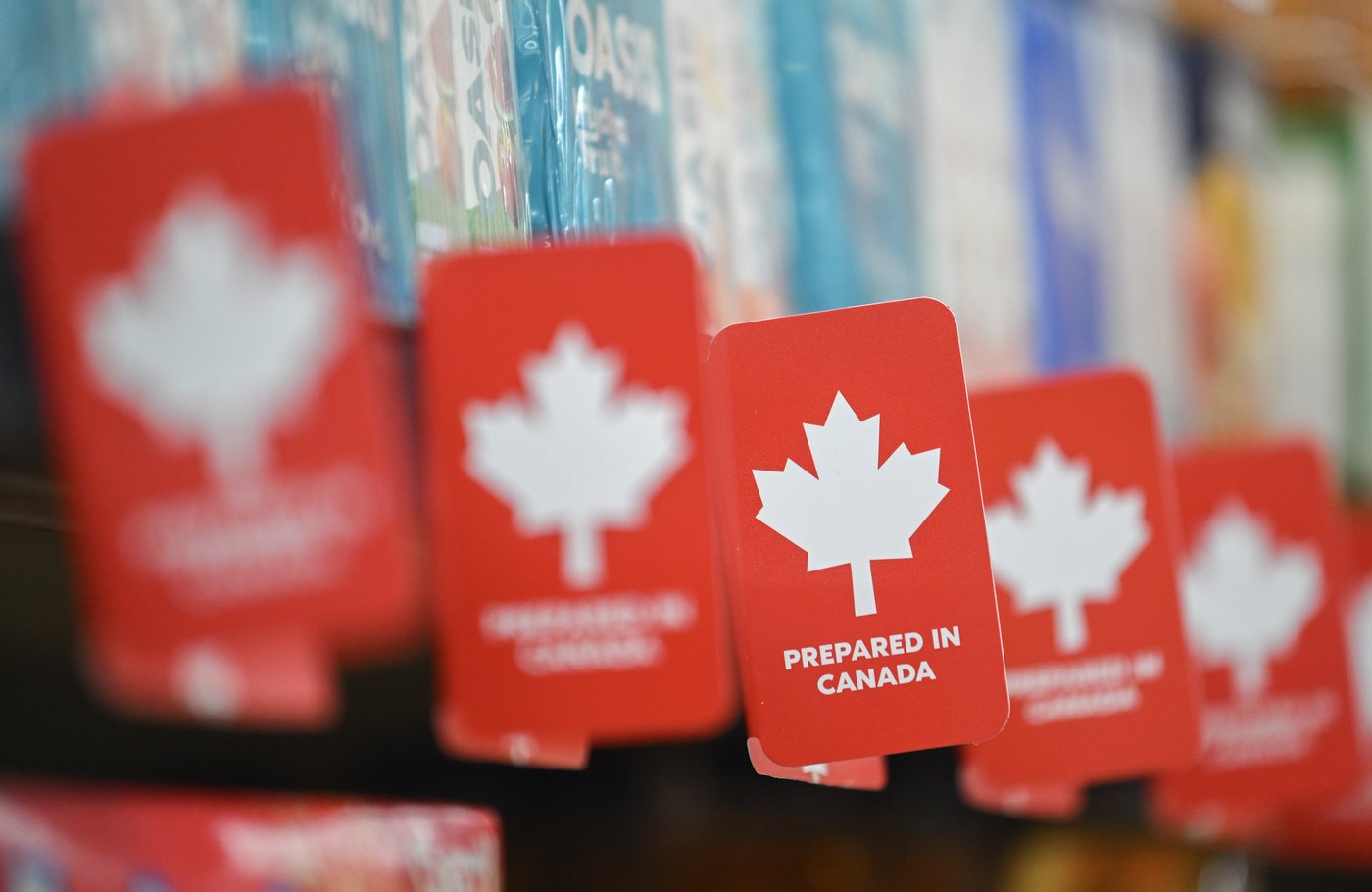
Buy Canadian sentiment is seeing a resurgence across the country as backlash to U.S. tariffs grows.
Consumers eager to support local products and businesses are swapping shopping tips and resources online as some retailers renew labelling of tariffed or homegrown goods in stores.
The Canada List, a website that ranks thousands of products sold in Canada based on their contribution to the Canadian economy, has seen a dramatic rise in traffic in recent days, founder Matthew Shane said in an interview Wednesday.
“My back-of-the-envelope calculation is daily traffic is actually up 10,000 per cent since Friday,” Shane said, adding thousands of people are signing up for the newsletter daily. “It’s a strong indication that the Canadian public is increasingly engaged in these trade tensions.”
The upsurge in interest underscores Canadians’ desire to source food, clothing, and household goods that support their local community, said Shane, an associate professor of psychology at Ontario Tech University in Oshawa.
“This is one way that everybody can do their little part,” Shane said. “Perhaps each individual purchase doesn’t make that much of a difference, but collectively it matters.”
The trade conflict between Canada and the U.S. escalated after talks between trade negotiators collapsed last week.
The U.S. imposed new tariffs on Canadian goods, and Canada responded this week with counter-tariffs set to take effect in early September.
The worsening trade dispute has resulted in fresh interest in the buy Canadian movement, said Margaret Chapman, partner and chief operating officer of Narrative Research.
“People have a very strong desire to protect Canadian jobs and local businesses and do something,” she said. “It’s a way that we can actually feel on an everyday basis we’re having some impact.”
Polling has shown many shoppers are willing to pay more for Canadian products — a trend that could gain momentum as the trade war intensifies, Chapman said.
“I don’t see the (buy Canadian) sentiment waning at all,” she said. “It has started to become entrenched as a way of purchasing. People are seeing the value of supporting Canadian-made products.”
The renewed buy Canadian focus comes at a favourable time of year, said Mike von Massow, a professor of food agriculture and resource economics at the University of Guelph.
“At this time of year, especially with fresh produce, it’s much easier to buy Canadian than it is in January,” he said.
As Canadian fruits and vegetables become harder to source over the winter, von Massow said consumers will likely show a preference for any non-U.S. produce.
“There are two tiers to this attitude that consumers have,” he said. “The first one is buy Canadian. The second one is if you can’t buy Canadian, don’t buy American.”
The conversation among retailers now is how to spotlight Canadian products in stores without landing in hot water for mistakes, said Kim Furlong, president and CEO of the Retail Council of Canada.
“There are always variables that are at play when it comes to identifying a product,” she said. “A lot of our retailers have shied away from labeling just because of the complexity of getting it wrong and potentially being called out.”
Some Canadian grocers came under scrutiny earlier this year for advertising imported goods as homegrown.
Still, Furlong said stores are trying to help consumers identify Canadian products and products affected by tariffs.
“The retailers that are indicating that a product has been tariffed is very useful for the consumer to understand what went into that pricing,” she said.
This report by The Canadian Press was first published Aug. 26, 2026.
News from © The Canadian Press, . All rights reserved.
This material may not be published, broadcast, rewritten or redistributed.

This site is protected by reCAPTCHA and the Google Privacy Policy and Terms of Service apply.
Want to share your thoughts, add context, or connect with others in your community?
You must be logged in to post a comment.