Elevate your local knowledge
Sign up for the iNFOnews newsletter today!
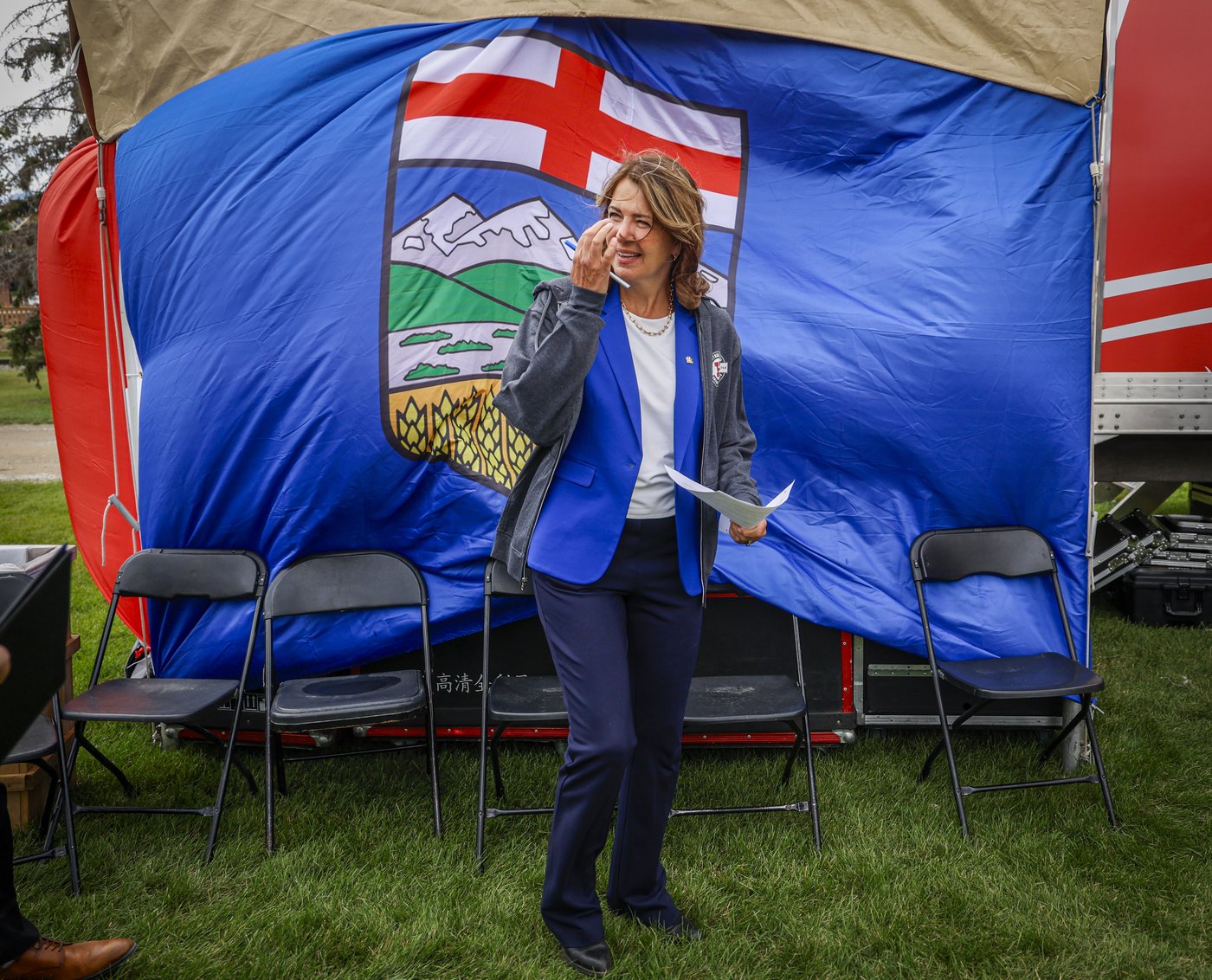
EDMONTON — A report released Wednesday by the Alberta government says if the province wants to separate from Canada, it would need to shell out up to $170 billion and hire at least 70,000 civil servants to do it.
The report, which the province commissioned from the University of Calgary’s School of Public Policy, says the minimum cost over the first five years would be $50 billion and could top out at $170 billion.
The figure covers money to acquire infrastructure, supplies and property currently paid for by the federal government. It also covers the staff needed for the transition and debt payments made higher by Alberta taking on a portion of the federal debt.
There are other costs. About $69 billion would be needed to replicate programs currently run by Ottawa. The annual expenses to run an independent Alberta government would cost up to $67 billion. New tax revenue could cover the increases, but there’s also a risk of staggering annual deficits of at least $25 billion.
The report’s authors say there are so many moving parts, it’s hard to arrive at a definite bottom line number to leave Canada, but note, “What we can say is that this would be a momentous decision.”

“Alberta separating from Canada and becoming an independent country involves far more than just drawing new borders and building a new state,” the report says.
“It completely changes how public services, trade, taxes and laws work.”
Premier Danielle Smith’s government commissioned the report in June to give Albertans a better understanding of the costs of separation ahead of a referendum next month on whether Albertans want to remain in Canada or hold a binding vote on quitting Confederation.
Smith had previously estimated a much higher price tag for separation ($400 billion) than what is outlined in Wednesday’s report, but her finance minister said the costs and logistics are still prohibitive.
Jason Nixon, in a statement, said it illustrates why the province is urging Albertans to vote to stay in Canada on Oct. 19.
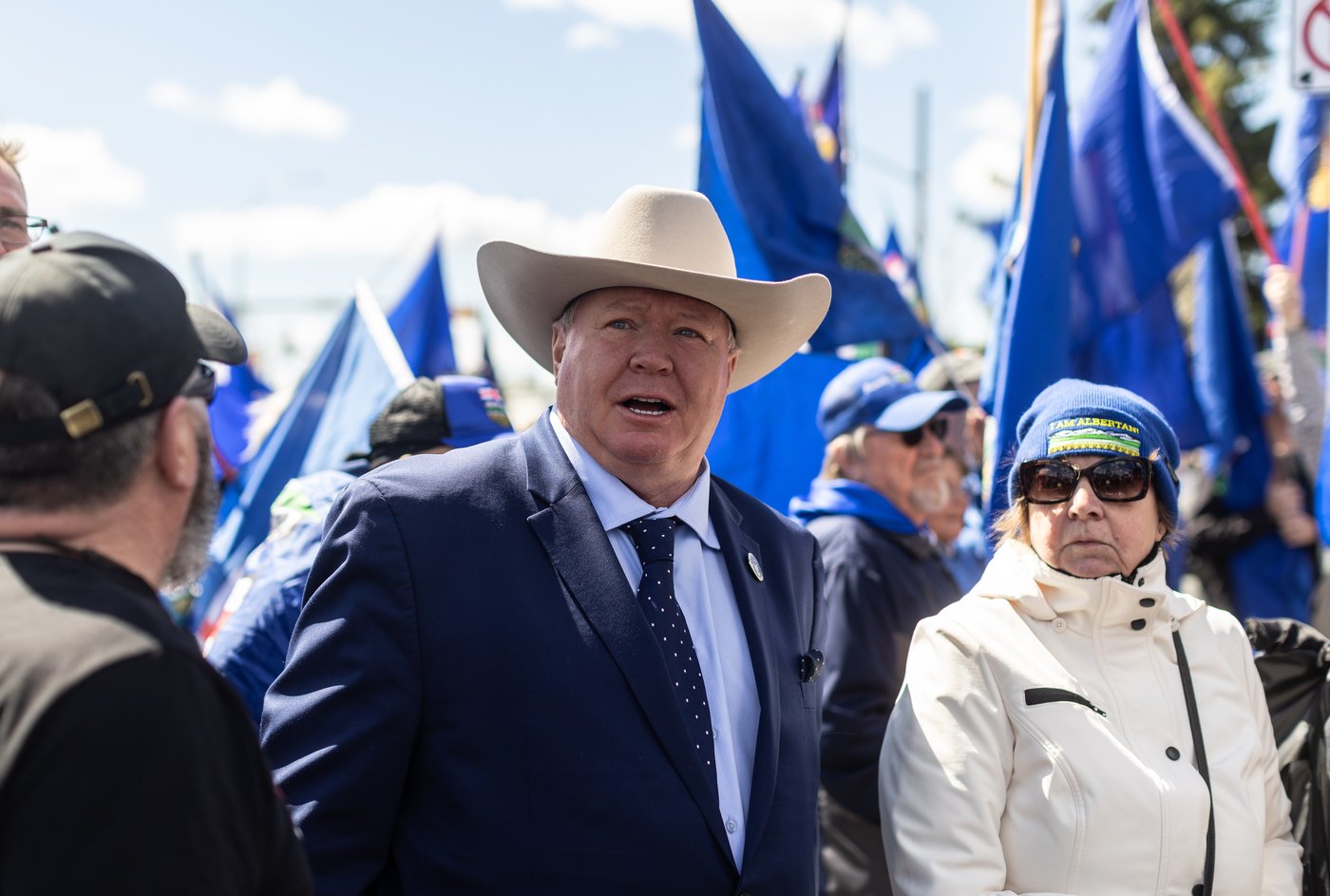
“Alberta’s government has always been clear: we support a strong and sovereign Alberta within a united Canada,” Nixon said.
The university’s report, budgeted at $1.5 million, considers two scenarios: the first being a smooth transition where the federal government makes concessions, and the other being a tough slog with Ottawa taking a hard line on negotiations and Alberta struggles to develop outside trading relationships.
The smooth-transition scenario sees a future where an independent Alberta could prosper, with a long-term gross domestic product rate 3.4 per cent higher than if the province stayed in Canada. Government surpluses, opportunities for tax cuts, as well as higher employment and wages could also be in store.
It also lists “opportunities” for Alberta should it choose to separate. For example, its oilsands wouldn’t be subject to environmental policies and its health system would be free to pursue private options.
But if Ottawa decided to get tough at the bargaining table, the report says, separating would be extremely difficult if not impossible to pull off. The federal government, it notes, could impose trade barriers and tolls on Alberta oil moving through B.C. to coastal tankers.
Ottawa may also try to make an example of Alberta, the report says, to discourage other provinces like Quebec from pursuing independence. And if the federal government fights Alberta independence, the global community might take that cue and withhold recognition of the new nation.
And then there is the United States, which Alberta would have to rely on for oil exports. The Americans, the report says, could try bully tactics and demand a share of revenues in exchange for market access.
Overall, this hardline-Ottawa scenario sees Alberta’s GDP dropping 16.2 per cent over the long term with substantial government deficits, higher taxes, lower employment and lower wages.
The report also discusses issues such as currency and tax collection, labour mobility, setting up a military, mail and international shipping for residents, border services and air traffic control.
Opposition NDP finance critic Court Ellingson said the report demonstrated that the upcoming referendum was a waste of time.
“These experts found separation would likely drop wages, kill jobs, raise taxes, shrink the economy, and drive us into endless debt while triggering a recession,” he said in a statement.
Jeff Rath, a lawyer and leading face in Alberta’s separatist movement, dismissed the report as a one-sided “joke” built on a foundation of false assumptions.
Rath disputed that Alberta would have to take on any of the federal debt and said the U.S. would be an ally and sign a trade deal immediately.
“(The report) is a complete waste of time,” Rath said in interview Wednesday.
Keith Wilson, another leader in the separatist movement, rejected the report as “unrealistically pessimistic.”
He said it downplays the leverage Alberta has when it comes to trade, whether it is with the rest of Canada or the United States.
Wilson specifically referred to British Columbia’s reliance on Alberta oil, as well as Quebec and Ontario.
“It even assumes that the Americans might not want to trade with us, which is absurd,” said Wilson.
Also Wednesday, Premier Danielle Smith’s government published a short letter it received from an advisory panel it tapped to review the university’s report and offer an opinion.
The panel, led by economist Jack Mintz with support from business leaders and former finance ministers, agrees with the findings, particularly the section that stressed Canada, not just Alberta would feel the pain of separation.
The report says that without Alberta and its economic output, Canada’s “global economic standing” would fall, the dollar would weaken, investment would decline, and Ottawa would be forced to raise taxes or cut spending.
Mintz said he hopes it means the rest of Canada understands that its better off with Alberta, and acts accordingly.
A number of think tanks and independence groups have recently released their own separation cost estimates, with wildly divergent figures.
The Alberta Prosperity Project, whose leadership was behind a petition calling for a binding separation vote, has pegged the cost of quitting Canada at $6 billion.
The Canada West Foundation and a former provincial treasury board manager put the cost at over $200 billion.
Smith called the referendum earlier this year. In addition to the separation vote, Albertans are also being asked nine government sponsored questions on immigration and constitutional reform.
The premier has said years of federal government interference has stymied Alberta’s economy and frustrated residents to the point that some see separation as a credible alternative that deserves to be addressed in a referendum.
Smith’s government has launched a $4 million advertising campaign for next month’s vote, in which it advocates voting for the reform questions and for remaining in Canada.
Polls have consistently suggested a large majority of Albertans want to stay in Canada.
Smith’s critics say this underscores their contention that she is both arsonist and firefighter by calling a vote to break up Canada while championing the cause to stay united.
They say she has called the vote not to address smouldering resentments toward Ottawa, but simply to mollify hardline separatists in her United Conservative Party.
This report by The Canadian Press was first published Sept. 16, 2026.
— With files from Dayne Patterson in Calgary
News from © The Canadian Press, . All rights reserved.
This material may not be published, broadcast, rewritten or redistributed.

This site is protected by reCAPTCHA and the Google Privacy Policy and Terms of Service apply.
Want to share your thoughts, add context, or connect with others in your community?
You must be logged in to post a comment.