Elevate your local knowledge
Sign up for the iNFOnews newsletter today!
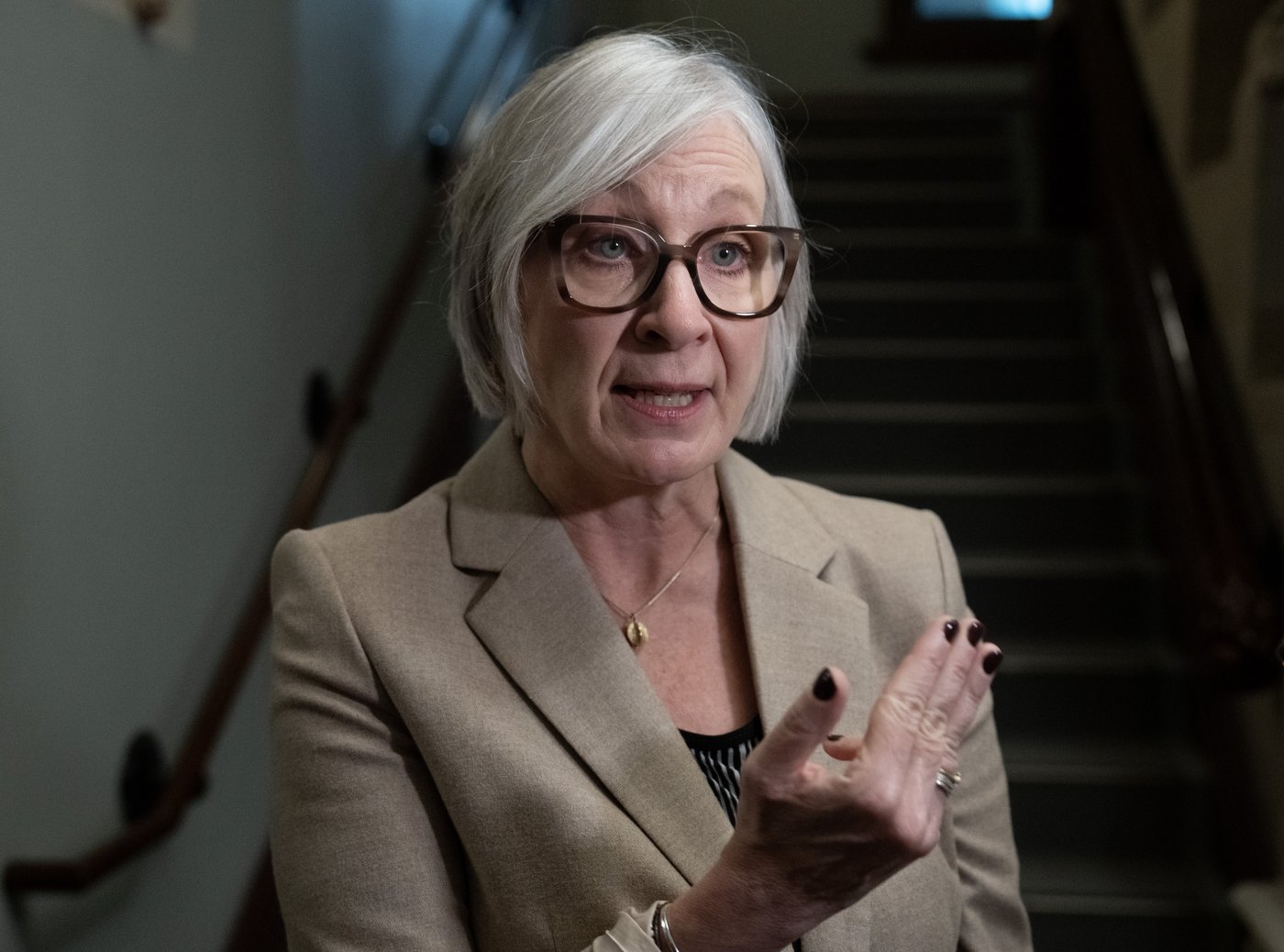
OTTAWA — The Liberal government moved Monday to impose new conditions on a contentious part of the Canada Labour Code that’s been used to quash high-profile labour disputes in recent years.
Jobs Minister Patty Hajdu said the proposed changes will put a “higher bar” on Ottawa’s ability to scuttle strikes, but labour leaders argue the legislation would instead roll back workers’ rights.
Bill C-39, the Building Canada Strong Act, includes changes to streamline project approvals across the country and makes adjustments to the Canada Labour Code.
Many of the proposed changes revolve around Section 107 of the labour code — a contentious section that has been used by the government to scuttle strikes in a variety of sectors in recent years.
The existing tool allows a minister to refer two deadlocked parties to the Canada Industrial Relations Board to declare an impasse, end the work stoppage and move talks into binding arbitration.
Labour leaders were hoping to see that section repealed or restricted. Employers have indicated they want to see stronger government intervention when a labour disruption might put Canada’s economic interests at stake.
The minister would instead have to fulfil two conditions before triggering Section 107. One would require the minister to declare that a dispute is adversely affecting the “national interest.”
The proposed legislation said the “national interest” could relate to effects on the Canadian economy, whether a strike is causing “serious social disruption” and if the minister’s direction has any impact on the freedom of association.
The minister also would have to consider a report from a new special mediator role being introduced under the legislation. That mediator would be tasked with setting out the parties’ positions and could offer recommendations on a new collective agreement.
“These changes mean that, as many people have called for, the labour minister must meet a higher bar before intervention is possible with this tool,” Hajdu told reporters on Parliament Hill after the legislation was tabled in the House of Commons.
“Section 107 is meant to be a measure of last resort, and it will remain that, when all other alternatives have been exhausted by the parties.”
A senior government official briefing reporters after the legislation was tabled Monday said the jobs minister would not gain any new powers through the legislation.
Bea Bruske, president of the Canadian Labour Congress, said her first read of the bill suggested otherwise.
She argued the government is giving itself the ability to end a strike unilaterally when it decides the national interest is at risk.
“A strike has economic impact because that is how collective bargaining works. If government can end a strike because it is having an economic impact, employers have less reason to compromise and reach a deal,” Bruske said in a statement to media. “That weakens collective bargaining before government ever uses the power.”
Hajdu said the proposed changes are in the bill because the government agreed with unions that Section 107 is a “consequential tool” that must be used transparently.
The federal government has leaned on Section 107 in recent years to end walkouts at Canada Post, the CN and CPKC railways, and at the B.C. and Montreal ports. Air Canada flight attendants defied an attempt to use the measure to end their strike in 2025.
Hajdu argued on Monday the introduction of a special mediator, whose final report will be made public, makes the entire bargaining process more transparent in federally regulated sectors.
She said it’s possible some of the previous instances where Section 107 was used might’ve been averted if sticking points were made public. The parties would have had more incentive to keep talks at the table, the minister suggested.
“If we had had that tool, there may have been additional pressure on the parties to behave in a way that’s in the interest of workers and the corporation,” Hajdu said.
NDP Leader Avi Lewis told reporters on Parliament Hill that adding another step to the use of Section 107 is not the same as adding guardrails. Leaving discretion over the tool’s use solely up to the minister is a “broadening” of the criteria, he said, not a restriction.
Bruske’s review of the legislation was not entirely negative. She hailed proposed protections against wage theft, for example.
The legislation would require collective bargaining to begin six months before a collective agreement is set to expire, but only in situations where a current agreement is older than five years or if previous rounds of bargaining ended in a work stoppage.
The bill would require businesses and unions to go through federally mediated “relationship repair work” if there’s a work stoppage, and proposes increases in enforcement and penalties for bad-faith bargaining.
In addition to the legislation, the government plans to hire an additional 26 workers at the Canada Industrial Relations Board to help clear the backlog of workers’ complaints against employers. The government said it will hire 100 health and safety officers to boost inspection capacity related to workplace safety.
Liberal ministers introducing the sweeping economic changes in Bill C-39 on Monday argued Canada is at a pivotal moment and must move quickly to respond to U.S. trade aggression and other geopolitical shifts.
“We are fighting every single day to save jobs, to grow jobs and to make sure that we can actually build big things in this country and get our goods to market, in many cases new markets,” Hajdu said.
Lewis accused Prime Minister Mark Carney of taking advantage of the moment to push through his economic agenda.
“We’re under economic attack from the United States and we need a crisis response. But Prime Minister Carney is using our fear and disorientation around the trade war to push through a series of unpopular measures that he did not run on, has no mandate for and would never get away with under normal circumstances,” Lewis said.
This report by The Canadian Press was first published Sept. 21, 2026.
— with files from David Baxter, Nick Murray and Kyle Duggan
News from © The Canadian Press, . All rights reserved.
This material may not be published, broadcast, rewritten or redistributed.

This site is protected by reCAPTCHA and the Google Privacy Policy and Terms of Service apply.
Want to share your thoughts, add context, or connect with others in your community?
You must be logged in to post a comment.