Elevate your local knowledge
Sign up for the iNFOnews newsletter today!
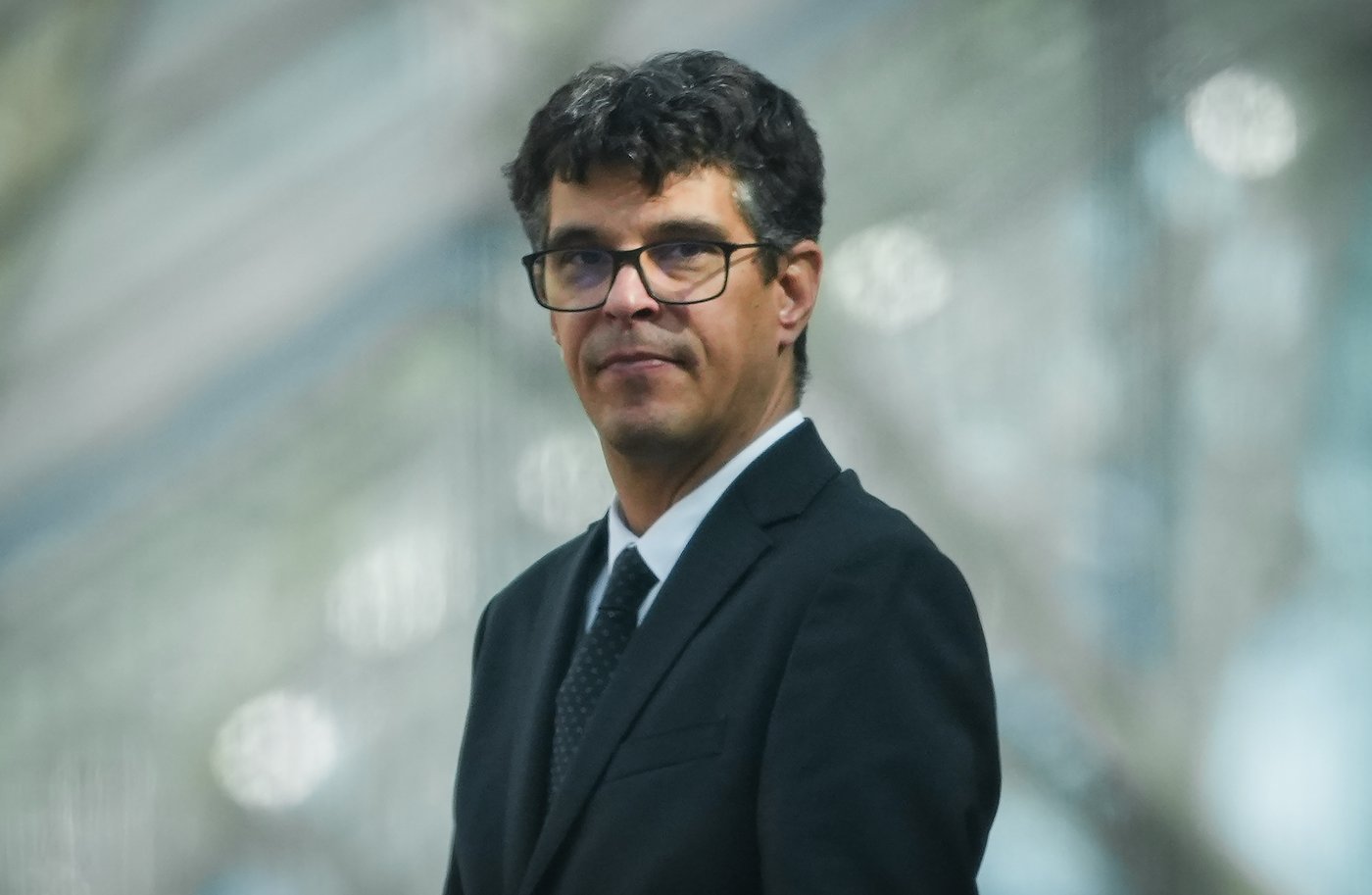
VANCOUVER — A former creative writing student told a B.C. Supreme Court defamation trial that she was “shocked” and “horrified” at language used in a mass email by a fellow student who was investigating misconduct allegations against author and former UBC professor Steven Galloway.
Cara Woodruff, a UBC creative writing graduate, told the civil trial where Galloway alleges defamation that she received an email in November 2015 from Chelsea Rooney, who was collecting complaints against Galloway.
Woodruff said the email from Rooney contained “inflated and outrageous” rhetoric and urged recipients to anonymously contact a reporter from The Canadian Press about allegations against Galloway.
She told the court that Rooney had been speaking on behalf of a woman identified only as A.B. because she was vulnerable and in need of support, but A.B. “had mentioned before that she didn’t like Chelsea. She didn’t trust her, so I didn’t understand why Chelsea was coming in like a detective.”
Woodruff said she didn’t believe that Galloway sexually assaulted A.B. and she kept asking the woman to go to the police to have it investigated “properly.”
Rooney issued a public apology to Galloway this month, just days before the trial began.
Her statement said she understood her conduct toward him was “serious and harmful,” and that she deeply regretted “contributing to the harm Mr. Galloway has suffered.”
Woodruff told the court on Tuesday that she felt “blindsided” when she learned of the allegations because she had been friends with A.B., and it “was very unclear” to Woodruff if there was a criminal investigation.
“It was so vague,” she said. “But it was a very complex situation. It just didn’t make sense to me.”
A.B. is not testifying in the trial, and the court has heard she is not asserting in her defence that the allegations she made against Galloway are true.
Galloway, the author of novels including “The Cellist of Sarajevo” and “The Confabulist” was a tenured professor and the chair of the creative writing program at the University of B.C.
He was never charged over the allegations by A.B., whose name is under a publication ban, though he was fired from his job.
Rooney said in her apology that she had been asked by the university, A.B. and faculty members to gather complaints against Galloway, but she had “no information” that the “very serious and unproven allegations” against Galloway were true.
The court also heard on Tuesday from Stephen Bohnen, a former UBC community relations officer, who first documented A.B.’s sexual harassment complaint against Galloway in 2013.
Galloway’s lawyer asked Bohnen about an email sent by A.B. that referred to the head of campus security named “Steve,” alleging he’d called Galloway a “serial predator.”
Bohnen said he was not the head of security, and when asked if it was him who referred to Galloway that way, he said “I certainly can’t remember anything like that. I have no reason to think of him as anything but a professor at the university.”
He said A.B. had not reported sexual assault, but rather sexual harassment.
Glynnis Kirchmeier, a defendant representing herself in the case alleged to have defamed Galloway in a Twitter post, questioned Bohnen about how the university handled complaints against professors.
Justice Neena Sharma paused Kirchmeier’s questioning, asking her about the relevance to the defamation case.
“I intend to argue that part of the downstream liability that I share with A.B. comes from UBC not handling her report correctly,” Kirchmeier said.
She said it would demonstrate that it was “reasonable for me to believe A.B., first of all, and why it would (not be) malicious for me to be distrustful of the findings” of a report by a former judge hired by UBC who’d deemed the allegations unsubstantiated.
“I’ll let you continue, although I’m not sure I completely understand that,” Sharma said.
The court also heard that A.B. had admitted in 2019 during cross-examination on an affidavit she swore that she had falsely claimed that the CBC’s legal team had vetted her story.
Galloway’s lawyer Daniel Burnett read from a transcript where A.B. said she made the claim because she “desperately wanted UBC to go forward with an investigation.”
“I don’t regret what I said because I needed to keep myself alive and safe, and there are no easy ways for safe, or safe ways for women to get their cases brought forward and investigated,” A.B. said in transcript read into court.
Later Tuesday, A.B.’s lawyers argued against admitting into evidence a report by a publishing industry expert, as Galloway alleges his writing career was destroyed after the allegations surfaced.
This report by The Canadian Press was first published Oct. 20, 2026.
News from © The Canadian Press, . All rights reserved.
This material may not be published, broadcast, rewritten or redistributed.

This site is protected by reCAPTCHA and the Google Privacy Policy and Terms of Service apply.
Want to share your thoughts, add context, or connect with others in your community?
You must be logged in to post a comment.