Elevate your local knowledge
Sign up for the iNFOnews newsletter today!
ST JOHN’S — Prime Minister Mark Carney says Canada is a voice “for justice” as the United Kingdom considers offering a formal apology for its role in the transatlantic slave trade.
Carney was in the Caribbean nation of Antigua and Barbuda on Tuesday for a meeting of Commonwealth leaders, where calls for reparations from the U.K. for its role in the slave trade were prominent.
Days before the summit began, British Prime Minister Andy Burnham said his government would consider apologizing for the first time for its role in the transatlantic slave trade, but said reparations were not on the table.
In his opening speech to the summit Tuesday, Antigua Prime Minister Gaston Browne noted the last Commonwealth meeting in Samoa in 2024 included an agreement that “the time had come for a meaningful, truthful and respectful conversation on reparatory justice.”
“We must now carry that commitment forward through structured, inclusive dialogue on the enduring consequences of slavery and colonialism, with a determination to make progress and a willingness to build consensus,” Browne said.
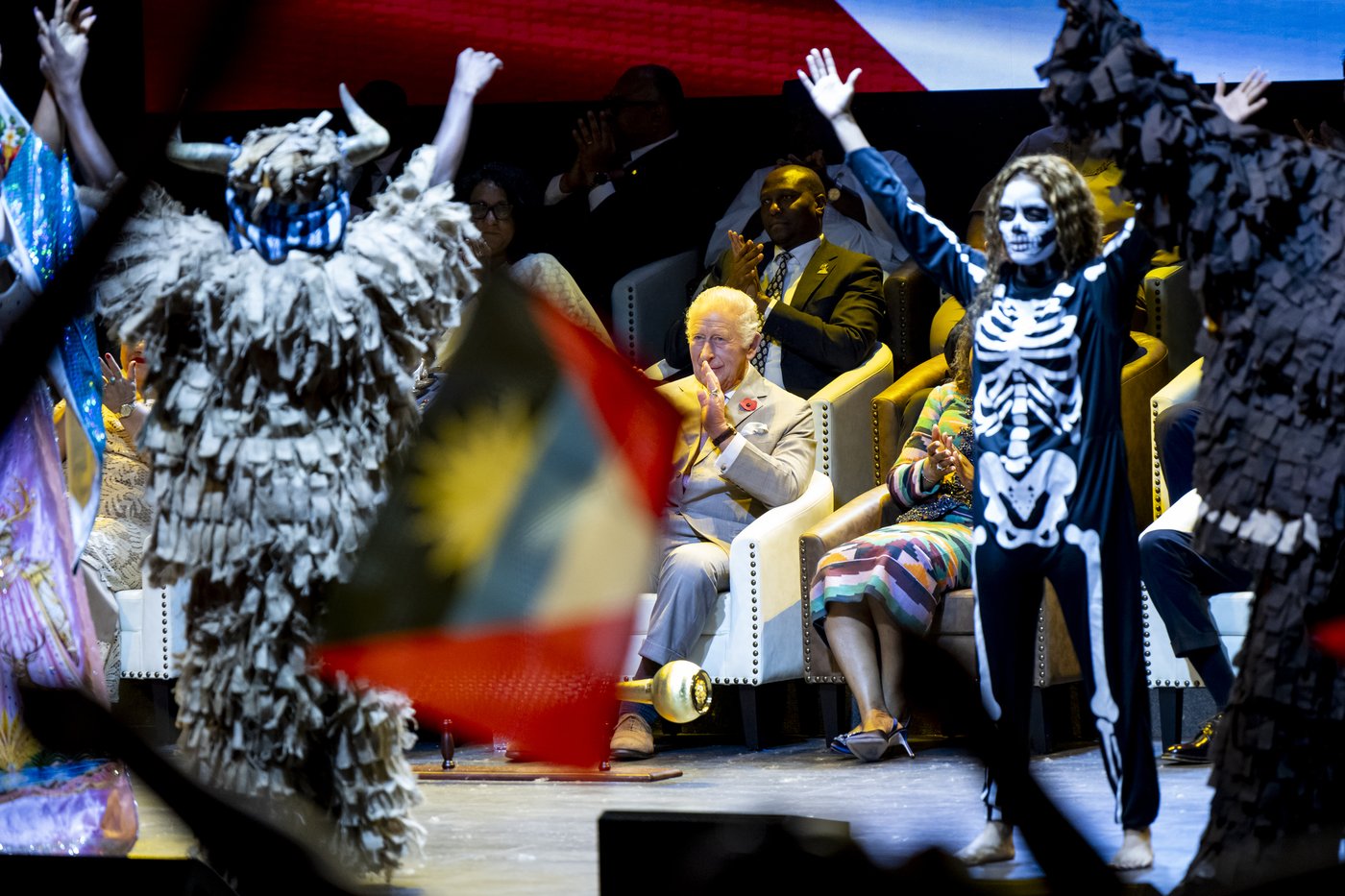
In his speech at the summit, King Charles called the transatlantic slave trade a “shameful chapter of history” but did not issue an apology.
“We cannot change the actions of those who came before us. We can however learn from the past,” the King said.
“The transatlantic trade and enslaved persons still cast a shadow over these islands and other members of our Commonwealth. As I’ve said before, that shameful chapter of history is one that fills my heart with horror and my soul with the most profound personal sorrow.”
Hours later, when asked by reporters about the calls for an official apology and reparations, Carney said Ottawa is always speaking up for “justice” and wants to play a role in building consensus.
He said Burnham spoke to the issue in the room during Tuesday’s meetings and it would be addressed in a joint statement.
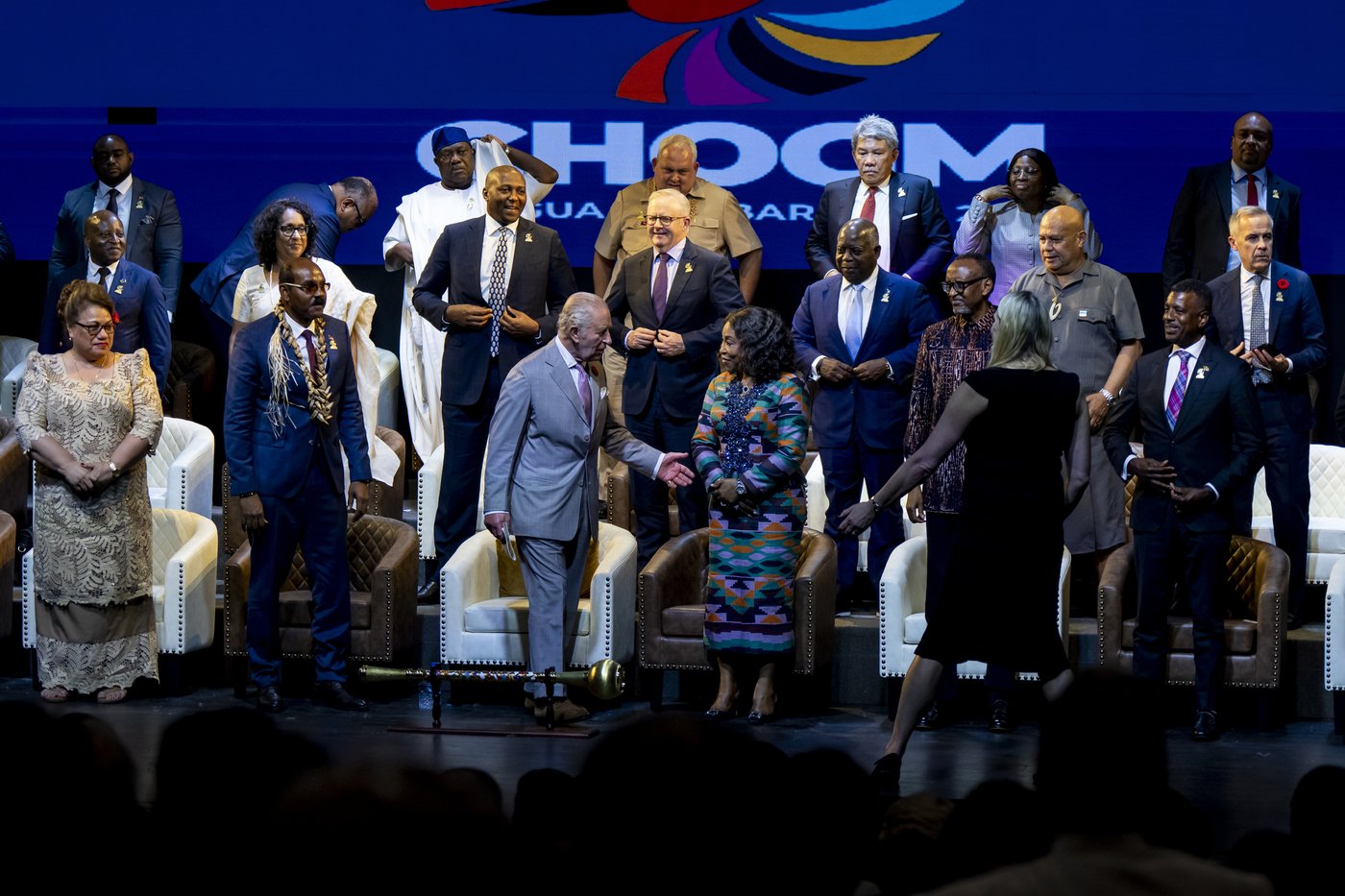
“You will see in the final communicate a reflection of the consensus, the impact of his words and the process being put in place to move forward amongst the Commonwealth,” Carney said. “We’re supportive of that and that’s part of the role we can play in hearing all voices and moving towards consensus.”
The final summit communiqué welcomed the British government’s pledge “to engage in a structured, time-bound, inclusive and good-faith dialogue with affected parties addressing the transatlantic trafficking of enslaved Africans and its historical harms.”
Protesters demanding reparations set up outside the meeting. Carney and Burnham were among the world leaders who had to walk past them into the opening ceremony on Tuesday.
“Technically, we’re free, but mentally a lot of us aren’t,” said protester Shana Michelle of Antigua. “If you look at the way we speak about ourselves, our skin, our hair, how we describe ourselves, you can see we still have those vestiges of colonialism in our speech, and we have to get away from that.”
Countries in CARICOM, an intergovernmental organization representing Caribbean nations, have proposed a 10-point plan for reparations.
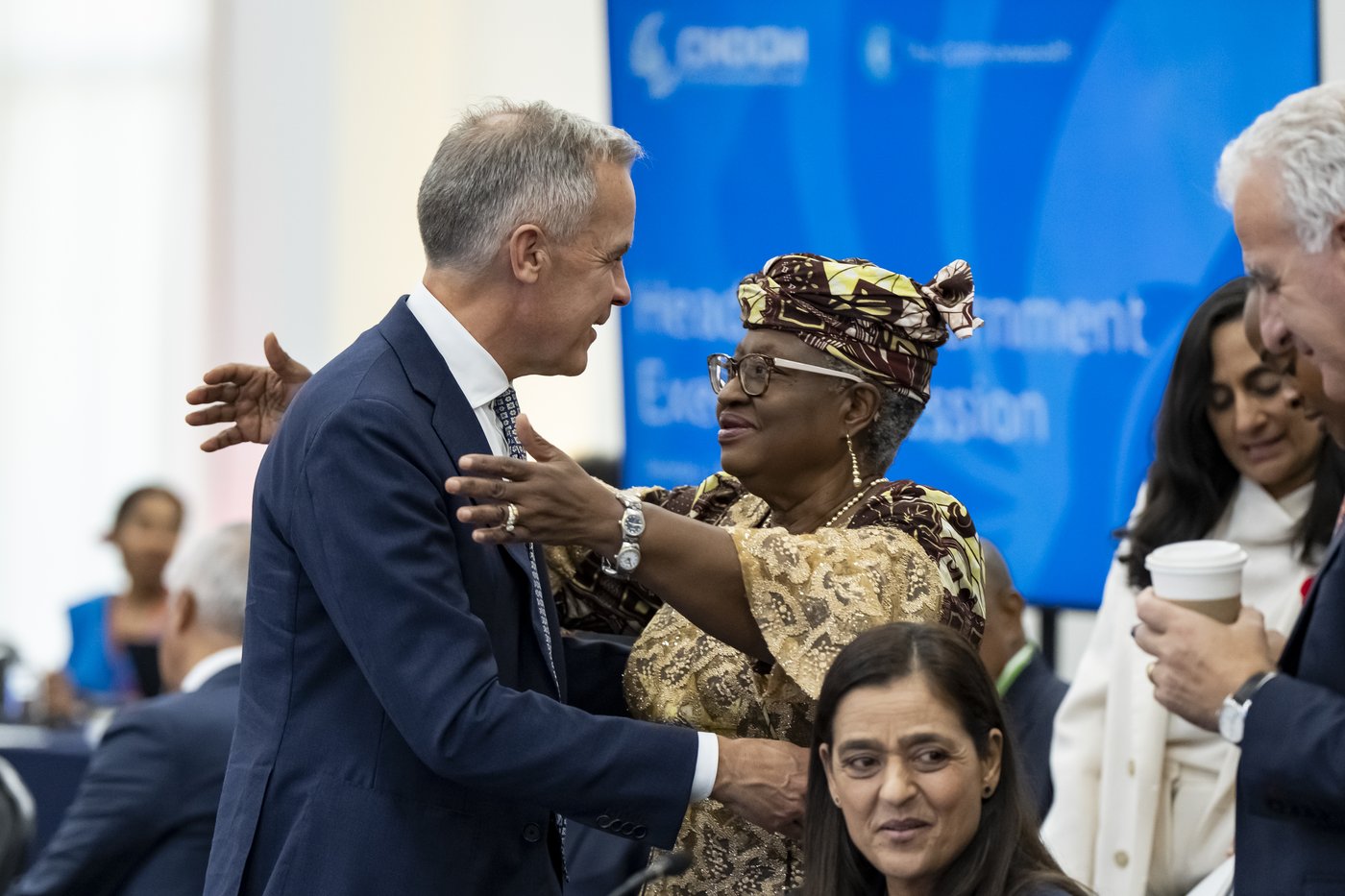
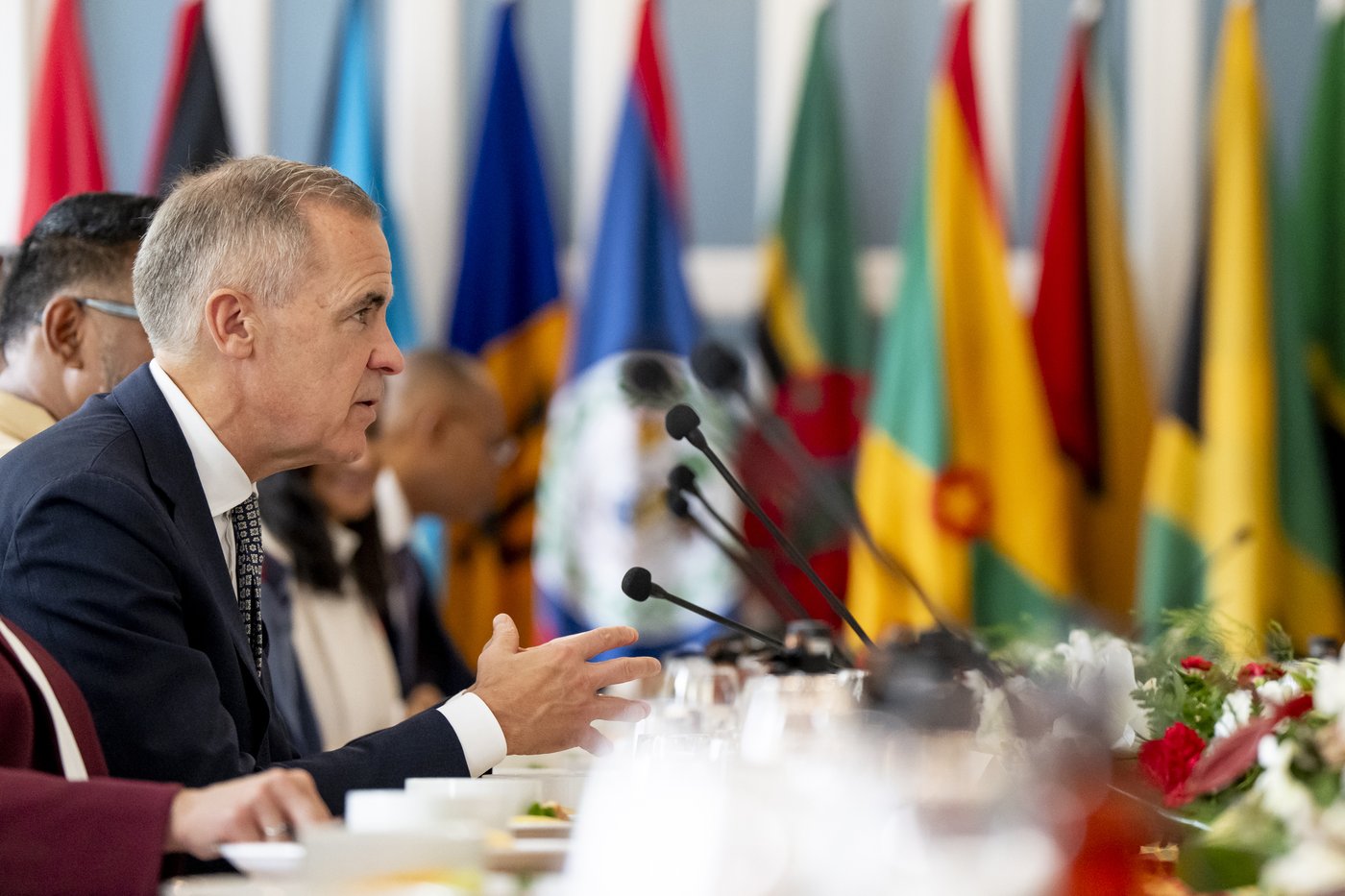
Earlier in the day, Carney told Commonwealth leaders at a working breakfast meeting that Canada and the Caribbean have barely begun to realize what’s possible in their trading relationship.
“There’s more than a million people in Canada who trace their roots back to the region,” Carney told the assembled leaders before attending the opening of the Commonwealth heads of government meeting in the capital St. John’s.
“There is growing trade, $4 billion a year more broadly … It scratches the surface of what’s possible.”
Carney began his day with a meeting with Browne, who told Carney at the start of their meeting that Canada “as a middle power is very influential in the Commonwealth globally.”

He said Canada can help “make the Commonwealth more consequential.” Carney replied that the gathering was “an extraordinarily important meeting at a crucial time.”
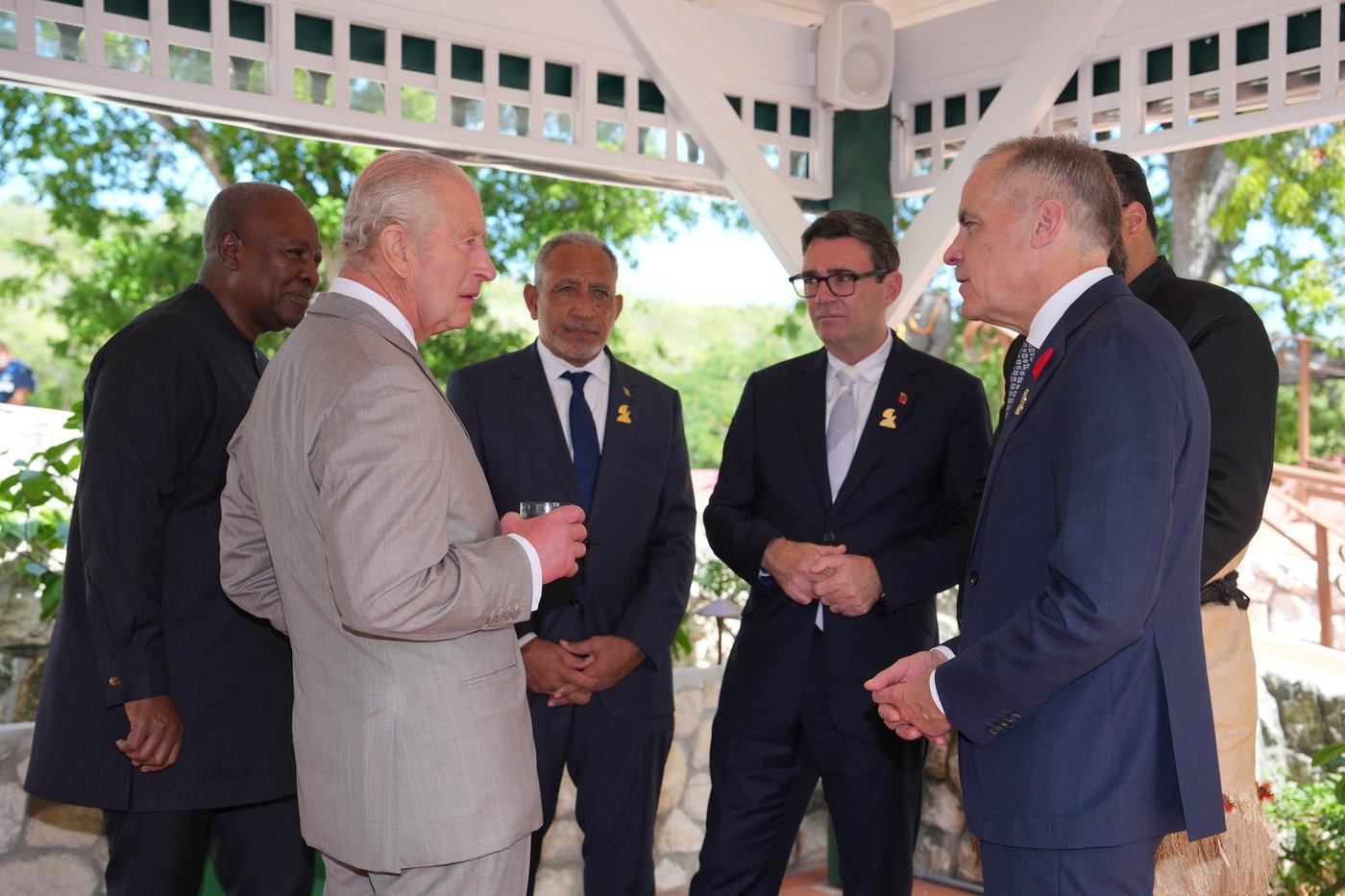
Carney’s office said in a readout that he discussed with Browne ways to do more in “trade and investment, energy, climate resilience, youth, tourism, people to people ties and the priorities of small island developing states.”
Foreign Affairs Minister Anita Anand joined Carney at the working breakfast, where the prime minister gave each of the assembled Caribbean leaders a bottle of maple syrup with his own brand on it.
Heads of state and foreign ministers from Antigua, the Bahamas, Barbados, Belize, Dominica, Grenada, Guyana, Jamaica, Saint Kitts and Nevis, Saint Lucia, Saint Vincent and the Grenadines, Trinidad and Tobago were in attendance, along with the secretary-general of CARICOM.
“We all know how much the world has changed. We’re all responding to it. We all know that the best response is to build out the close ties of friendship,” Carney said in his opening remarks at the breakfast.
After the breakfast, Carney and the Caribbean leaders walked together to the venue where the Commonwealth heads of government meeting was being held, just a few minutes away.
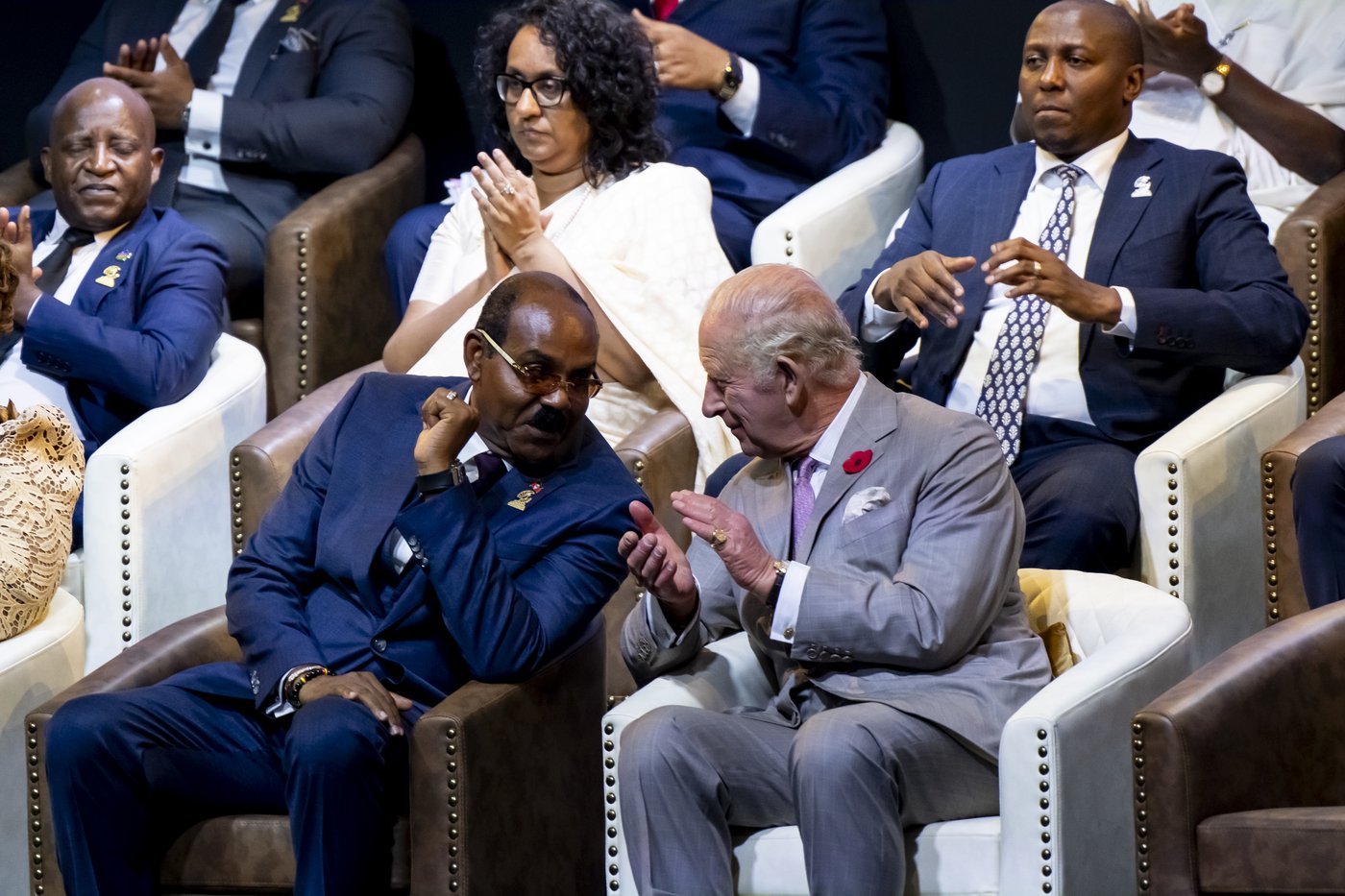
Later in the day, Carney also met with Guyana President Mohamed Irfan Ali, who thanked Carney for his “enormous global leadership” and for expanding trade, security and biodiversity co-operation with Caribbean countries. Carney also met with the leaders of Australia and Ghana.
He later told reporters that leaders discussed trade and investment opportunities, strengthening supply chains and fostering sustainable economic growth.
“This is the moment when you pivot, and then you move in that direction,” Carney told reporters. He said his one-day visit started “to put in place some of the mechanisms that make that direction possible.”
In a press release following the meeting, the government said the prime minister had announced more than $70 million in new investments in Commonwealth countries, including the Caribbean. The release said the investments would go towards infrastructure, emergency preparedness, restoring forest ecosystems, and the fast dispatch of emergency relief.
Carney described talks on clean energy and mining collaboration and financing to deal with climate change — a cause Canada has championed in recent years and one that Caribbean leaders cite as one of their most pressing challenges.
Carney addressed Commonwealth leaders at a roundtable session titled “financing for development,” but his remarks were closed to media and the Prime Minister’s Office declined to provide a copy of his speech.
Carney also attended a lunch hosted by King Charles for new heads of government in the Commonwealth. The leaders of Gabon, Ghana, Mauritius, Mozambique, Namibia and the U.K. were also expected to attend the lunch, a spokesperson for the Prime Minister’s Office said.
Carney is attending a dinner also hosted by King Charles before he flies back to Ottawa late Tuesday. Neither event with the king, nor the King’s speech at the meeting, were accessible to Canadian media.
The Commonwealth is a voluntary coalition of 56 countries. Most of them have ties to the former British Empire. The leaders’ meeting is held every second year and is the first since Carney took office in March 2025.
The modern Commonwealth was established in 1949 and Commonwealth countries together represent 2.7 billion people. Commonwealth members include large countries like the United Kingdom, Australia, India and Nigeria, and many of the world’s smallest countries — such as Tuvalu, a group of islands in the Pacific Ocean with a population of about 10,000.
Experts say ties with Commonwealth countries can help Canada win support in multilateral forums like the United Nations, a strategy Canada has used in the past.
This report by The Canadian Press was first published Nov. 3, 2026.
— With files from Dylan Robertson in Ottawa
News from © The Canadian Press, . All rights reserved.
This material may not be published, broadcast, rewritten or redistributed.

This site is protected by reCAPTCHA and the Google Privacy Policy and Terms of Service apply.
Want to share your thoughts, add context, or connect with others in your community?
You must be logged in to post a comment.