Elevate your local knowledge
Sign up for the iNFOnews newsletter today!
PHILADELPHIA – A Philadelphia non-profit group detailed plans Wednesday to open next week what would be the nation’s first medically supervised injection site to combat overdose deaths, despite outrage from neighbours and opposition from the local federal prosecutor.
The announcement came after a federal judge who oversaw months of litigation ruled Tuesday that the Safehouse plan wouldn’t violate federal drug laws because it aims to reduce drug use, not encourage it.
The decision to open the first site in residential south Philadelphia, and not the Kensington neighbourhood north of downtown that has become the epicenter of the city’s opioid problem, took many by surprise. At a heated news conference Wednesday, neighbours complained that the site selected has a day care centre in the building, and schools, stores and restaurants nearby.
“We will monitor this,” said former Pennsylvania Gov. Ed Rendell, a Safehouse board member. “If problems arise, we can always stop and go to a different location.”
Board member Ronda Goldfein said the organization wanted to start with a smaller facility, given its finances, before expanding its services to the Kensington area. The city’s 1,100 overdose deaths each year include one death per week in south Philadelphia, she said. Supporters hope those deaths could be avoided if people have medical help — and counselling and treatment when they are ready — nearby.
South Philadelphia residents at the news conference feared an increase in discarded needles, trash and crime. They also said the Safehouse organizers had not involved them in the decision.
“They don’t even know about it, and you’re opening up next week?” asked City Councilman Mark Squilla.
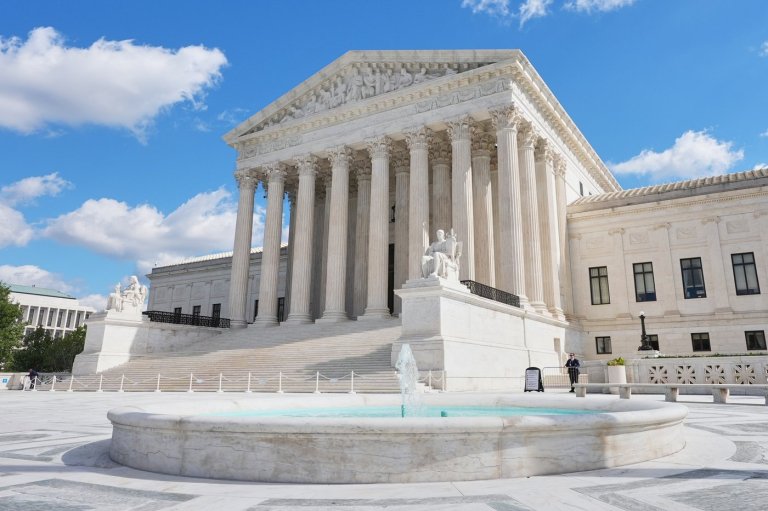
U.S. Attorney William McSwain, who had challenged the plan in court, vowed to appeal to the 3rd U.S. Circuit Court of Appeals.
“What Safehouse proposes is a radical experiment that would invite thousands of people onto its property for the purpose of injecting illegal drugs,” McSwain said Tuesday. He said the Justice Department and U.S. surgeon general also oppose the idea.
Under the Safehouse plan, people could bring drugs to the clinic-like setting, use them in a partitioned bay and get medical help if they overdose. They would also have access to counselling, treatment and other health services.
The opening has been on hold for much of the past year while McSwain’s office argued that the plan violates a 1980s-era drug law known as the “crackhouse statute.” Safehouse lawyers said it wasn’t clearly illegal under that section of the Controlled Substances Act — which regulates the possession, use and distribution of certain drugs — to stand nearby with life-saving medical help. U.S. District Judge Gerald McHugh agreed.
“The ultimate goal of Safehouse’s proposed operation is to reduce drug use, not facilitate it, and accordingly, (the law) does not prohibit Safehouse’s proposed conduct,” McHugh wrote in a preliminary ruling last fall that he affirmed this week.
Mayor Jim Kenney, a Democrat, and District Attorney Larry Krasner also support supervised injection sites as part of a harm reduction strategy.
The facilities have long operated in Canada and Europe and have been considered by several U.S. cities, including Seattle, New York and San Francisco. Smaller, unofficial sites have also popped up in some places across the U.S.
“The NIMBY (Not In My Back Yard) mentality is killing our neighbours,” said Brittany Salerno, 30, who does volunteer outreach in south Philadelphia. “Just because people don’t see it, it doesn’t mean it’s not happening.”
___
This story has been updated to correct that Salerno does volunteer outreach in south Philadelphia but does not live there.
News from © iNFOnews.ca, . All rights reserved.
This material may not be published, broadcast, rewritten or redistributed.

This site is protected by reCAPTCHA and the Google Privacy Policy and Terms of Service apply.
Want to share your thoughts, add context, or connect with others in your community?
You must be logged in to post a comment.