Elevate your local knowledge
Sign up for the iNFOnews newsletter today!
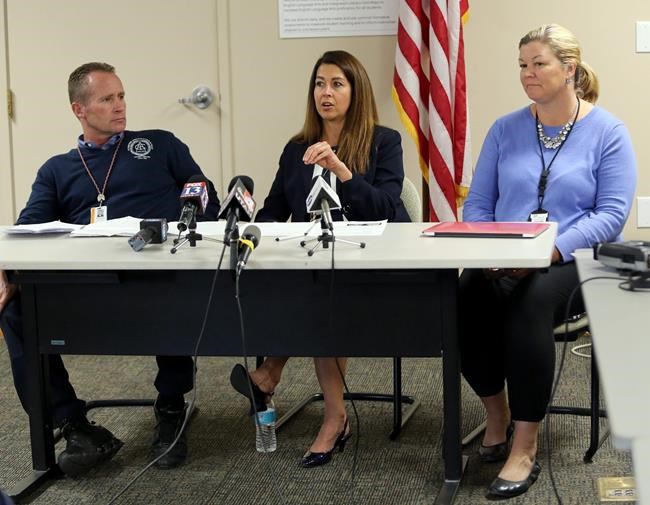
SALT LAKE CITY – Police say the deaths of two 13-year-old boys in the Utah ski-resort town of Park City could be connected to a new synthetic drug that was also found at the estate of entertainer Prince after he died.
Park City police are waiting for toxicology results to confirm what killed Grant Seaver and Ryan Ainsworth, whose bodies were discovered by their parents last month.
Investigators say they found conversations on the boys’ social media accounts about a drug called U-47700, sometimes known as “pink,” Park City Police Chief Wade Carpenter said.
There is also evidence that other local teens ordered the drug online from China, according to search warrants in the case.
U-47700 is among a new generation of drugs being synthesized in clandestine labs and is too new as a recreational drug to be listed among illegal substances as the U.S. struggles with an epidemic of opioid use.
Nearly eight times stronger than morphine, U-47700 has been connected with at least 50 deaths nationwide. It was found in pills at Prince’s estate after the entertainer overdosed on another synthetic opioid, the painkiller fentanyl.
In Utah, Seaver, a talented skier, and Ainsworth were found separately by their parents over two days. At first there were no clues about what killed the otherwise healthy kids, Carpenter said.
The deaths have left a grieving student body and a reeling administration at Park City schools. A picturesque mountain town that hosts Robert Redford’s Sundance Film Festival, it’s the kind of place where people move to raise their families, said school superintendent Ember Conley.
Since the deaths, police have been investigating a web of about 15 kids. School searches have turned up methamphetamine residue in a locker and parents have turned in containers with U-47700 residue that they found among teens’ belongings, Carpenter said.
U-47700 was developed by a pharmaceutical manufacturer in the 1970s as a possible alternative to morphine. Now, chemists in places such as China and Eastern Europe can make it with recipes published in online patent records and old scientific journals.
“It’s pretty easy,” Carpenter said. “They go online, unfortunately, (with) $37 and a credit card and a cellphone and they can order it up, which is what makes it so scary.”
Like many synthetic opioids, the exact effects of U-47700 are little-understood and a small amount could be fatal, especially if it’s laced with another drug.
“The consumer, they don’t know what they’re putting into their body,” said Russ Baer, a spokesman for the Drug Enforcement Administration.
Such synthetic drugs weren’t on the official radar at Park City schools before the junior high students’ deaths, and the newness makes it harder to enforce school rules written for illegal substances.
Locker-sniffing dogs are not trained to recognize it and typically drug tests can’t detect it, Conley said.
The DEA has filed to have U-47700 listed as a banned substance, much as it did when drugs such as the synthetic marijuana known as spice and hallucinogenic bath salts arrived on the scene.
That’s expected to go into effect early next week. The change will make school administrators’ jobs easier and streamline prosecutions, but it’s not a panacea.
“There are 200 drugs that can take its place,” Carpenter said. “The problem is so massive, and it’s throughout the country.”
News from © The Associated Press, . All rights reserved.
This material may not be published, broadcast, rewritten or redistributed.

This site is protected by reCAPTCHA and the Google Privacy Policy and Terms of Service apply.
Want to share your thoughts, add context, or connect with others in your community?
You must be logged in to post a comment.