Elevate your local knowledge
Sign up for the iNFOnews newsletter today!
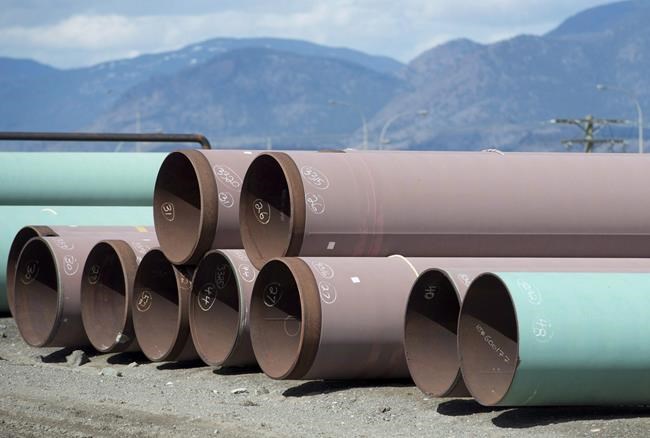
Local officials are celebrating big economic gains that would come from a new pipeline through Kamloops, but the question of a big property tax cut still hangs over the lines that are already there.
The federal government announced a deal that could see a new oil pipeline following the Trans Mountain route that passes through the North Thompson Valley and Kamloops on its way to the west coast.
The Trans Mountain expansion line officially opened up in May 2024 after years of construction, which brought workers to the Kamloops area, then added a few million dollars in property taxes to Kamloops city hall alone.
“It’s probably going to take a long time to even get started and there will be challenges… nevertheless, as with the Trans Mountain pipeline, there’s an economic benefit. It’s a good thing for the city, the economy and jobs,” deputy mayor for the month Coun. Dale Bass said. “It’s something as simple as people coming to work on it can experience Kamloops.”
Bass said the city is optimistic the project, once started, would be an economic boon for the city. She added that more housing is being built and nearing completion, so it’s not expected to worsen local vacancy rates.
However, questions still surround whether BC Assessment will cut taxes for utilities, like pipelines. A plan to do so was proposed last fall and it struck harsh criticism from local officials along the Trans Mountain route.
“As we saw a few months ago, the reassessment was going to cost Kamloops hundreds of thousands of dollars, if not millions,” Coun. Mike O’Reilly said.
He added that Trans Mountain did not lobby the province or BC Assessment to reduce their property taxes.
“We spoke with Trans Mountain this week, and they said they didn’t have any position on wanting the pipelines reassessed with a decreased value,” he said. “If we look at Trans Mountain now, looking to increase capacity… we expect there will be an increase in taxation and we will be advocating for what we deserve.”
He called the announcement of a new pipeline “great” for BC and “fantastic” for Kamloops, but he said city hall, along with the Thompson Nicola Regional District, are still lobbying the province to make clear what is happening with pipeline taxes and to avoid putting the lost revenue onto local property owners.
Smaller communities will likely be hit even harder, with Clearwater staring down a potential 11% tax increase due to the pipeline tax cuts before the plan was dropped. For Kamloops, O’Reilly said it would’ve been closer to around 3%.
A BC Assessment staffer took the brunt of regional district ire over the cuts during an October board meeting.
He told the regional district last fall that he anticipated frustration, but the agency wasn’t looking for “anymore” input from local governments. Those officials, however, had no opportunity to provide input on the changes before they were proposed.
The cuts weren’t approved by the province’s finance ministry and were instead postponed.
Trans Mountain was not available to comment in time for publication.
News from © iNFOnews.ca, . All rights reserved.
This material may not be published, broadcast, rewritten or redistributed.

This site is protected by reCAPTCHA and the Google Privacy Policy and Terms of Service apply.
Want to share your thoughts, add context, or connect with others in your community?
You must be logged in to post a comment.