Elevate your local knowledge
Sign up for the iNFOnews newsletter today!
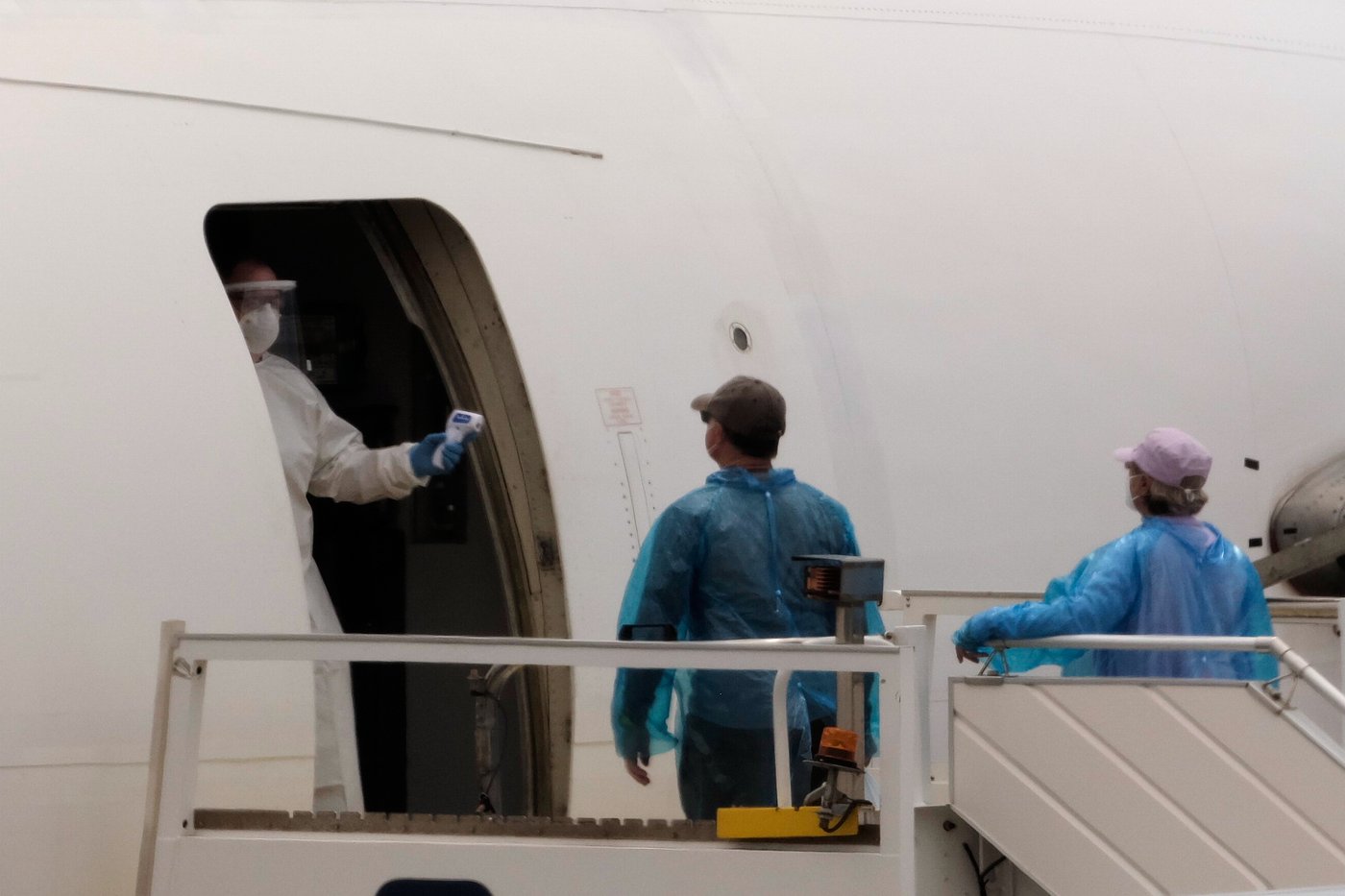
TORONTO — Ontario’s ministry of health is asking seven more people to isolate in relation to a global hantavirus outbreak, though it says those individuals are considered “low-risk” contacts.
Jackson Jacobs, a spokesperson for the province’s health minister, said they are in addition to the three people who were asked to isolate after potentially being exposed to the virus while travelling, and are considered “high-risk.”
They’re all directed to isolate for 45 days “out of an abundance of caution.”
That brings the total number of people who are being monitored by local public health units in the province to 10.
Another six are isolating in Alberta and British Columbia, and remain asymptomatic, according to provincial health officials. One person in Canada connected to the outbreak is no longer isolating in Quebec, after the province’s health ministry said they were deemed a low-risk contact.
Someone is considered “low-risk” if they came into contact with one of the “high-risk” people.
In Ontario, those considered high-risk include a couple in Grey Bruce who was on the ship and a visitor to the Greater Toronto Area, in the Peel Region. They all shared a flight with a cruise passenger who later died of hantavirus.
Jacobs said Tuesday the three high-risk contacts in Ontario remained well and were showing no symptoms.
The Public Health Agency of Canada said passengers and crew members who were on the vessel, along with anyone identified as high-risk contacts from a flight with a confirmed case, should not travel.
“The government of Canada is implementing temporary measures that will prevent any passenger and crew that have been aboard the MV Hondius since April 1, 2026, from boarding a flight to Canada,” the agency said in an update Tuesday.
The director of the World Health Organization said the risk of hantavirus to health on a global scale continues to be low.
The number of positive cases internationally has grown to 11, including three deaths. No additional fatalities have been reported since May 2, and all cases have been among the ship’s passengers or crew.
“At the moment, there is no sign that we are seeing the start of a larger outbreak. But of course, the situation could change. And given the long incubation period of the virus, it’s possible we might see more cases in the coming weeks,” Dr. Tedros Adhanom Ghebreyesus said.
Public health officials and infectious disease physicians have stressed that Andes virus — the type of hantavirus that hit the ship and the only kind known to spread person-to-person — requires close and prolonged contact to spread and that it is not a pandemic threat.
TESTING
Health experts said it’s not clear whether it’s useful to test people who may have been exposed to hantavirus but don’t have symptoms.
Dr. Bonnie Henry, British Columbia’s provincial health officer, said public health officials around the world are discussing the issue as passengers from the ship have returned to their home countries.
She said tests for some viruses aren’t effective before patients develop symptoms and little is known about how well testing works in rare cases of the rodent-borne virus.
Henry said there are two types of blood tests for hantaviruses — one that checks for antibodies and a PCR test that detects pieces of the virus itself.
If anyone in Canada who may have been exposed to the virus develops symptoms, Henry said health officials are ready to test and treat them.
Alberta health officials said Tuesday their two travellers are self-isolating at home.
“If they display symptoms, testing will be conducted but, as noted, there have been zero symptoms to date,” said Tom McMillan, spokesperson for the Alberta Primary Health Ministry.
University of Saskatchewan hantavirus scientist Bryce Warner said health officials are in a “unique” situation because doctors wouldn’t normally have any reason to suspect the rare virus until a patient is showing signs of illness.
Warner, who works at the university’s Vaccine and Infectious Disease Organization, said a negative test in someone without symptoms wouldn’t necessarily mean they don’t have hantavirus.
“Because the incubation period can be several weeks, if you did a test in the first week and it was negative by PCR you can’t just say ‘OK, I’m negative.’ It could take another week or two or three, really, for that to come up as positive,” he said.
ISOLATION
Four Canadians arrived on Vancouver Island on Sunday and are self-isolating on a voluntary basis for at least 21 days and possibly up to six weeks.
Henry said she and the local health officer on Vancouver Island have legal tools to require people to isolate in appropriate facilities. But she said those powers won’t be used, unless people don’t comply with the request to self-isolate.
“So, it (forced isolation) is a last resort,” she said.
Stephen Hoption Cann, a clinical professor at the University of B.C.’s school of population and public health, said voluntary isolation is appropriate given the low chance of transmission.
“It’s not like the COVID virus,” he said. “It can be transmitted, but not easily transmitted, especially when a patient is not symptomatic.”
If, however, symptoms were to develop, the individuals could be transferred to an isolation unit, he said.
Henry said Sunday that the province has established protocols and facilities in the unlikely event that symptoms develop, including the B.C. Biocontainment Treatment Centre at Surrey Memorial Hospital, to safely assess and care for patients.
“I think we are striking the right balance,” Hoption Cann said, when asked about B.C.’s approach.
“There is a low risk of transmission from this virus. They don’t want to overact. It’s always a delicate balance. If you start (forced) quarantines, you can always have a lot of backlash from that.”
Hoption Cann said the COVID-19 pandemic showed that a lot of people were quite upset with the restrictive measures.
“You just want to maintain overall co-operation from the population, and demonstrate that you are doing the best you can, but not be too extreme under the current situation based on the science of what we know about the virus,” he said.
This report by The Canadian Press was first published May 12, 2026.
Canadian Press health coverage receives support through a partnership with the Canadian Medical Association. CP is solely responsible for this content.
News from © The Canadian Press, . All rights reserved.
This material may not be published, broadcast, rewritten or redistributed.

This site is protected by reCAPTCHA and the Google Privacy Policy and Terms of Service apply.
Want to share your thoughts, add context, or connect with others in your community?
You must be logged in to post a comment.