Elevate your local knowledge
Sign up for the iNFOnews newsletter today!
Elevate your local knowledge
Sign up for the iNFOnews newsletter today!
Select Region
Selecting your primary region ensures you get the stories that matter to you first.
OTTAWA — The unofficial authority on recession calls in Canada says it’s too soon to use that word to describe the sluggish economy.
Debate has raged on Parliament Hill over whether the country is in a recession since Statistics Canada reported last week that the economy contracted for two quarters in a row.
The C.D. Howe Institute’s Business Cycle Council is traditionally viewed as the arbiter on calling a recession in Canada.
The council said in a bulletin Friday that two quarters of declining GDP in a row are not sufficient to call a recession and urged against reading too much into the recent data.
The group of economists argued weakness in Canada’s economy is not yet widespread or persistent enough to warrant the recession label, and the marginal decline in the first quarter of the year will be subject to revisions in the months ahead.
Their report noted GDP increased in more than half of the sectors in the Canadian economy in the first quarter of 2026, showing the economic slowdown was not pervasive. The economists also said recent improvements in the unemployment rate indicate Canada is not in a recession.
Statistics Canada reported Friday the Canadian economy added 88,000 jobs in May, while the unemployment rate fell to 6.6 per cent from 6.9 per cent in April.
The C.D. Howe economists said they are ready to meet again to discuss a possible recession call if broad-based economic strain emerges in both GDP and employment figures.
The business cycle council said the upcoming review of the Canada-United States-Mexico Agreement, or CUSMA, will continue to cause worries about economic growth for the next few quarters.
Over the past week, the Conservatives have laid the blame for what they’re calling a “full-blown recession” at the feet of the Liberal government.
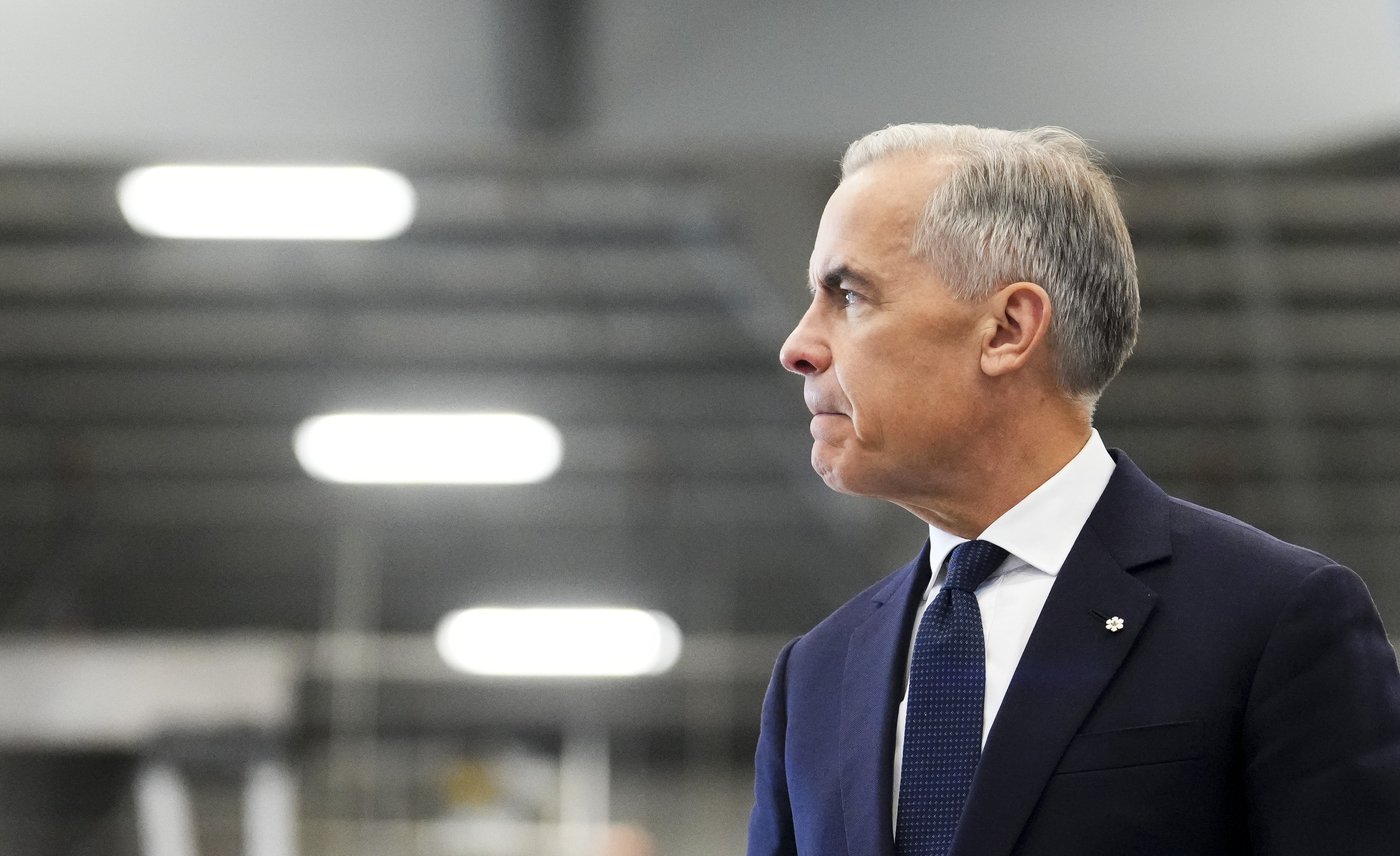
Prime Minister Mark Carney cited the job gains as “positive news” and “signs that our plan is working” during a public appearance in Brampton, Ont., on Friday rolling out the Liberals’ Groceries and Essentials Benefit. He did not take questions.
Carney has avoided using the word “recession” when discussing the economy over the past week, though he has acknowledged “weakness” in the data. He said growth will be uneven as the government works to pivot the economy away from reliance on the United States.
During question period on Wednesday, Carney deferred to the C.D. Howe Institute when pressed about whether the economy was in recession. He also pointed to fresh projections from the Organisation for Economic Co-operation and Development, or OECD, forecasting that Canada would see the second-fastest pace of economic growth in the G7 this year and next.
MP Garnett Genuis, the Conservative jobs critic, claimed the Liberals were cherry-picking data in question period on Friday. While he said the May job gains were good news, he noted employment was still lower than at the start of the year and this labour market should not become “the new normal.”
C.D. Howe’s Business Cycle Council pushed back against using “technical recession” to describe a slowdown marked solely by two contracting quarters of GDP.
“The adjective ‘technical’ is sort of designed to convey the idea that it’s official or scary. But it’s really just a rule of thumb,” said Steve Ambler, co-chair of the think tank’s Business Cycle Council.
When real GDP declined for two consecutive quarters in 2015 in response to tanking oil prices, recession debates raged then as well. But the business council ultimately determined those declines didn’t meet the bar for a recession.
The council’s bare minimum for a recession is actually just one quarter of contraction — but that decline would have to be sharp enough and reach most sectors of the economy.
The federal Conservatives published a new digital ad Friday that continued to hammer the recession angle.
The ad uses generative artificial intelligence to show stand-ins for Canadians waiting in line at food banks or facing job losses and home foreclosures, but smiling because it’s only “technically” happening to them — a jab at the “technical” recession modifier.
Ambler said there is a case to be made that Canada’s economy is weak right now, and critics of the government can look at metrics like stagnant GDP per capita to make that argument.
But he said mislabelling the state of the economy as a recession does little to make that point.
“If you want to construct a narrative saying we’re not doing very well, you can do so,” he said.
“But once again, this is my own personal opinion that trying to build the narrative on the basis of the ‘R-word’ … actually just weakens the argument.”
This report by The Canadian Press was first published June 5, 2026.
— With files from David Baxter and Maan Alhmidi in Brampton
News from © The Canadian Press, . All rights reserved.
This material may not be published, broadcast, rewritten or redistributed.

This site is protected by reCAPTCHA and the Google Privacy Policy and Terms of Service apply.
Want to share your thoughts, add context, or connect with others in your community?
You must be logged in to post a comment.