Elevate your local knowledge
Sign up for the iNFOnews newsletter today!
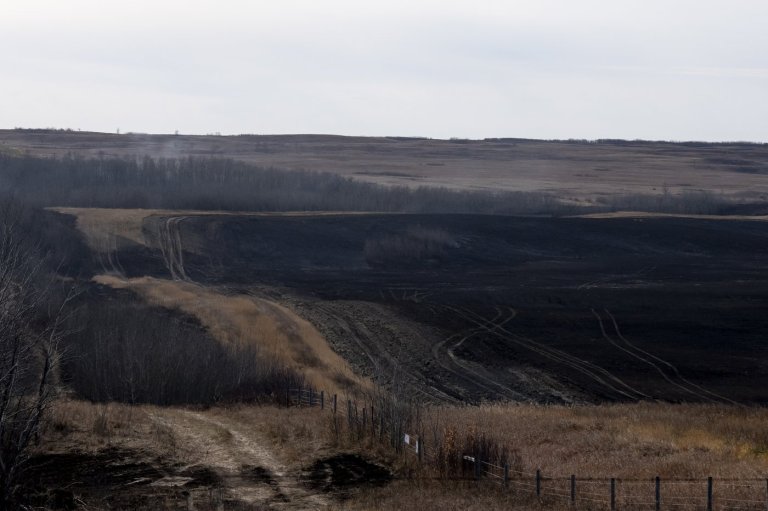
OTTAWA — A small First Nations community in Ontario that was burned to the ground by a raging wildfire on Monday is being deprived of the help it needs because the federal government doesn’t recognize it as a First Nation, the community’s lawyer says.
And its chief says she didn’t hear anything from Indigenous Services Minister Mandy Gull-Masty for nearly a week after the fire broke out.
Residents of Collins First Nation, a remote community without road access more than 200 kilometres north of Thunder Bay, were forced to self-evacuate earlier this week in advance of fast-moving fires.
Videos show community members fleeing on small boats as the flames encroached upon the shoreline.
Anishinabek Nation Grand Council Chief Linda Debassige told The Canadian Press the community members made a narrow escape. She said they took care of each other after provincial and federal agencies failed to warn them of the blaze and provide evacuation support.
The council, a body of 39 First Nations, recognizes Collins, also known as Namaygoosisagagun, as a First Nations community and is supporting its members by providing hotel stays and essentials like food and clothing.
“We don’t know if we’re going to be reimbursed, but that doesn’t matter,” Debassige said.
“Our concern is about supporting this community when the federal and provincial government have failed them.”
Several other First Nations in the province, including Mississaugas of Scugog Island First Nation, are also raising funds for the community at their powwow this weekend.
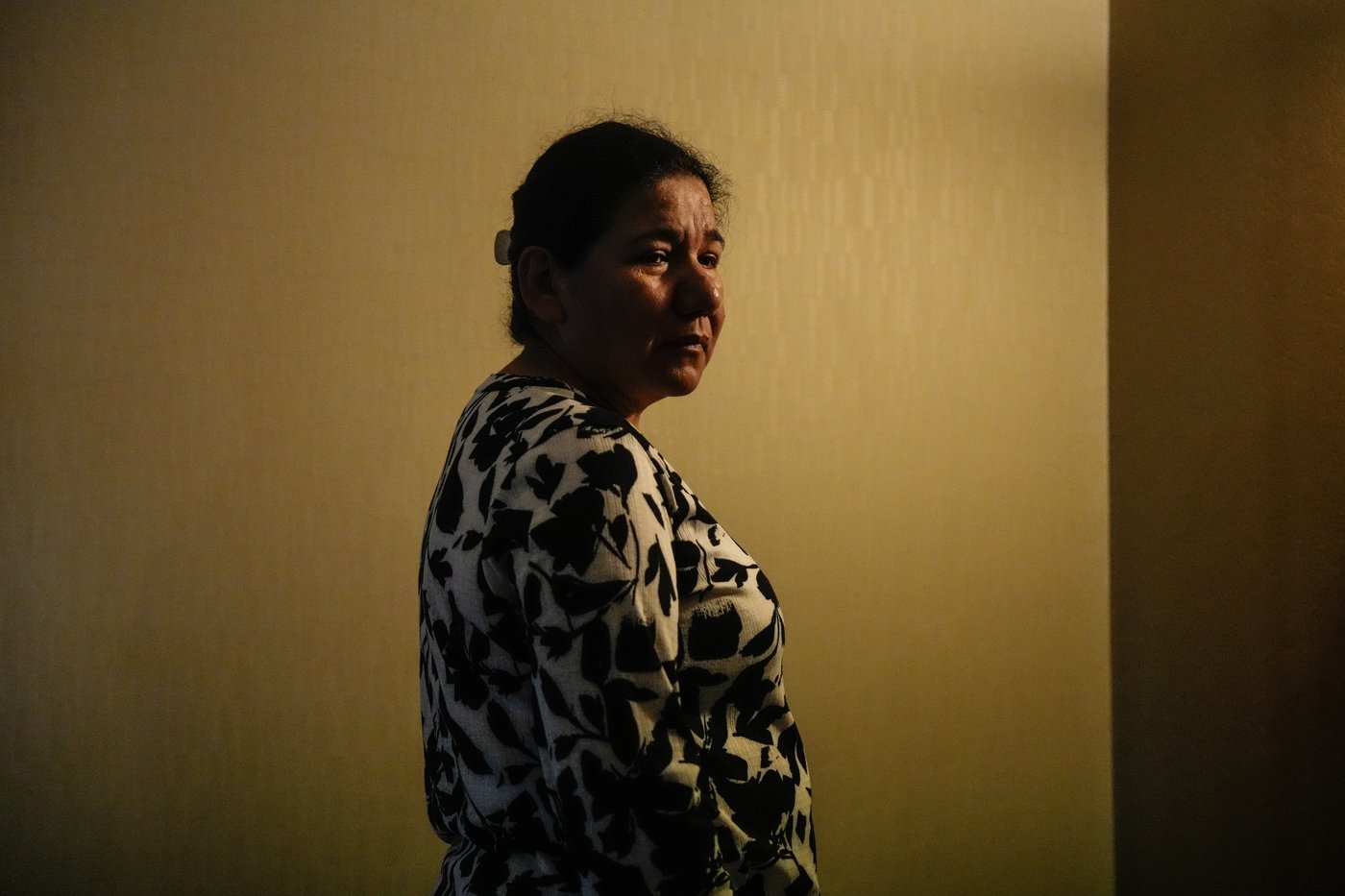
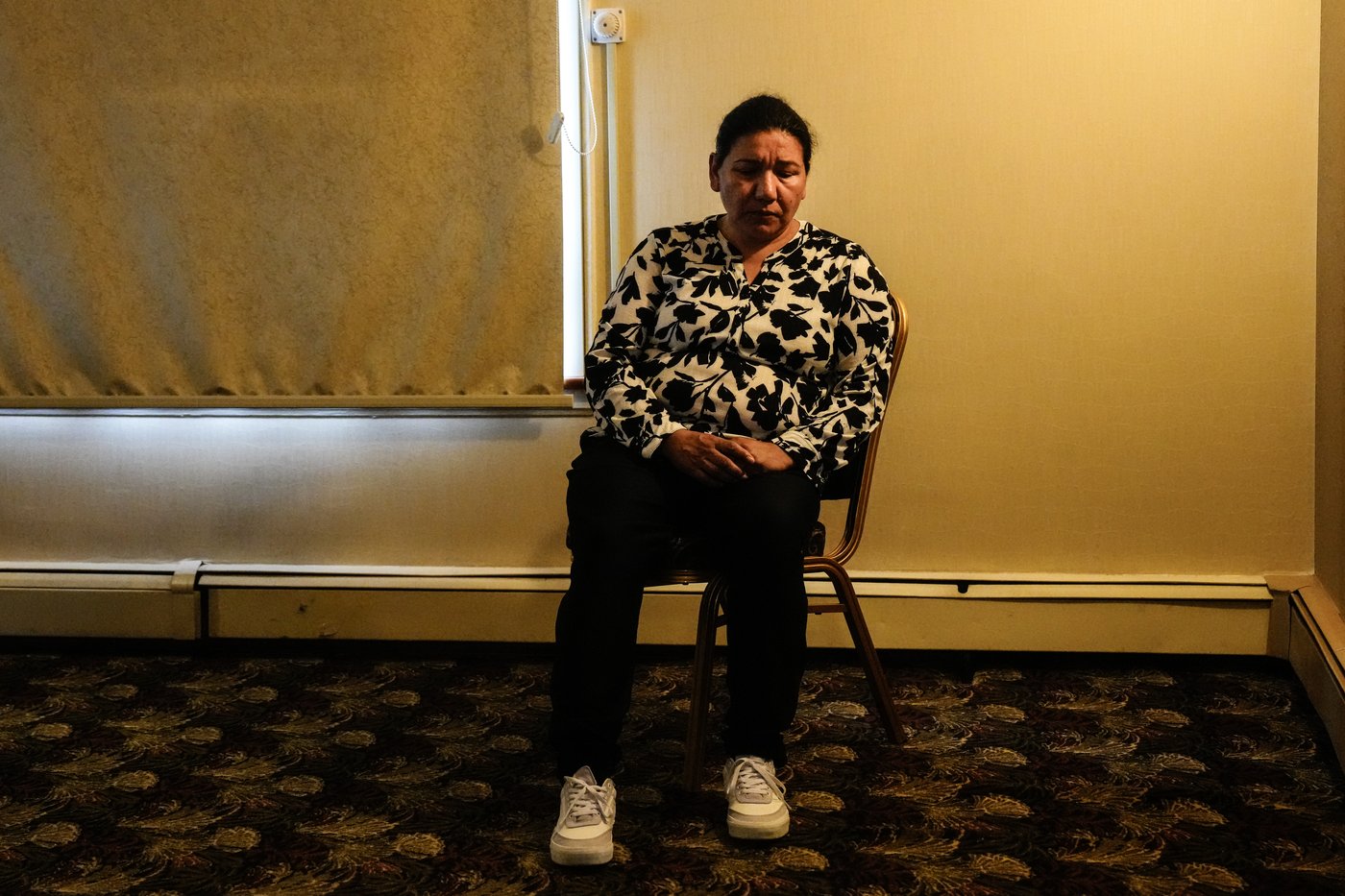
Collins First Nation Chief Helen Paavola told The Canadian Press she heard from Gull-Masty for the first time since the fire broke out on Friday afternoon.
“I’m not sparing anybody at this point because I’m angry now, and every day that goes by I become angrier because I’m hurting, my people are hurting and we have nowhere to go,” she said.
“We don’t belong here. We belong back home in the bush.”
She said she’s thankful for the support her community has received from Anishinabek Nation, and from other communities who have donated when governments didn’t step in.
“That’s unbelievable, but that’s the Anishinaabe way,” she said.
Meaghan Daniel, a lawyer who represents Collins First Nation, wrote a letter to Gull-Masty on Thursday calling on her department to provide the community with emergency, recovery and reconstruction supports available to recognized communities under the Indian Act.
While residents of Collins are recognized as First Nations people under the Indian Act, the community itself is not. Its leaders have pressed Ottawa for official recognition for decades.
“To be clear, if Namaygoosisagagun is denied access to the emergency and rebuilding supports available to recognized First Nations, it will not simply suffer a slower recovery. It may lose forever the opportunity to rebuild the community its members spent decades creating,” Daniels wrote in the letter.
“In those circumstances, the question is not merely whether recovery will be delayed. It is whether Namaygoosisagagun will have a future in the place it has called home since time immemorial.”
In an emailed statement, Indigenous Services Canada spokesperson Eric Head said the federal government will provide aid to address the community’s immediate needs. He said work is underway with federal and provincial partners to identify those needs and co-ordinate supports for community members.
The department did not answer questions about whether it will reimburse Anishinabek Nation for evacuation and relocation supports or help Collins First Nation rebuild, or if the minister has spoken with leaders from the community.
It did not say if it will recognize Collins First Nation under the Indian Act.
Paavola said the government ought to.
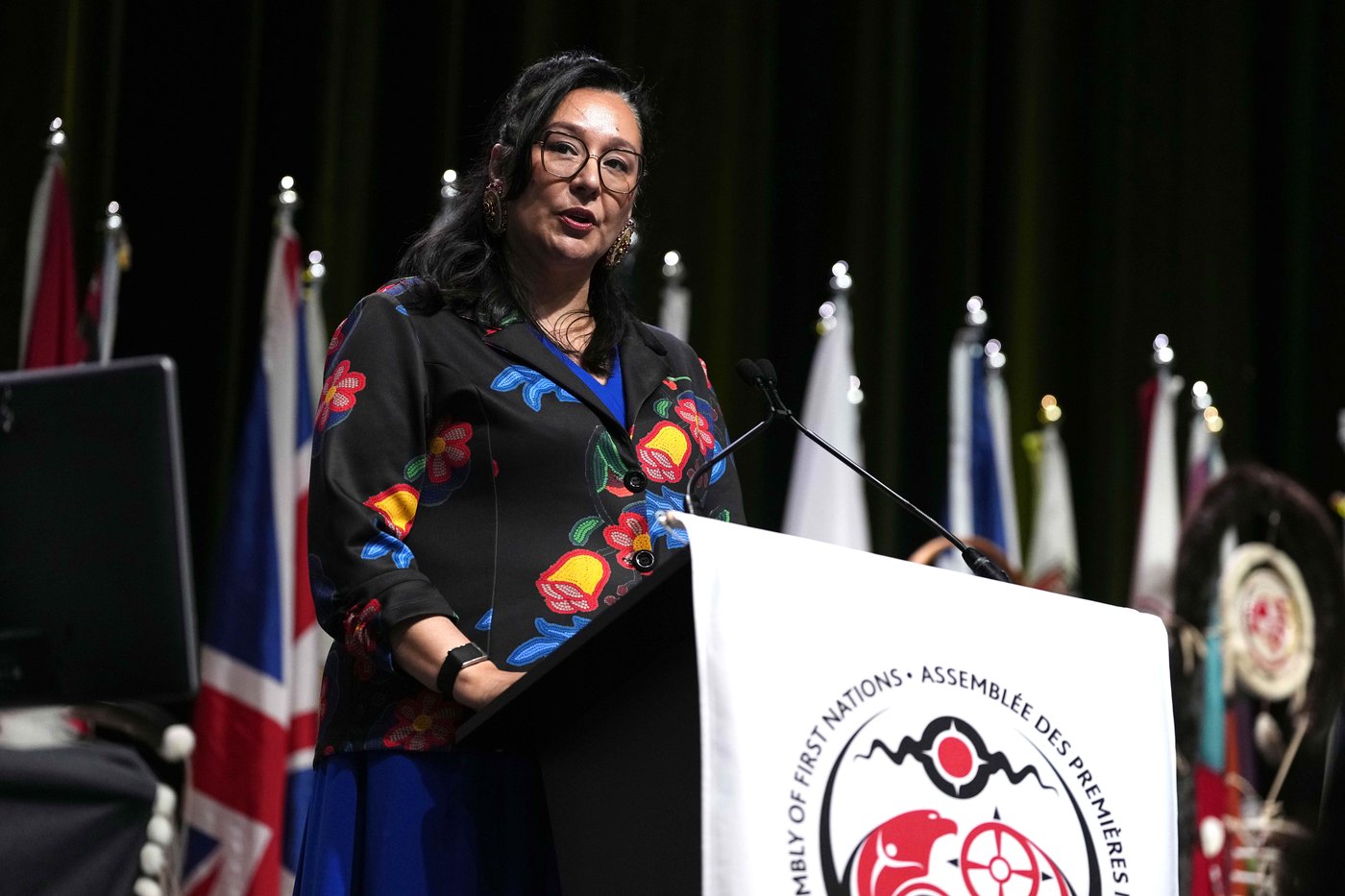
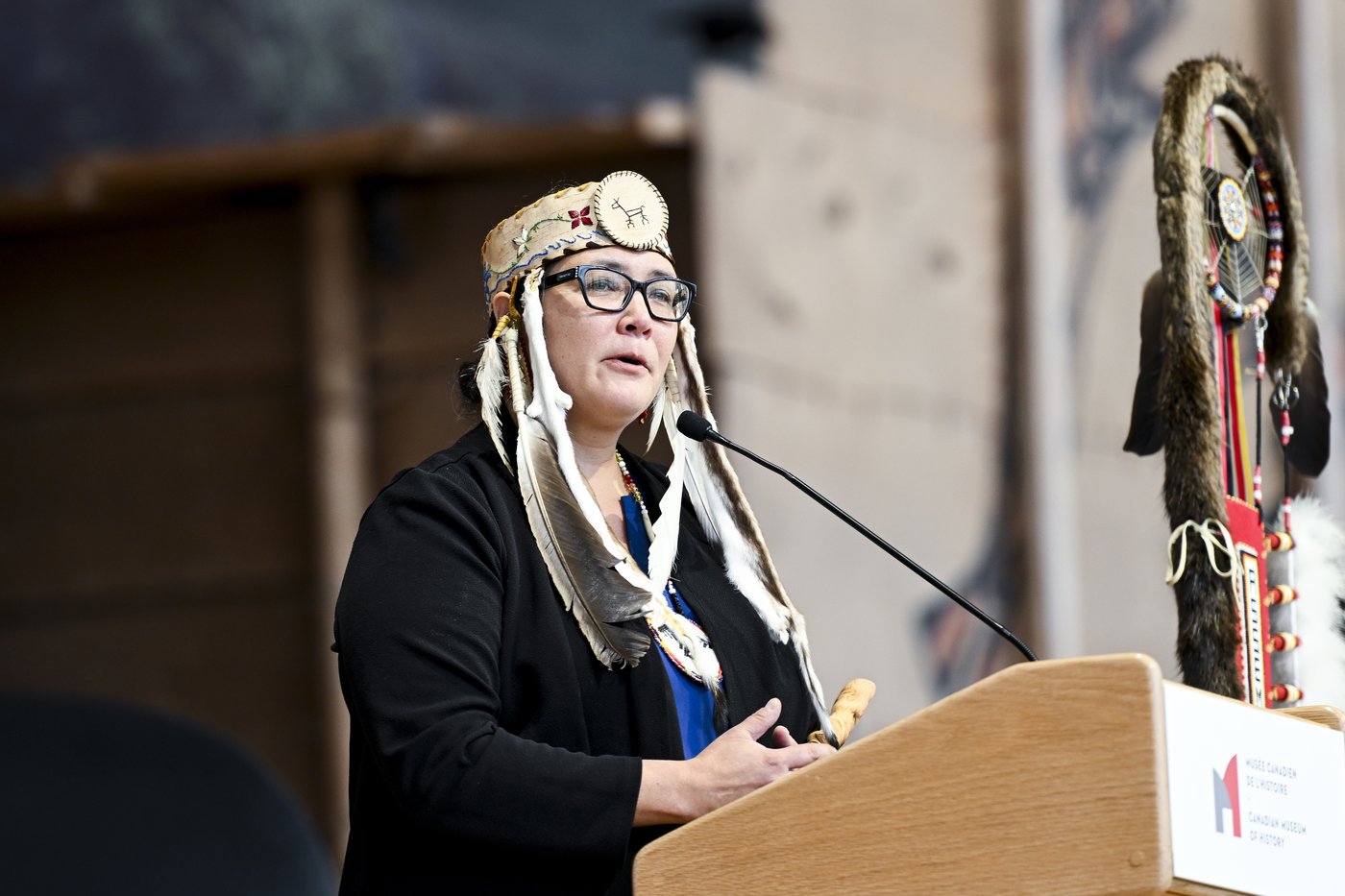
Gull-Masty was noncommittal when asked Thursday if the federal government would provide funding to Collins First Nation. She said the community exists in a policy gap because it lacks status.
“We are working very closely with the province. The province has expressed that they will be providing that support but I think we have a role to play in that space,” Gull-Masty said. “I am looking to take that next step.”
NDP Leader Avi Lewis said on social media late Friday the federal government “must recognize Namaygoosisagagun’s status, reimburse them for the services they should have provided and give them the resources they need to recover from this disaster.”
Conservative MP Billy Morin, who previously served as the chief of Enoch Cree Nation, accused the minister of dragging her feet.
“It’s wrong when people are faced with their homes burning down and their lives on the line that government officials don’t react to say, ‘We’re going to do everything in our power to help you,’ and they cite policy and technicalities not to help them,” he told The Canadian Press.
“They’re late to respond to people whose lives are on the line.”
Daniel said the First Nation does not have the luxury of waiting while jurisdictional and administrative questions are sorted out, and that every day that passes without clarity affects the future of an entire community.
The community is only accessible by boat or train.
Daniel and Debassige said all community infrastructure has burned, including homes, shared buildings and cultural belongings, along with the forest area residents rely on for sustenance. Daniel said the evacuation was so swift, community members fled with nothing more than the clothes on their backs.
Paavola said it was a miracle her members didn’t perish, including the youth who helped with the evacuations.
“They did this on their own, and without any help. So nobody can come and swoop in and say, ‘We helped,'” she said.
“It’s a miracle that they survived and that they’re all here today.”
The community has built itself without any federal funding or supports available to recognized First Nations. Instead, Daniel said, it has relied on the determination, ingenuity and sacrifice of its members.
“This is self-determination at its very heart,” she wrote.
“Unless Canada acts immediately, it will compound a historical injustice with a humanitarian one.”
Paavola said the community has retained its connection to the land and teaches its children to do the same.
“We had paths, dirt paths, that we walked down. Our ancestors walked on the same path,” she said, adding they hunt, fish and gather berries and medicine to survive.
“So what am I going to miss? I’m going to miss my whole life, because that was our lifestyle.”
Debassige said the community was not warned by the provincial government that the fire was near the community. Paavola said a community member spotted a helicopter that turned around when it approached the blaze.
“I don’t understand what kind of heartless person, what kind of heartless ministry, could leave my members there to burn,” she said.
“They can’t say that they didn’t know.”
Ontario’s Natural Resources Minister Mike Harris told reporters Friday the fire ignited very close to the community and spread rapidly. He said what matters most is that community members got out safety.
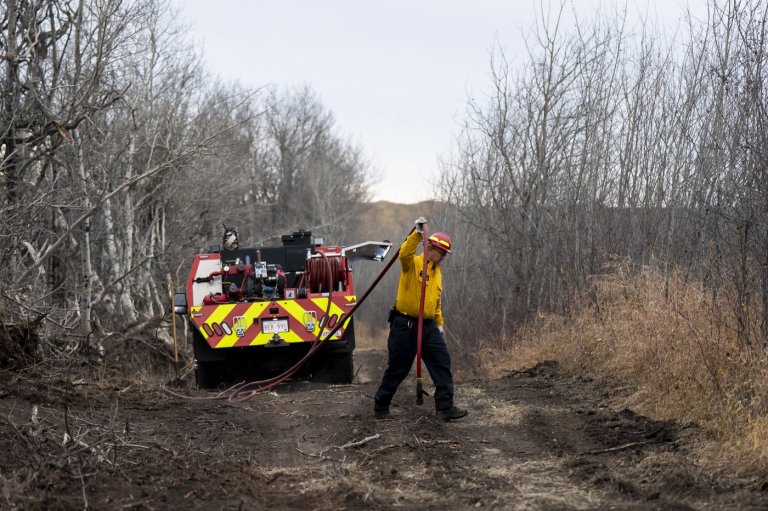
He said the smoke in the area made it difficult for the province’s planes to access the site and it took them more than two days to understand what happened.
“We’ll continue to work with Collins,” he said. “We have not seen fire behave like this.”
Chiefs gathering in Ottawa this week for an Assembly of First Nations meeting passed an emergency resolution calling on Indigenous Services Canada to offer supports for Collins First Nation evacuees and the rebuilding effort.
The resolution also seeks an independent review of the Collins First Nation evacuation after the community was left to fend for itself.
Debassige said Thursday that if the community had waited for outside help, the conversation now would be about how to recover the bodies of children, elders and adults, instead of rebuilding.
Paavola said her community should not be penalized just because it’s isolated.
“We should not be judged as a people that don’t want to move forward with progress, because progress doesn’t mean that we have to move forward,” she said.
“What it means for us, it means continuing to hand down our traditions, to hand down our ways of life to our future generations. For us, it’s a way of life.”
This report by The Canadian Press was first published July 17, 2026.
News from © The Canadian Press, . All rights reserved.
This material may not be published, broadcast, rewritten or redistributed.

This site is protected by reCAPTCHA and the Google Privacy Policy and Terms of Service apply.
Want to share your thoughts, add context, or connect with others in your community?
You must be logged in to post a comment.