Elevate your local knowledge
Sign up for the iNFOnews newsletter today!
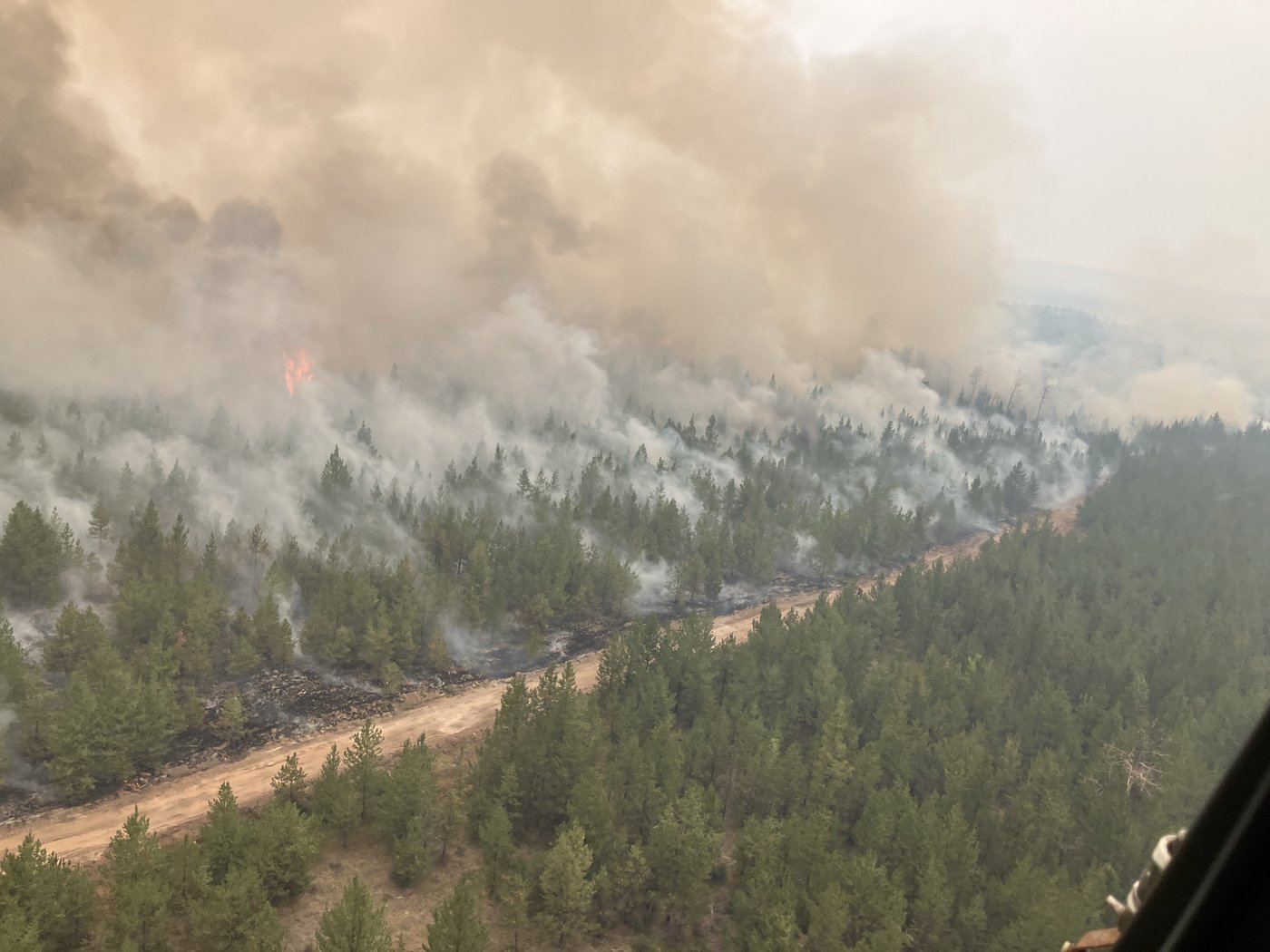
CLINTON, BRITISH COLUMBIA, CANADA — Steve Larabie says he and his family have lost everything in a wildfire that roared into the outskirts of Clinton, B.C., late Friday, describing a scene of exploding gas and diesel as vehicles and excavators burned.
Larabie and his wife, their children, son-in-law and two grandchildren made it out safely. But they lost their two homes and Larabie’s business on their property three kilometres south of the village, he said in an interview Saturday.
He said the fire was burning about 20 kilometres away from the property at around 1 p.m. on Friday, but within a few hours it was at his doorstep.
“There were no fire trucks, there was no structural protection. There was nobody to help me while my home was burning,” said Larabie, reached by phone in Kamloops, B.C., about 120 kilometres southeast of Clinton.
A local official confirmed the Pear Lake blaze inflicted structural losses on Friday, though the village itself was mostly spared after an overnight battle by crews who remained in the community on Saturday.
The estimated size of the fire exploded to more than 190 square kilometres when the BC Wildfire Service updated its mapping, up from about 44 square kilometres on Friday as the flames pushed north, east and south of Clinton.
Larabie had operated Steve’s Towing and Autobody outside Clinton for the last 12 years and said he initially stayed behind to protect his property while the rest of his family left, but the conditions reached the point where he “couldn’t fight it” and he barely escaped the flames himself.
Larabie shared a video with The Canadian Press shot through the open window of a moving pickup truck, showing a scorched landscape littered with blackened, twisted metal and burned vehicles on his property.
He said there were about 3,000 vehicles and 50 pieces of equipment at the site and described the blaze as a disaster for the environment, with “vehicles burning, on fire, exploding, gas, diesel, excavators burning, equipment burning, everything.”
Brian Doddridge, with the village’s emergency operations centre, said he believed the vast majority of Clinton’s residential area survived, but there were some structural losses, and officials would assess the damage and notify property owners once it was safe to do so.
Clinton residents were ordered to leave on Friday, and while Doddridge was among a handful of village staff who initially remained behind to help manage the evacuation, he said they left at about 5 p.m., with the fire fast approaching.
“The town was kind of shrouded in smoke, so it became hard to see anything beyond the immediate boundaries of the town,” he recalled.
“But you could see the orange glow coming over the hill.”
Doddridge said fire crews in Clinton worked overnight to install sprinklers and beat back the blaze, one of three fires that make up the Big Bar wildfire complex.
He said he was aware some residents have opted to stay in their homes.
“They’ve been notified by the door knockers that it’s an extremely dangerous location in the hot zone there, and that, you know, they are putting their lives in danger.”
A Facebook post from the village of Clinton said power was out in the community, while the BC Hydro website showed several outages in the region.
BC Hydro spokesman Kevin Aquino said the utility was working with the wildfire service and others to help assess damage and restore power where possible.
The BC Wildfire Service said all three blazes in the Big Bar complex were expected to grow, including the Fiftynine Creek blaze north of Clinton, prompting the expansion of an evacuation order for an additional 19 properties on Saturday.
The Thompson-Nicola Regional District also expanded an evacuation alert to cover more than 430 properties east of Clinton, including the Loon Lake area.
The fires threatening Clinton are among about 120 active blazes across B.C., with more than 50 classified as burning out of control.
The community of Boston Bar and nearby areas remained subject to evacuation orders prompted by the Brunswick complex of fires in the Fraser Canyon. An update from the service on Saturday said cooler temperatures and higher humidity levels were expected to help moderate fire behaviour.
The Thompson-Nicola Regional District issued an evacuation order for 61 properties on Saturday in response to the Ainslie Creek blaze, part of the Brunswick complex. The order covers the Canford area, about 17 kilometres west of Merritt.
At the same time, the district expanded an evacuation alert to cover nearly 650 properties in the Canford and Lower Nicola areas west of Highways 5 and 97C.
In southeastern B.C., the City of Kimberley rescinded an evacuation alert issued last Sunday for about 8,100 residents due to the Matthew Creek blaze.
The wildfire service recommended the move “given the progress crews have made, forecasted fire behaviour and available resources,” Kimberley Fire Chief Will Booth said in a statement issued by the Regional District of East Kootenay on Saturday.
Back in Clinton, Doddridge said “a lot of really great people” were working around the clock to protect the village, but the threat remained.
“We’re just kind of hanging our hopes on them right now,” he said.
Larabie, meanwhile, said his property wasn’t insured for wildfire. After the massive Elephant Hill blaze that spanned part of the region in 2017, he said, “the insurance companies were very clear they had no interest in giving me fire insurance for my address.”
Another tow truck company has offered Larabie and his family a place to stay in Cache Creek for the time being, he said.
This report by The Canadian Press was first published July 25, 2026.
— By Brenna Owen in Vancouver
News from © The Canadian Press, . All rights reserved.
This material may not be published, broadcast, rewritten or redistributed.

This site is protected by reCAPTCHA and the Google Privacy Policy and Terms of Service apply.
Want to share your thoughts, add context, or connect with others in your community?
You must be logged in to post a comment.