Elevate your local knowledge
Sign up for the iNFOnews newsletter today!
Okanagan mayors want Oliver’s jail to double as a mandatory health care facility, but critics say a hardline approach to the province’s addictions crisis misses the mark.
The province has been expanding its involuntary care system for two years as BC cities grapple with open drug use and people with untreated mental health issues on the streets, with Kelowna being one of many examples.
Patricia Bacon, Okanagan and Kootenay John Howard Society CEO, said it’s “very, very short-sighted.”
John Howard is a registered charity that helps people experiencing homelessness, poverty, mental health and addiction challenges, along with involvement in the criminal justice system.
“It is simple for us to sit around and say they can stop using (drugs) and we’ll throw them in the Okanagan Correctional Centre, that’ll set it right,” she said. “It’s very simple for a very complex problem.”
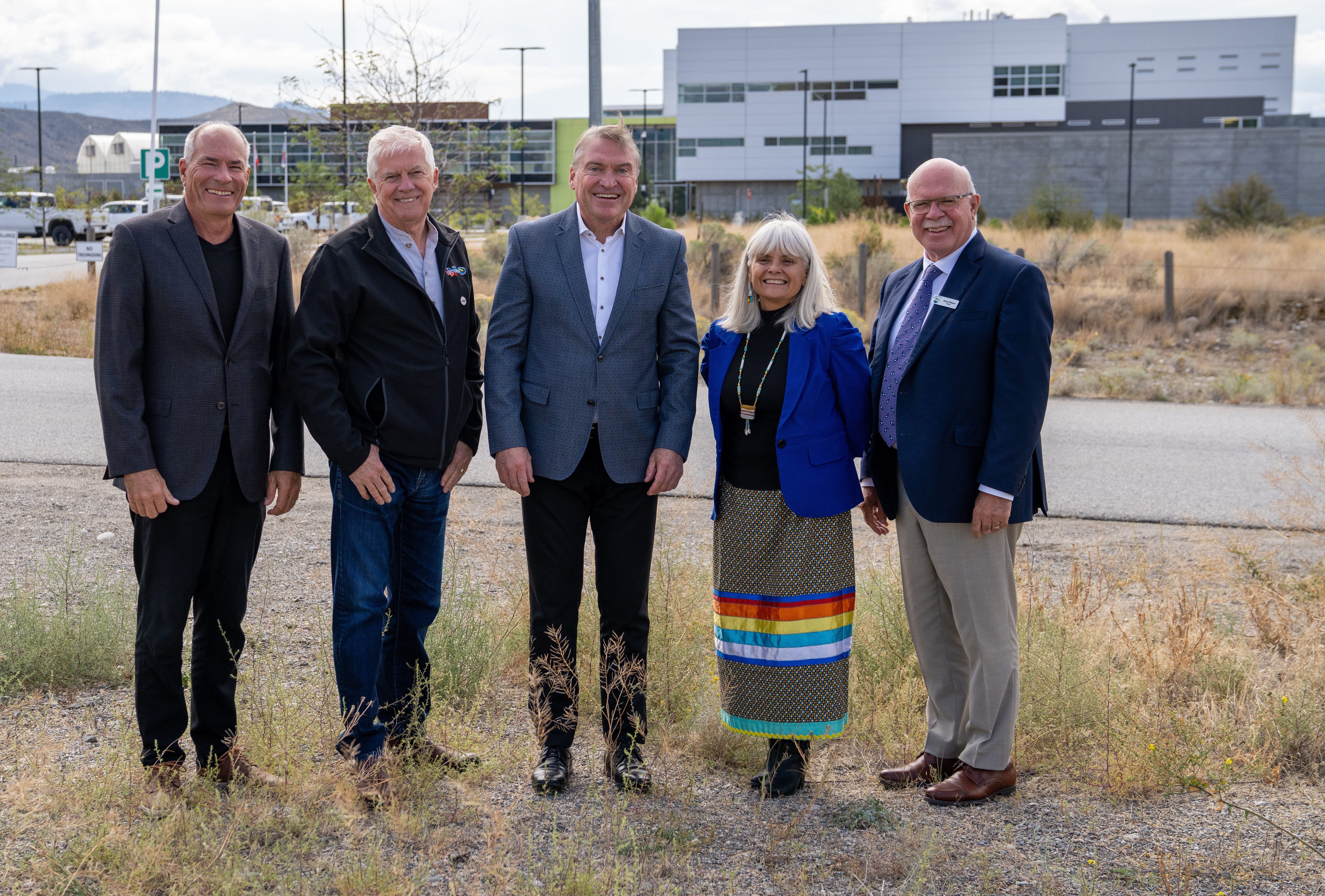
Five local leaders met at the Okanagan Correctional Centre, Sept. 4, for photos and to announce their lobbying effort.
With local elections next month, they collectively demanded the province use the jail for “secure and mandatory” mental health and addictions treatment, according to a joint news release.
The Okanagan Correctional Centre has been far from full with inmates in recent years, so they’re calling on the province to use the extra space.
“Ahead of UBCM, we are calling on the province to move from discussion to action. We have spent years advocating for secure and mandatory care. The need is clear, the facility is here, and communities cannot wait any longer,” Kelowna mayor Tom Dyas said in the release.
Dyas also recently published a letter he sent on behalf of city council to have Health Canada deny Interior Health’s licence for the downtown Kelowna supervised consumption site.
BC started the move toward an expanded involuntary care program two years ago. Since then, Prince George is the only Interior city to be part of the expansion with 72 beds announced in July.
Kamloops has also lobbied for it, but stopped short of demanding the province put its funding in that city despite being home to the Kamloops Regional Correctional Centre. Instead, city council called for funding directed toward the Interior more broadly.
Bacon said the move effectively further criminalizes people for using drugs and dealing with mental health challenges without necessarily committing other crimes, especially when they would be put in a jail rather than a health care setting.
She said that there is a lack of evidence to suggest the move would actually help people while even voluntary programs can be unreliable.
“If we already have voluntary programs that are failing people who go into them, how on earth do we think this could possibly be an effective treatment approach?” she said.
The prospect of involuntary care has been criticized by mental health providers since Premier David Eby’s government announced an expansion in 2024. Canadian Mental Health Association BC, for example, said the province has relied too heavily on involuntary services for two decades already, while voluntary services haven’t kept up.
Oliver mayor Martin Johansen was beside Kelowna’s Dyas for the joint announcement, along with Penticton mayor Julius Bloomfield, West Kelowna mayor Gord Milsom and Osoyoos Indian Band councillor Mary Wilbur. Vernon mayor Victor Cumming is part of the lobbying effort, but he didn’t make an appearance with the others Friday.
“We must continue building a full continuum of care that includes more treatment and recovery options, as well as secure and involuntary care for those unable to access treatment voluntarily,” Bloomfield said in the release. “Communities across the Southern Interior are looking for action, and we need every part of the system working together.”
The Okanagan mayors, except Johansen and Milsom, are running again in the October municipal elections.
Cities like Kamloops, meanwhile, have only put in some lobbying efforts toward mandatory care, while local officials have instead tried urging the province toward funding drug recovery and mental health programs within BC Housing facilities without much progress.
News from © iNFOnews.ca, . All rights reserved.
This material may not be published, broadcast, rewritten or redistributed.

This site is protected by reCAPTCHA and the Google Privacy Policy and Terms of Service apply.
Want to share your thoughts, add context, or connect with others in your community?
You must be logged in to post a comment.