Elevate your local knowledge
Sign up for the iNFOnews newsletter today!
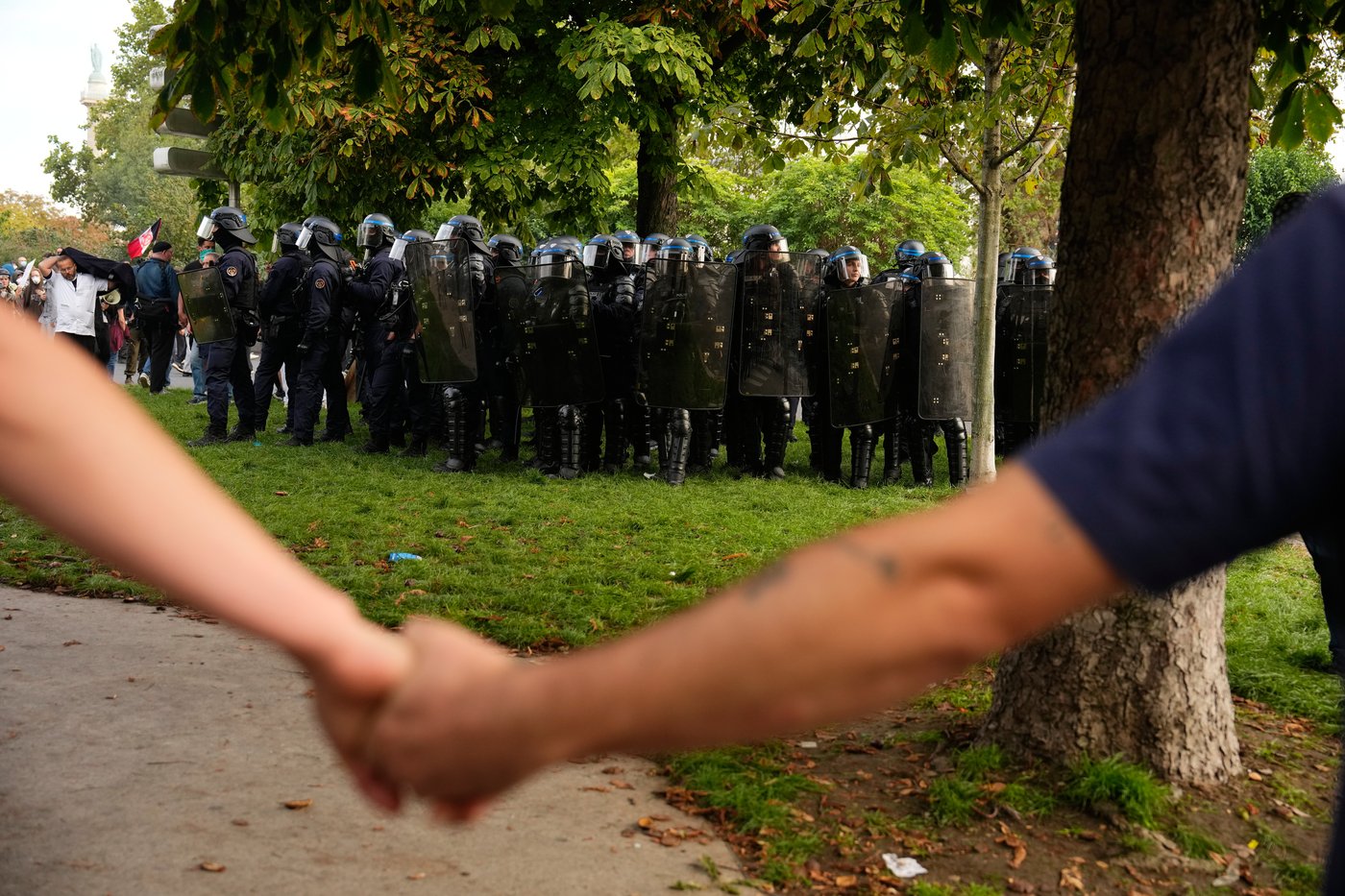
PARIS (AP) — The police tear gas grenade shattered the 14-year-old’s jaw and many of his teeth. The officer who fired it was taken into custody a week later and charged with violent mutilation, punishable by up to 15 years in prison. Following surgery, the boy cannot speak and can only eat with a straw, his mother says.
Other adolescents have also suffered life-changing injuries blamed on police weaponry during nationwide protests by high school students demanding more funding for run-down schools. In the former mining town of Lens, a 15-year-old lost a hand in an incident involving a police stun grenade. In Tours, in the wine-making Loire region, the prosecutor there says a police riot-control round is suspected in the partial blinding of a 16-year-old.
Beyond physical wounds, the massive use of police arrests and tactics that government critics and human rights campaigners allege have been unnecessarily violent is giving a generation of French schoolchildren — and soon-to-be voters — a real-life education about state power and their rights as citizens, and how the two sometimes clash.
“It politicizes you at an incredible speed,” said Alexis Baudelin, a Paris attorney for more than a dozen youngsters taken into custody.
“For many of them — for all of them — this was one of the first times that they’d taken part in a demonstration, coming together in a public space to voice demands they considered legitimate.”
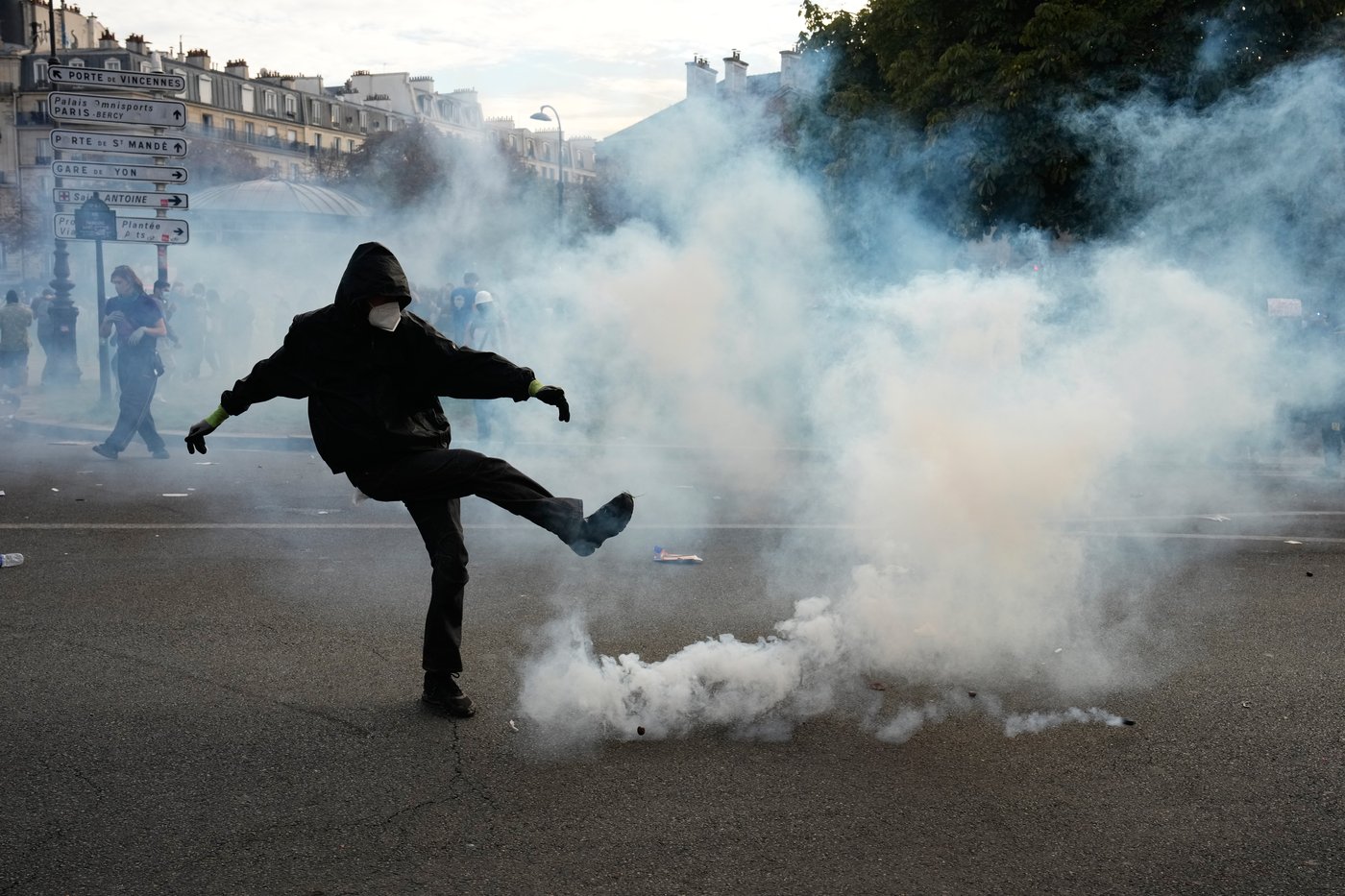
Police have swept up thousands of young people
According to the Interior Ministry, police have made more than 6,600 arrests — mostly of people under 18 — since protests began snowballing last week, including 488 people detained during nationwide demonstrations Tuesday. The movement demanding increased funds and more replacement teachers for schools started in a Paris-region high school in mid-September.
Lawyers and researchers who study French policing caution that the muscular response could spawn disillusioned young adults soured on the Republic and its promises of “ Liberty, Equality, Fraternity. ” Police have been less forgiving with teenage protesters than they previously were when farmers, a powerful lobby in France, doused government buildings with manure, blocked roads and set fires.
Baudelin, the lawyer, said his young clients have had a crash course in “unrestrained violence from the police.”
“Being locked up for hours and hours with nothing, in cells that are for the most part extremely unsanitary, in police stations that smell terrible, where you can’t sleep, with police officers telling you that if you don’t talk, if you don’t tell the truth, threatening you, telling you that your life is going to be ruined,” he said.
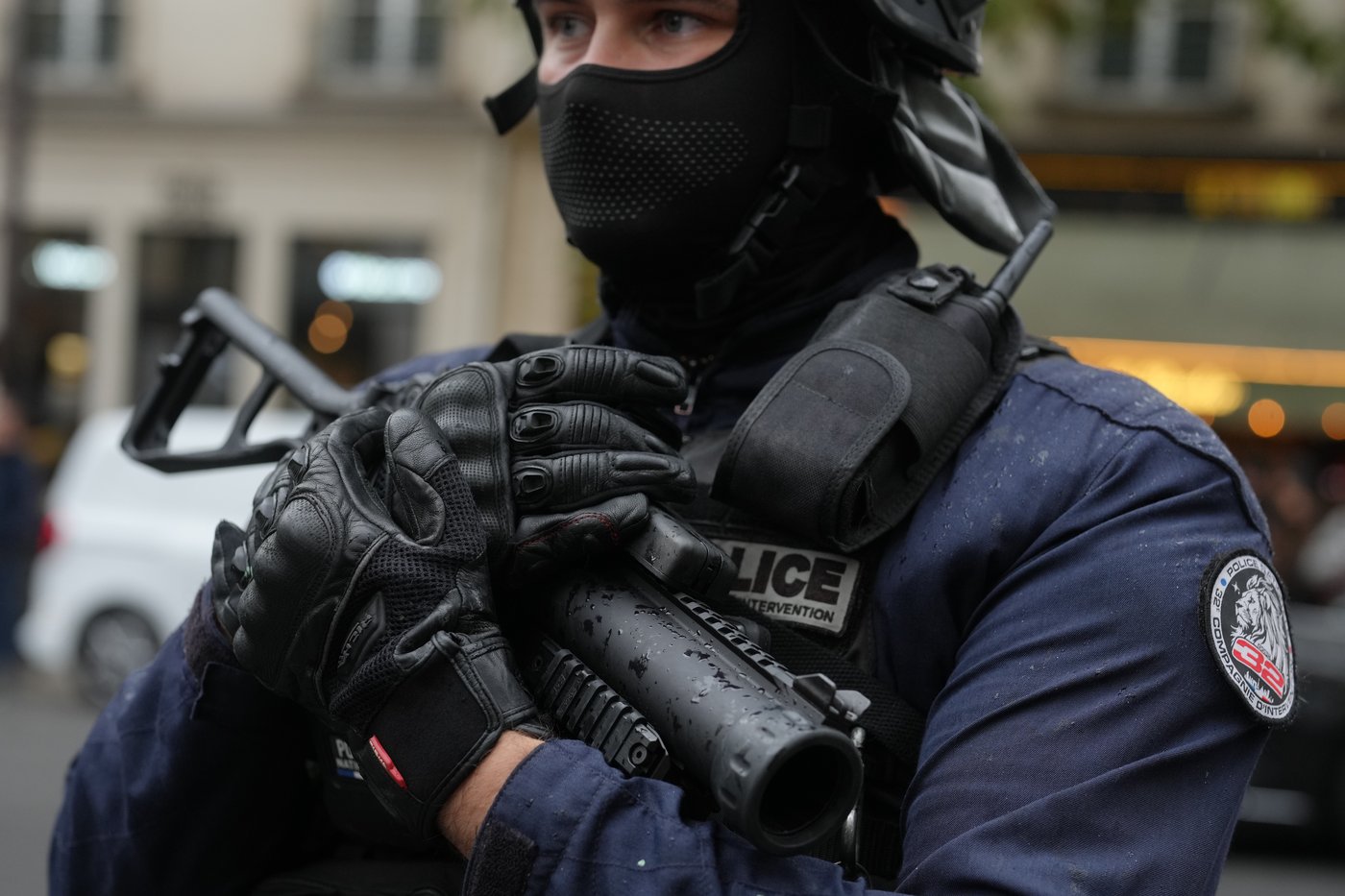
“It’s an experience that can be deeply traumatic and is completely out of proportion.”
Minister suspends use of some police grenades
Amid a growing outcry, Interior Minister Laurent Nunez announced Wednesday that the model of stun grenade suspected of mutilating the teenager in Lens will no longer be used against high schoolers, in light, he said, of a “strong possibility” that such a weapon was involved in ripping off the pupil’s hand.
“We need to understand exactly what happened,” Nunez said.
Still, he has also defended police actions as proportionate in “almost all cases.” He says police have been obliged to intervene when protests led to rioting, vandalism and other violence, and have done so mindful that they’re largely dealing with children.
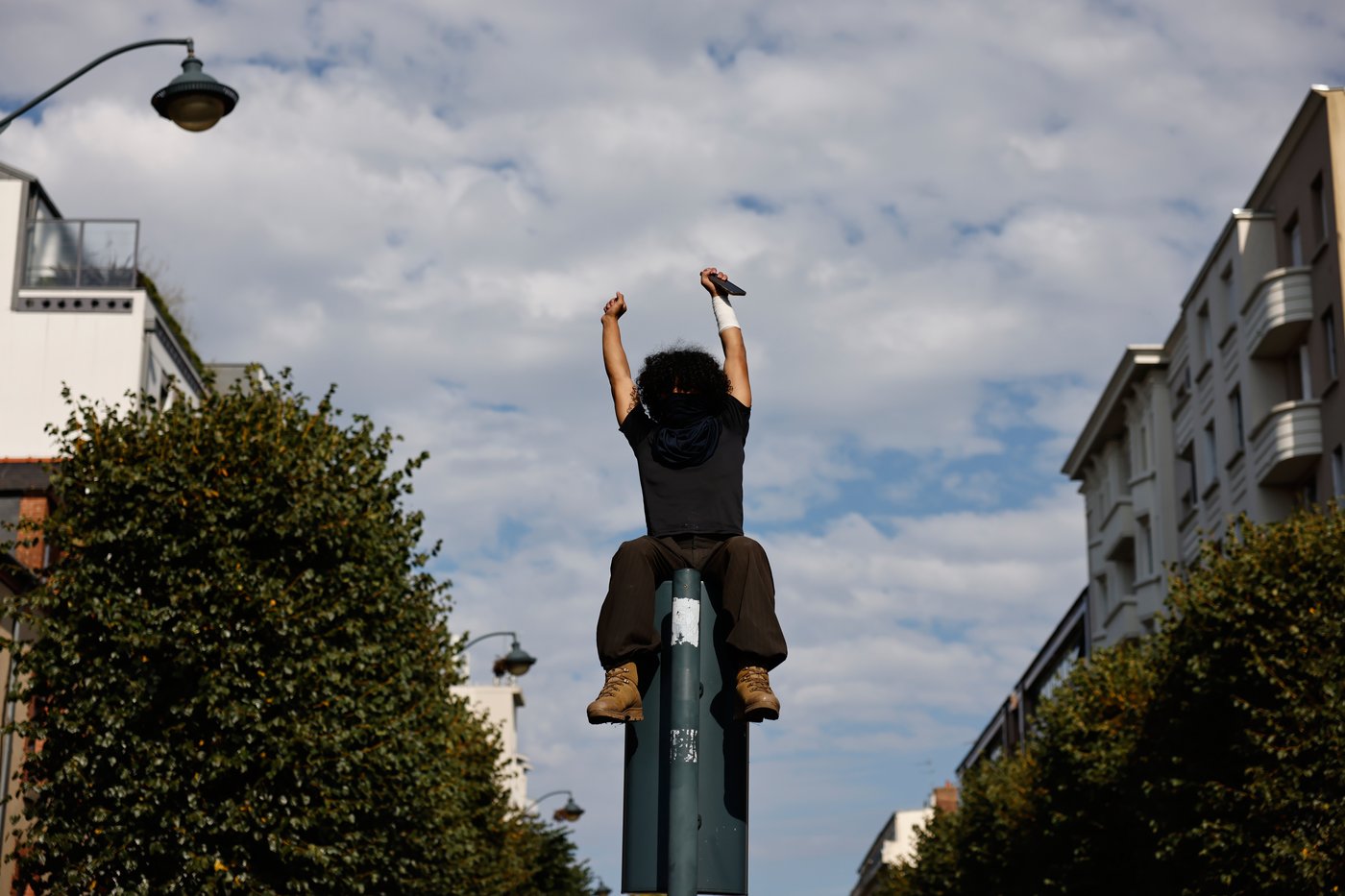
“You don’t handle a high schoolers’ movement in the same way as one by adults,” the minister said to broadcaster RTL.
In the case of the 14-year-old with a smashed jaw and teeth, the officer who fired his grenade launcher directly at him during a protest in Saint-Ouen l’Aumone, northwest of Paris, said during questioning in custody that he acted in “a fraction of a second” to protect a female colleague who’d exchanged blows with the boy, according to a statement from the prosecutor’s office leading the investigation.
It described the officer’s actions as disproportionate, resulting in a preliminary charge against him of violence by a public official causing mutilation or permanent disability. Suspended from duty and barred from carrying a gun, he is the first officer facing potential prosecution in 18 investigations opened so far into suspected police misconduct during the protests.
The boy, Eden, sent his mother a video from outside his school, showing police and some protesters, just moments before the officer shot him with the gas grenade, she said, speaking to The Associated Press and other media on condition that she not be identified to preserve the anonymity of her child.
But when she then called him, it was one of his classmates who answered, screaming that her son had been hit in the face and was on the ground, bleeding with his jaw and top teeth broken and bottom teeth “completely ripped out,” she said.
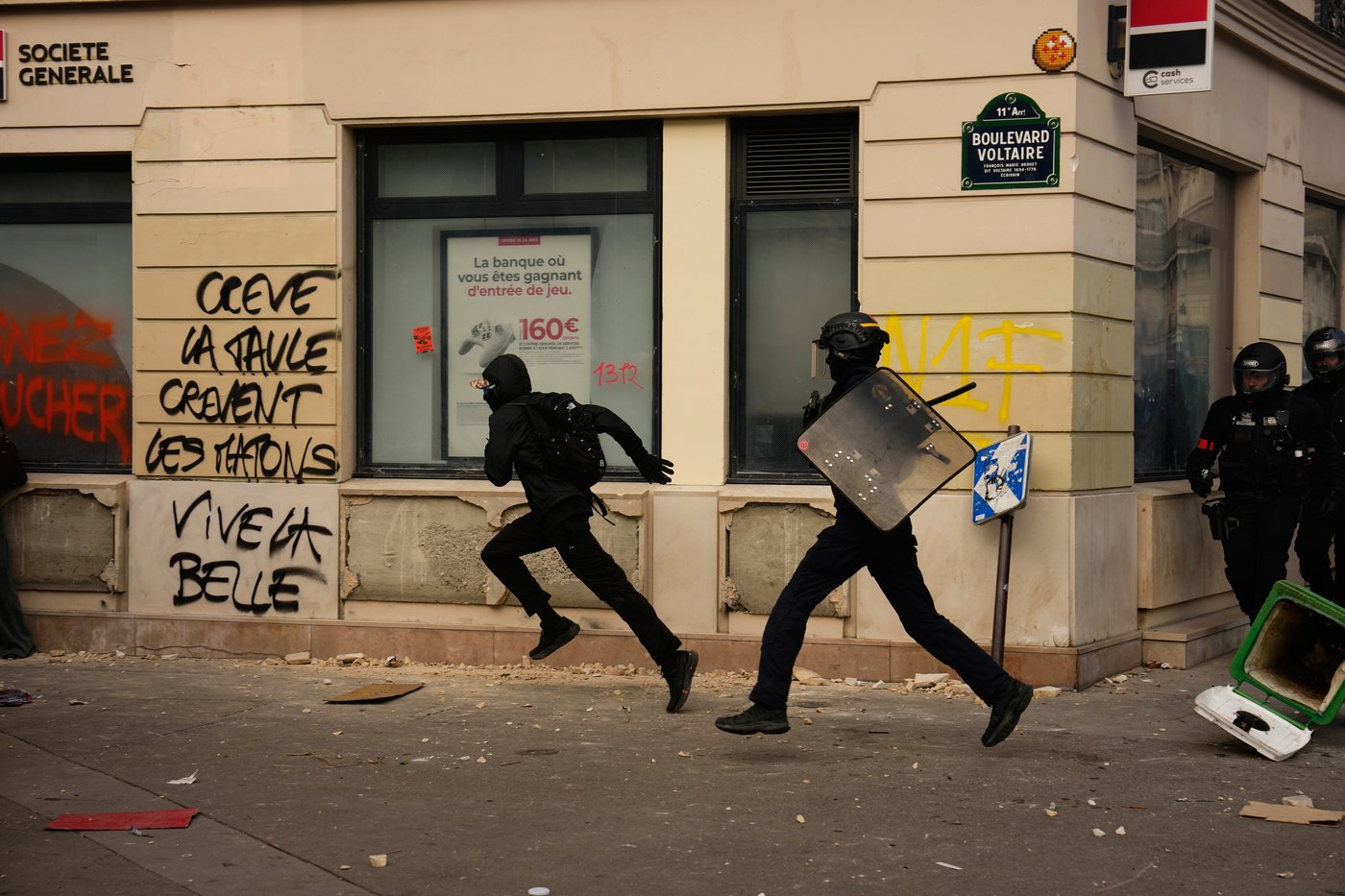
“It’s shameful, it’s appalling, it’s violent, it’s disgusting, it’s despicable — I could give you a whole list of words,” she said. “They are dealing with children. And children demanding what? Simply better conditions in which to study.”
Teens emerge more defiant from arrests
In the crowds that demonstrated in Paris on Tuesday, marching boisterously from one city square to another, AP found three Paris-region teenagers who said they were arrested, handcuffed, searched, held in custody but then released with no criminal charges last week.
Two 17-year-olds, a boy and a girl, described being detained together with another friend. They believe that police picked on them because of their color. The girl and the other friend are Black; the boy described himself as Arab. French officials have repeatedly denied that there is racism in the police ranks. Prime Minister Sébastien Lecornu said in parliament this week that such accusations are “lies.”
The boy said the officers who stopped them said, “’You, you and you, you’re coming with us.'” There was no apparent motive, because “we weren’t wearing hoodies, we had nothing on us, our faces were visible,” he said.
“Here in France, they don’t listen to us. They would rather send in the police than listen to us and put measures in place to improve our daily lives,” he said.
The girl said her first experience of police custody only reinforced her determination to protest but also taught her to run when officers appear.
“The police are more powerful than us,” she said. “There’s nothing we can do.”
___
Sam McNeil in Brussels contributed to this report.
News from © The Associated Press, . All rights reserved.
This material may not be published, broadcast, rewritten or redistributed.

This site is protected by reCAPTCHA and the Google Privacy Policy and Terms of Service apply.
Want to share your thoughts, add context, or connect with others in your community?
You must be logged in to post a comment.