Elevate your local knowledge
Sign up for the iNFOnews newsletter today!
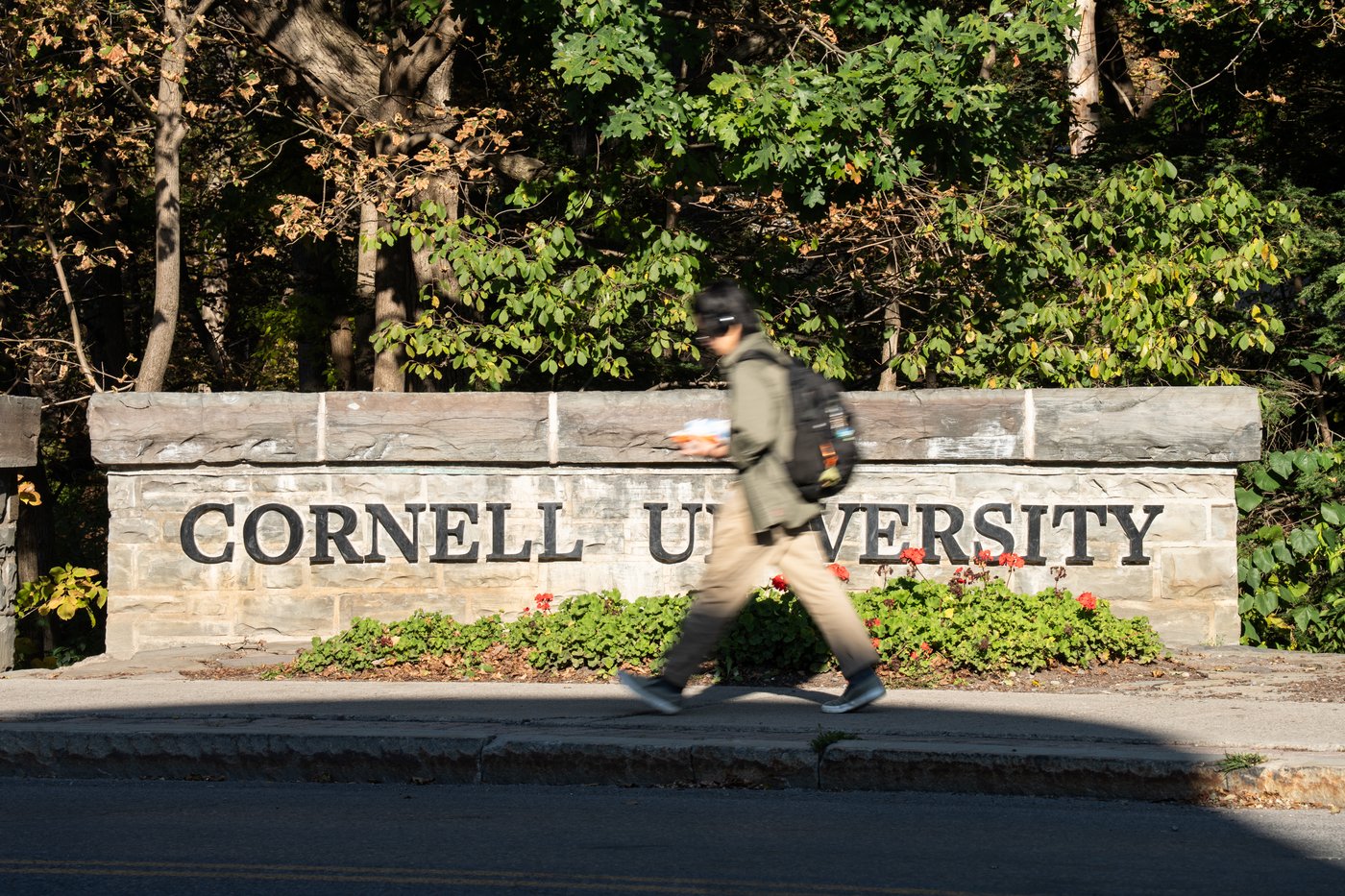
Cornell University faculty debated a proposed no-confidence resolution in the university’s administration Wednesday, following widespread frustration over its response to a woman who reported she was gang raped at a campus fraternity house in 2024.
The Faculty Senate met behind closed doors Wednesday afternoon to conclude debate on the resolution, introduced earlier this month when angry members confronted Cornell University President Michael Kotlikoff about the university’s handling of the allegations.
During Wednesday’s meeting, some senators sought to postpone the no-confidence vote until an independent investigation into the university’s handling of the case was released, according to materials science and engineering professor Lara Estroff, who was listening to the proceedings remotely. It was not immediately clear whether the motion would succeed. Electronic voting had been scheduled to begin after the meeting and remain open through Nov. 6.
The meeting came a day after 20 female science and engineering faculty members called on Kotlikoff to resign in a letter to Cornell’s trustees obtained by The Associated Press.
The professors accused Cornell’s leadership of creating a second crisis through its handling of the allegations, saying the administration had failed to demonstrate sufficient transparency and accountability.
“What our community needed was clear leadership; instead, it faced a leadership vacuum,” the professors wrote.
They rejected Kotlikoff’s argument that changing leadership would destabilize Cornell, saying his resignation would instead resolve a “crisis of legitimacy.” They also opposed waiting for the results of the independent investigation.
The proposed resolution expresses no confidence in Cornell’s administration over its response to sexual assault on campus but does not explicitly call for Kotlikoff’s resignation.
Faculty Sen. Noah Tamarkin, an anthropology professor and co-sponsor of the resolution, said it was intended to pressure university leaders to change how sexual assault is addressed and to give faculty and students a greater role in decision-making, not necessarily force anyone from office.
Estroff, one of the letter’s signatories, said she opposed delaying the vote until the independent investigation was complete. But she also criticized the resolution itself, saying its reference to the university’s administration was too vague and that she preferred the letter’s explicit call for Kotlikoff to resign.
“I wouldn’t vote for the resolution as it is worded,” said Estroff, who is not a Faculty Senate member.
A woman identified in court documents by the pseudonym Jane Doe filed a lawsuit last month alleging that seven Chi Phi fraternity members sexually assaulted or exploited her in October 2024 and that Cornell mishandled her complaints. All seven men have denied her allegations.
The criminal investigation by Cornell’s police department stalled after the district attorney declined to pursue charges. In a New York Times interview, Kotlikoff said he never followed up to learn what had happened to the woman or the investigation.
At an Oct. 14 Faculty Senate meeting, Kotlikoff acknowledged some missteps but defended his leadership and asked for more time to reform student social life, according to a recording obtained by the AP. He urged faculty to have confidence in his leadership, pointing to the independent investigation, which he said could lead to meaningful reforms.
Asked whether he read the Cornell Police Department’s report on the rape allegations, Kotlikoff said he had not because the investigation was confidential and university policy dictates top administrators shouldn’t have a role in criminal investigations.
“I really reject the idea that I had no interest in it or was not concerned about it,” Kotlikoff said.
He insisted experienced leadership was necessary to confront problems. Replacing a president would harm Cornell’s reputation, Kotlikoff said.
Faculty also questioned Cornell’s handling of a disciplined student’s return to campus, including his assignment to a dorm room with a roommate unaware of his disciplinary history.
After Kotlikoff left the Oct. 14 meeting, a string of faculty speakers said they had lost confidence in the administration’s ability to combat sexual assault on campus. Some Faculty Senate members warned that a hasty no-confidence vote would do little to address the underlying problems.
A no-confidence vote would be largely symbolic, but could send a message to the university’s trustees, who ultimately decide who leads it.
Kotlikoff became the university’s interim president in July 2024 and took the job permanently last year.
He’s faced a dining and custodial workers strike, criticism of his decision last year to pay $60 million to resolve Trump administration civil rights investigations and accusations of stifling campus protests.
News from © The Associated Press, . All rights reserved.
This material may not be published, broadcast, rewritten or redistributed.

This site is protected by reCAPTCHA and the Google Privacy Policy and Terms of Service apply.
Want to share your thoughts, add context, or connect with others in your community?
You must be logged in to post a comment.