


Zero water required for garden bursting with blooms in Kamloops

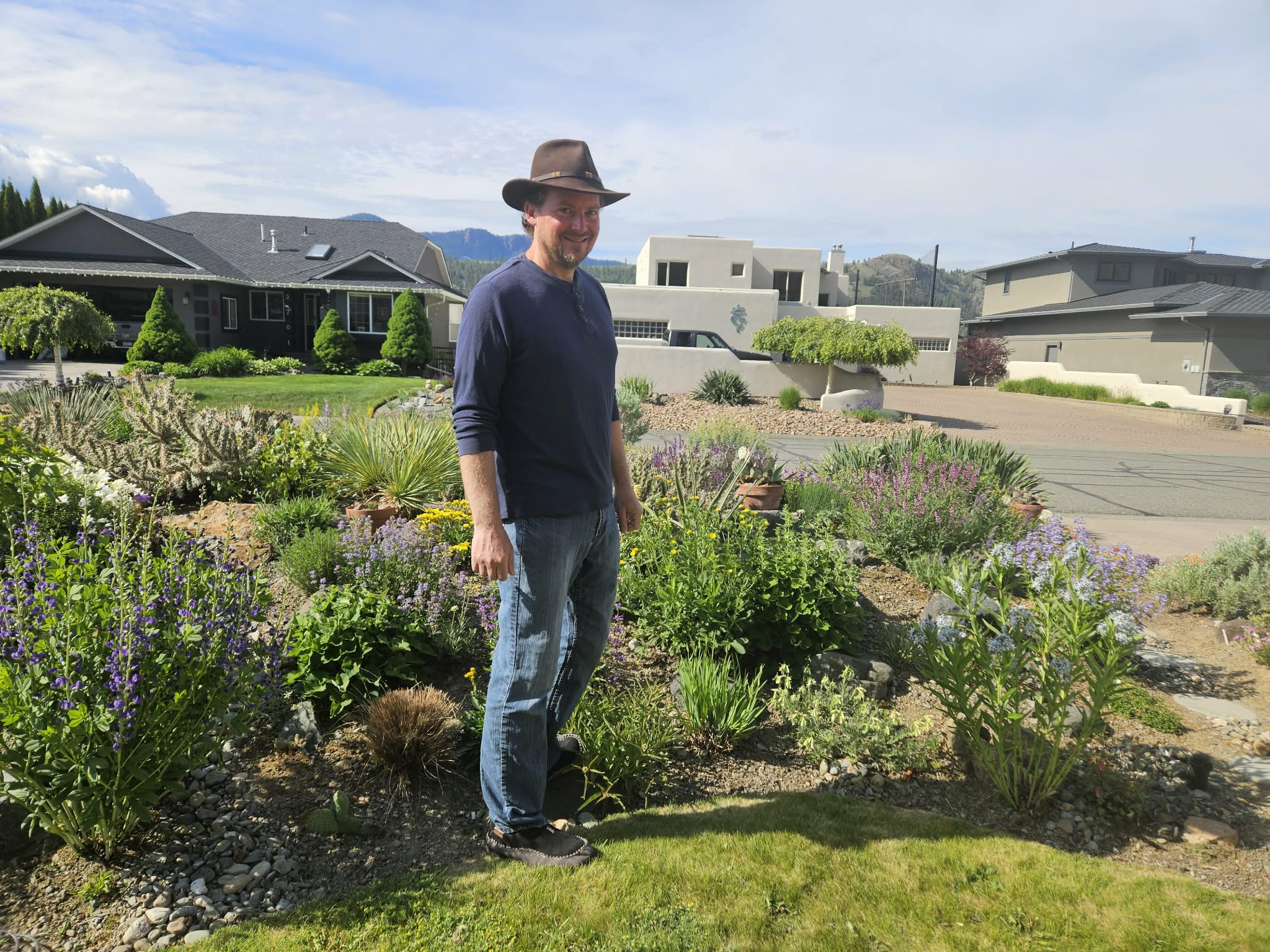
The garden at Jay Akerley’s Kamloops home is bursting with blooms, bees and birds, despite not being watered for two years.
Akerley is the expert gardener behind the masterpiece on Navatanee Drive, that regularly draws in curious neighbours and passersby asking questions.
“People stop and stare and are interested in the different plants as the garden has a unique look, and then they’ll ask questions about the lack of watering it requires,” he said.
“It isn’t xeriscaping designed to use less water, rather a living system that just happens to use less water.”
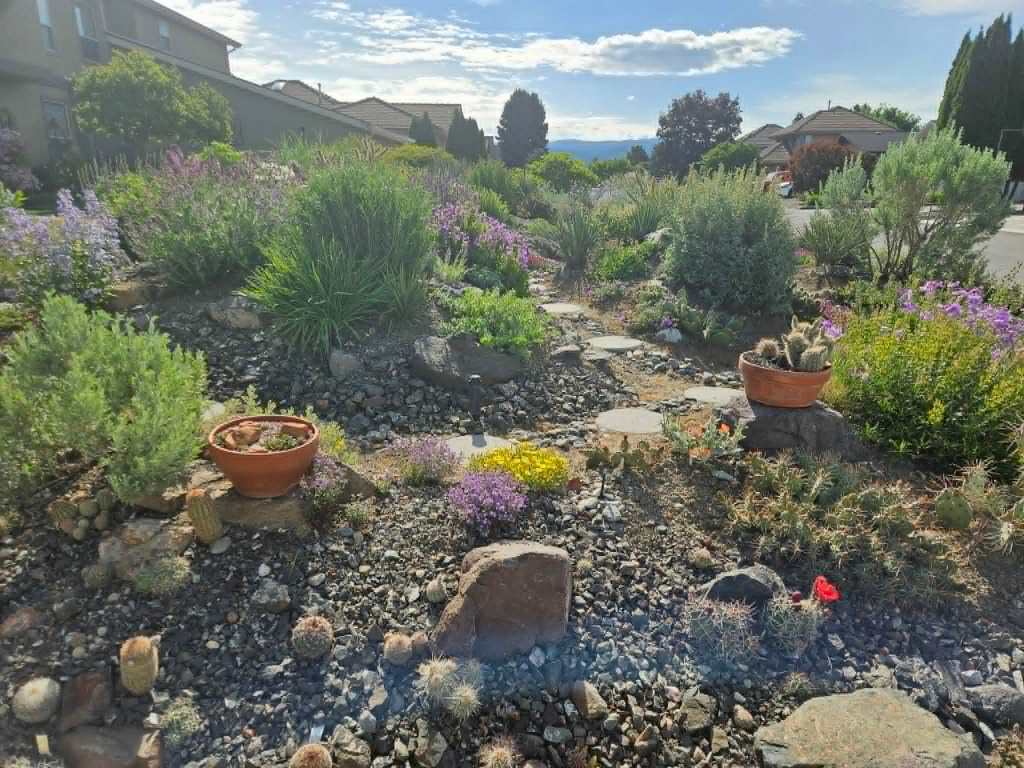
The garden is located on the sandy valley bottom and is a version of a dryland plant community with species of wildflowers, yucca plants and numerous varietals of cactus that attract pollinators and wildlife.
The vibrant waterless garden is the result of Akerley’s years of rock gardening, a horticulture education, a degree in geology and learning from mentors at the Denver Botanical Gardens in Colorado.
Akerley’s interest in rock gardening began at a young age, and really picked up when he was a teenager.
“I was 14 when my family moved from Delta to downtown Vancouver and I didn’t know anybody so I’d ride my bike around the beaches,” he said. “It was at that time the Pacific Northwest Palm and Exotic Plant Society donated hardy palms to the city for planting along the beaches. It’s a huge legacy. If you go down to English Bay now, you’ll see all these tall palm trees.”
He joined the society and eventually became vice president.
“It was eye opening that you could do something like that in the micro climate along the beaches in Vancouver, it looked like California,” he said. “From that point on I’ve liked to replicate landscapes and sort of celebrate landscapes and what they can do.”
As an adult, Akerley had property in Greater Vancouver where he created European style rock gardens.
“The oldest rock gardening traditions are western European from areas like Scotland and the Czech Republic,” he said. “The European tradition style uses mostly alpine plants. It’s easier to do that in Vancouver where you have cooler temperatures in the summer.”
When Akerley moved to Kamloops in 2022, he brought some plants from Vancouver to start building the bones of his new garden which is based on a newer school of rock gardening that has risen in Denver, Colorado.
He bought a mixture of soils that mimic the poor soils of the steppe biome, the semi-arid grassland ecosystems found around the world.
The garden doesn’t use fertilizer and is permanently planted without requiring a greenhouse or covering during the winter months.
“This garden has its own theme,” he said. “It’s very western but by design has dryland plant species and wildflowers adapted to a steppe or montane environment.”
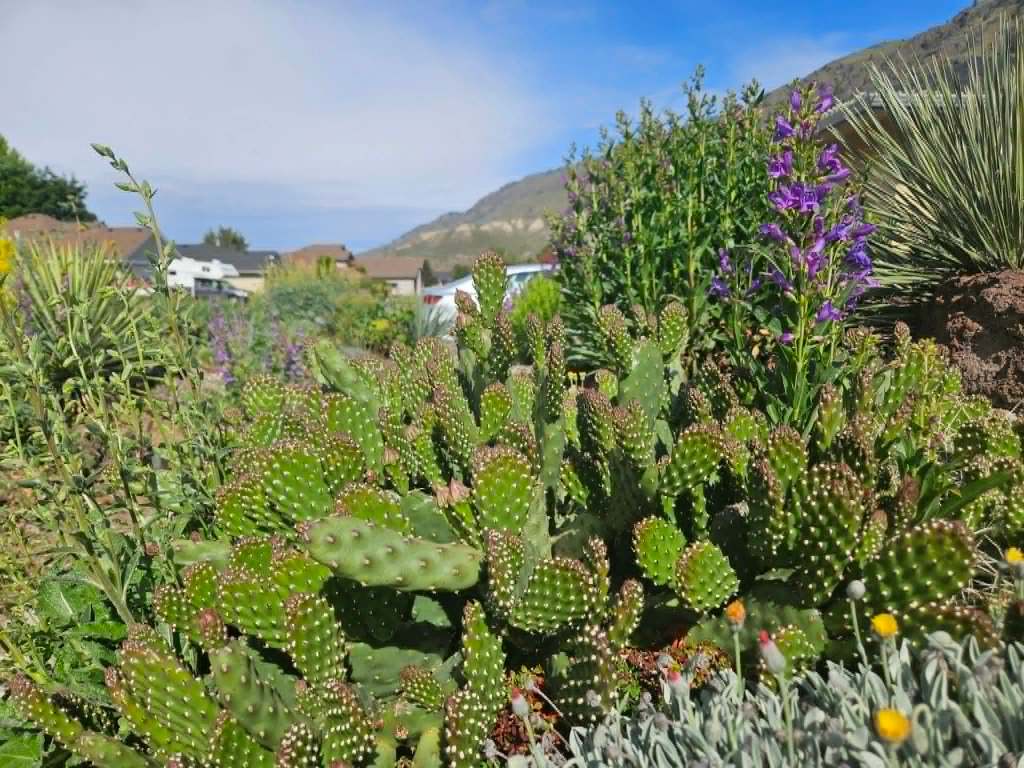
Almost nothing in Akerley’s garden is a cultivated variety of plant or wildflower, rather he started native and non-native plants from seed with some taking years to grow.
“When people see the wildflowers a lot of them ask if I dug them up from the local hills and that’s not what I’m about,” he said.
“I’m a seedsman, I like to grow things from seed. Digging something is likely going to die anyway, wildflowers don’t take well to being transferred. For me, the win is producing something from seed.”
Curious onlookers often ask if the garden gets eaten by deer.
“A lot dryland plants are adapted to dry conditions by way of their aroma or unpalatable flavour and its pretty leathery stuff,” he said. “The leaves are fuzzy or leathery to reduce evapotranspiration and animals don’t want to eat that nor the cacti.”
The former president of the Alpine Garden Club of British Columbia, Akerley is a regular speaker for the North American Rock Garden Society, and at local garden clubs and provincial master garden groups.
“I want to promote this type of gardening as an alternative but not everyone is going to grow stuff from seed,” he said. “You can find cultivars that are more common and similarly drought tolerant but maybe not quite as much as their wild counterparts.
“You can use all native plants with native soil and it would look just as good with just as much colour.
“Once you know what you’re doing it’s pretty easy, the difficult thing is gaining the education to know what will succeed.”
News from © iNFOnews.ca, . All rights reserved.
This material may not be published, broadcast, rewritten or redistributed.

Join the Conversation!
Want to share your thoughts, add context, or connect with others in your community?
You must be logged in to post a comment.








One response
Wow I love this