


Penticton’s proposed tiny home project stirs up controversy

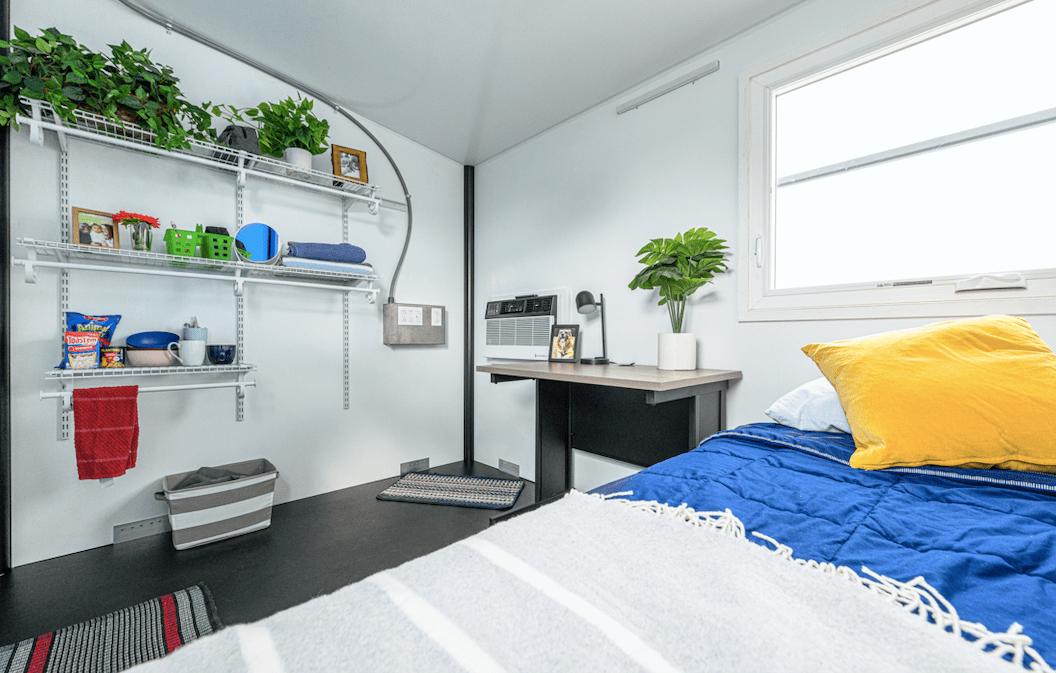
Penticton is working on plans for a tiny home project to give homeless people temporary housing, and it has already stirred up some opposition.
On Nov. 4, Penticton City Council is voting on a temporary use permit to allow the province to put up 50 tiny homes that would give people who have been in emergency shelters for a long period of time a stepping stone to permanent market housing.
The province’s HEART and HEARTH, Homeless Encampment Action Response Team and Homeless Encampment Action Response Temporary Housing, would deliver the project at 616 Okanagan Avenue. The project would include 24/7 supports to help transition people out of homelessness.
The city’s general manager of public safety Julie Czeck said the project is learning from the success in Kelowna with similar tiny home initiatives at STEP Place, Trailside and Balsam Place.
“The tiny home model is the core of the similarities, with similar wraparound supports, mental health, counselling, addictions, recovery, etc., and program agreements to support accountability and personal growth for the residents who move into these tiny homes,” Czeck told iNFOnews.ca.
An online petition against the tiny home project was set up last week and it already has 1,270 signatures.
“Businesses in the industrial area have expressed deep concern regarding the lack of consultation surrounding the proposed Temporary Use Permit. They cite potential increases in theft, property damage, biohazard waste, and insurance costs as serious risks to their operations,” the petition reads.
Czeck said the city has a plan to address those concerns, but anyone who is worried about the project should reach out and voice their opinion.
“With any project of this nature, we do know that there are natural concerns that emerge for individuals. And that’s why we’re taking a thoughtful approach with the safety and security plan that would be a condition for the site,” she said.
BC Housing is going to select an operator for the project that would run the day-to-day support.
BC Housing said the site would include overdose prevention and a space for people living in the tiny homes to use drugs. Housing agreements would not require people to be sober.
The rent payments would be on an Income Assistance Rate, which changes depending on the size of a unit and the challenges the tenant is facing.
Czeck said residents who live in the tiny homes will have to sign an agreement to participate in programs and pay some rent, but there will be job training and programs to help people find employment.
Czeck said the city’s contribution to the site is the land, so any budget to build or run the site would come from the provincial government.
The petition against the project has concerns about how close it is to a temporary winter shelter nearby, but Czeck said there aren’t a lot of options for city-owned land that would fit the bill for a tiny homes project.
“There’s very limited vacant properties that are in a location that align with our shelter and supportive housing guidelines that are serviceable and would allow for a quick deployment or that are near services or close to transportation,” she said.
Parts of the plan are still being worked out and it all might fall apart if city council votes down the temporary use permit.
“Ultimately, council will balance the feedback and their perspective as part of their deliberations in making that land use decision,” she said. “There will be no tiny houses if there is no land use decision. So any further planning on the operations and the logistics really can’t take shape in any substantive way until that decision is made.”
News from © iNFOnews.ca, . All rights reserved.
This material may not be published, broadcast, rewritten or redistributed.

Join the Conversation!
Want to share your thoughts, add context, or connect with others in your community?
You must be logged in to post a comment.








One response
similar wraparound supports, mental health, counselling, addictions, recovery, etc., and program agreements to support…
There is not an agency in town currently that has been able to access so called wrap around services. Itereiohelath provides limited supports outside of in office.. is unable to keep up with current caseload… access of counseling outside of mental health is unheard of due to cost. The o ly recovery offer is the fellowship which is not a fit for all folks that use substances. Agencies are grasping at straws to attempt to show the possibility to aquire these services. Non profits do not hire individuals at the professional level they describe. BC housing won’t pay what is needed to keep the professional level of what they are saying they will provide. Non profits hire under qualified staff because they are not funded to pay for those that have the credentials. Yhis is all blowing smoke from agencies that currently provide supportive housing that is not actually being provided. Complex care is required to support the population of people at this level and it is not provided in almost all cities in this province. Don’t be fooled by the people saying that ” we are gonna” that aren6 currently doing as such. Agency’s in this city claim they provide services that they do not. Remember the government has under funded supports for decades. Why would they only now provide the so called wrap around services for yhis project. I call BS.