


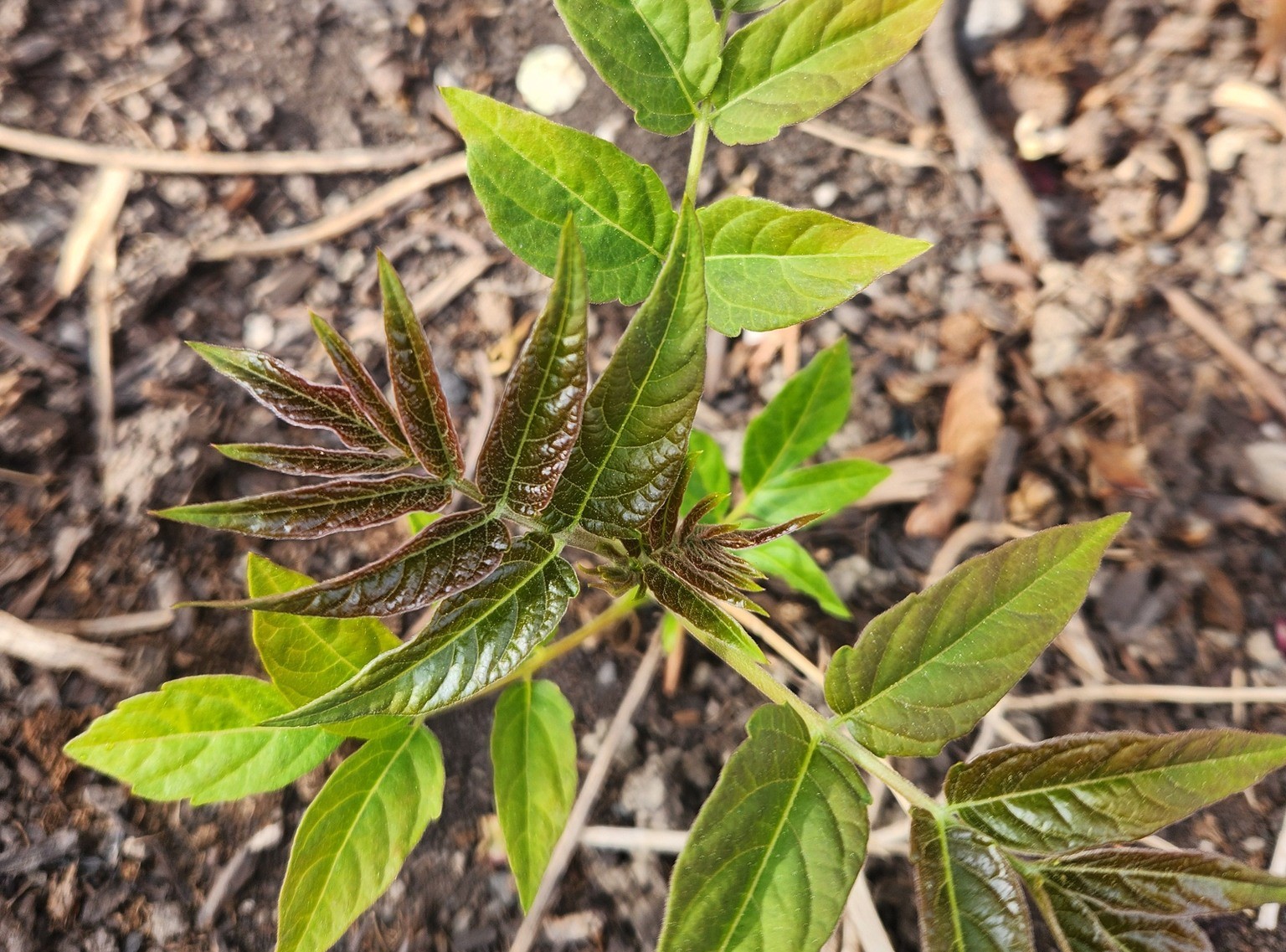
Tree of heaven called tree of hell by gardeners in Kamloops, Okanagan

Property owners in Kamloops and the Okanagan are grappling to manage an invasive, fast-growing tree known as a prolific reproducer that is almost impossible to eradicate.
Tree of heaven has been taking over native vegetation in urban spaces and gardens for decades. The tree can grow several feet every year, reach a height of 30 metres and live for five decades.
The monster-sized tree is known as tree of hell by local gardeners.
“The tree is super hardy and will grow pretty much anywhere, then it grows three to four feet per year,” said longtime Kamloops gardener Roz Beers who has the plants on her property. “They drop seed pods everywhere and settle into all the places you don’t want them, in my case, in small cracks around my house so I now have trees growing out of the foundation of my home.
“The biggest issue is the root system. The small trees that grow have weak roots that snap before you can dig out the whole thing. And the more you snap it, the stronger it grows below the dirt. Even digging it up is problematic because any tiny root piece that is left will take and grow stronger, but snap more easily. It’s definitely a tree of hell.”
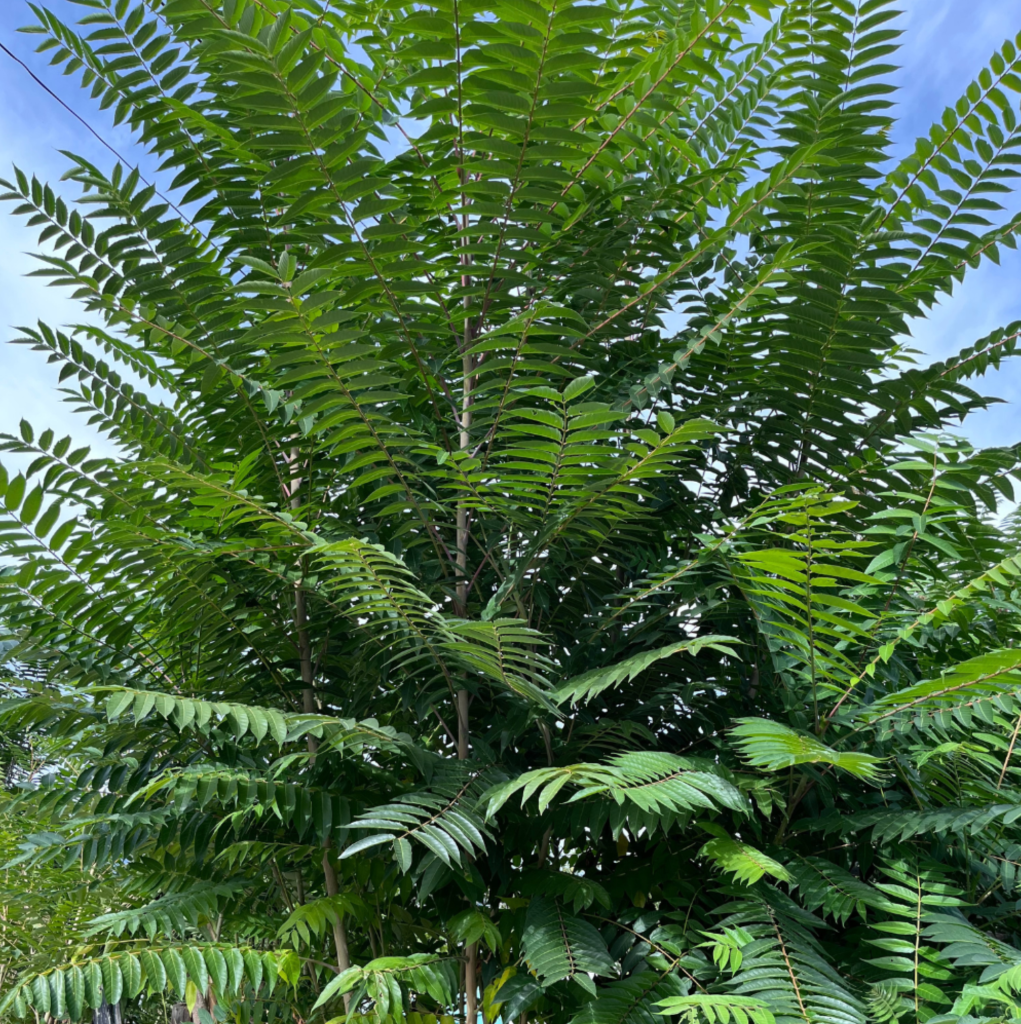
Native to Asia, tree of heaven was introduced to BC by horticulturalists in the 1800s as an urban tree for its fast growth and ability grow in a wide range of conditions, according to a fact sheet from the Invasive Species Council of BC.
Not only does it take over native vegetation and secrete toxins into the soil that prevents other plants from growing, it is the preferred host of the invasive agricultural pest, the spotted lanternfly which feeds on grapevines.
This tree can quickly reproduce through thousands of winged seeds along with suckering from its creeping root system and is notably difficult to remove.
Cutting the trees down or pruning them isn’t an effective method of removal since they respond by growing stump sprouts and rapidly spreading root suckers. Aggressive root suckering is capable of damaging urban structures like building foundations.
Young seedlings can be dug out or hand pulled, ensuring the entire root system is removed. This approach does not work for larger seedlings which can potentially leave root fragments behind that will regrow.
There are chemical ways to manage the trees such as herbicide sprayed onto leaves but it risks damage to non-target species. Herbicide can be applied around the base of trees or put into angled cuts in the tree.
“Hydro has come and cut our one tree of heaven that is below the power line, but they have stopped coming because it’s a losing battle,” Beers said. “The tree grows so fast, it’s very hard to maintain and stay on top of the big dead branches that grow very high up.
“Our trees and invasive plants were all here when we moved in, it has just been a constant battle in trying to maintain and contain the spread of them all and the cost comes back onto the homeowner.”
Tree of heaven has been a bane for property owners and municipal districts in the region for years, with numerous initiatives unrolled by local governments to remove them.
One such initiative is taking place through the Regional District of the Central Okanagan. It recently partnered up with the City of Kelowna to offer free native replacement trees for residents in the district who remove tree of heaven from their private properties.
Similarly, in the South Okanagan, tree of heaven is one of four invasive tree species being removed from public land as part of a three-year project headed by the Okanagan and Similkameen Invasive Species Society who made the announcement in a news release in October.
The removed trees are being replaced with native trees and shrubs to enhance habitat for native wildlife and increase species diversity. Part of the project goal is to encourage private property owners to follow the same process.
The invasive species society provides tips for property owners to minimize the spread of invasive plants here.
Go here to report invasive species sightings to the Invasive Species Council of BC to help them identify and manage invasive species, including areas with new infestations.
News from © iNFOnews.ca, . All rights reserved.
This material may not be published, broadcast, rewritten or redistributed.

Join the Conversation!
Want to share your thoughts, add context, or connect with others in your community?
You must be logged in to post a comment.



One response
There are no invasive plant or species. They all exist for a reason.
Just because humans cannot make money off of them or they get in they way of precious money making that does not make them invasive.