

Summerland cherry research to speed up breeding climate resistant trees

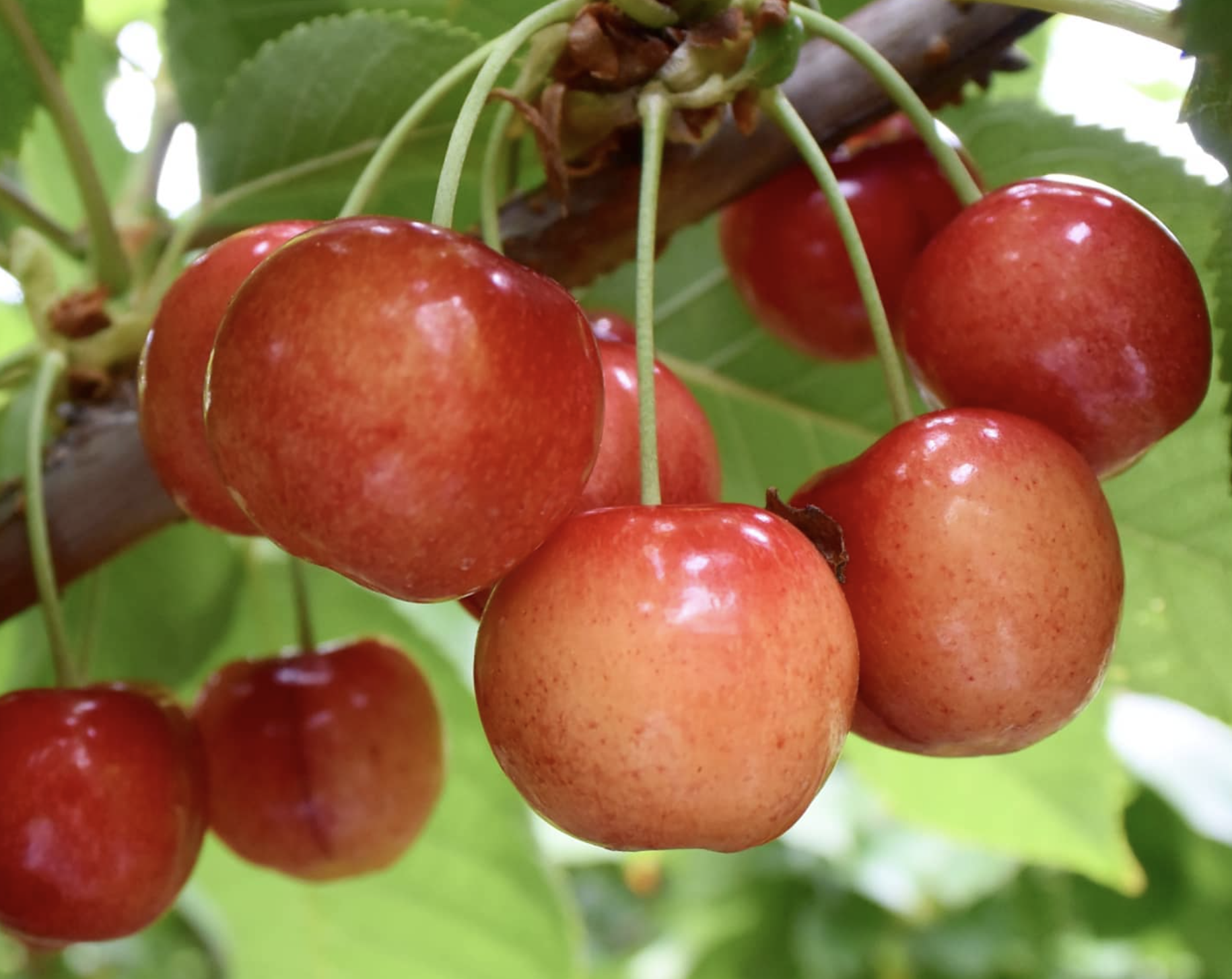
It can take decades to breed and cultivate new cherry varieties, but there’s a team in Summerland working on changing that.
Research scientist Dr. Letitia Da Ros with Agriculture and Agri-Food Canada Summerland Research and Development Centre is working on a way to reduce cultivation time from 30 years so that farmers in B.C. have new types of cherries that are more resilient to extreme weather.
She said breeding crops like cherries to resist the weather is a change in human selection in agriculture.
“With any crops that humans grow we’ve really focused on yield and disease resistance,” she said. “As we see a lot of changing and shifting weather patterns, we’ve begun to focus more on stability of production and varying weather conditions.”
Breeding a new type of cherry takes decades because varieties need to be crossed together, then given time to grow, then taste tested, then planted and tested out in a field to make sure they’re resilient enough, then finally taken to farmers.
Da Ros said the research approach is two-pronged since the team is working on breeding more resilient, faster flowering cherry varieties, but it’s also looking at genetic markers to see if researchers can predict which varieties will perform better in extreme temperatures without having to go through as many years of testing.
She said releasing what they learn as they work on the long-term project of a better cherry variety means people don’t have to wait to benefit from their research.
“We’d like to always have how we can help you now and in the future, so that we get that benefit as soon as we can,” she said. “We can shorten it from 30 to 10 years, but we want to also be able to help with that information before the 10 years is up.”
B.C. produces 95 per cent of Canada’s cherries. In 2024, Canada exported more than 1,000 metric tons of cherries, valued at more than $12 million.
Not only are the actual cherries money makers but the varieties as intellectual property generate revenue. There are 36 varieties of cherries grown around the world that are Canadian intellectual property which generate millions of dollars in royalties each year.
The Summerland Research and Development Centre was founded in 1914 and researchers like Da Ros have been working on cherry varieties for roughly a century.
“We actually have a hundred year old apple and sweet cherry breeding programs that have been running and the germplasm that comes from here with our industry partners actually supplies a large proportion of the sweet cherries that are grown across the world,” she said.
The funding for this project is coming from Genome BC, a not-for-profit organization that was attracted more than $1.1 billion in investments that funded more than 600 genome projects over the course of 25 years.
Da Ros said it’s always helpful when growers themselves give researchers information about what problems they are seeing in their orchards.
“If you get out there, have your voice heard there, then we’ll know about it and be able to try and provide solutions around that,” she said.
News from © iNFOnews.ca, . All rights reserved.
This material may not be published, broadcast, rewritten or redistributed.

Join the Conversation!
Want to share your thoughts, add context, or connect with others in your community?
You must be logged in to post a comment.